Appliance
Liebherr wine fridges
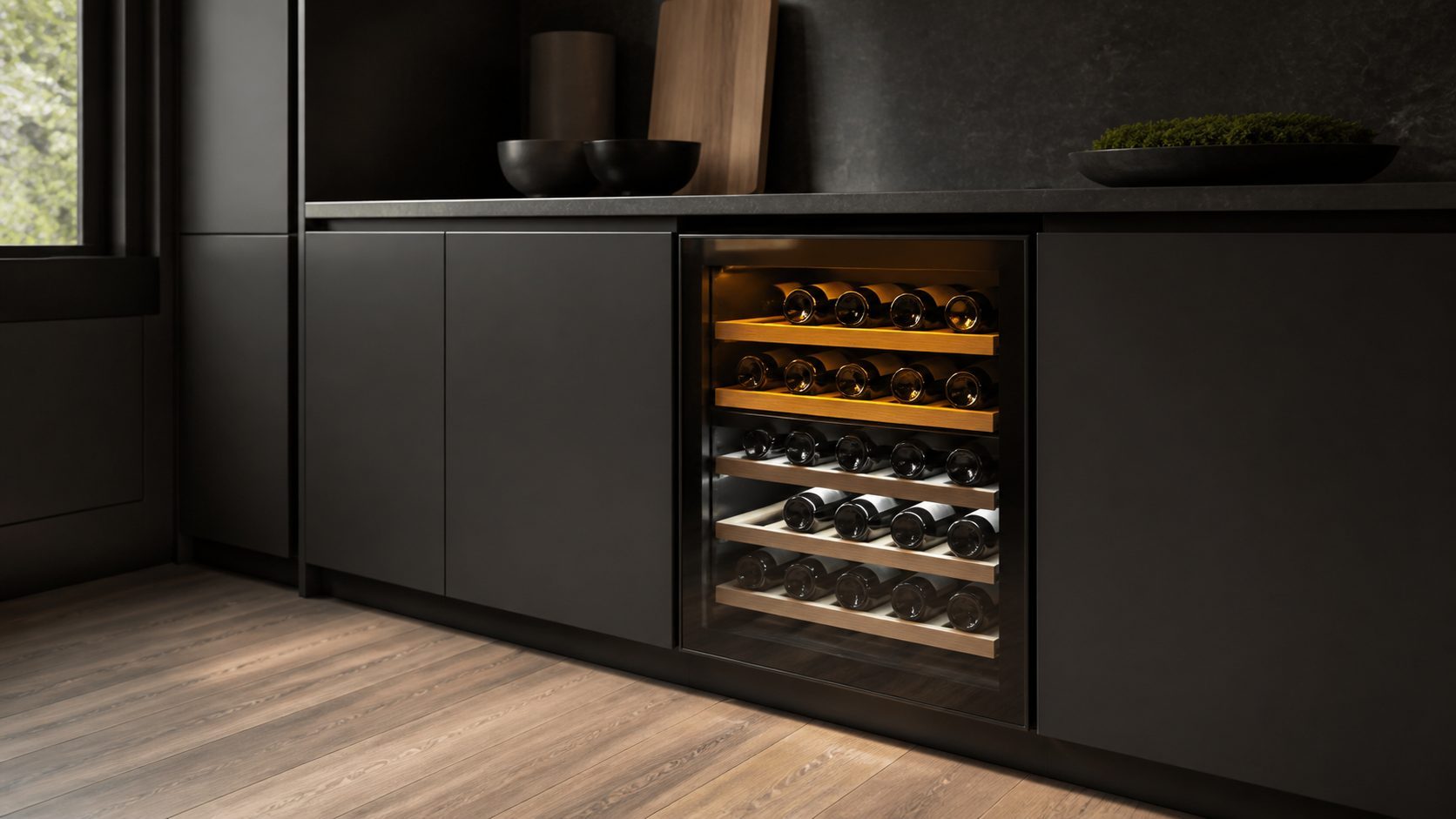
The undercounter kind — the one that lives under the worktop beside the dishwasher drawer, holds a few dozen bottles and usually runs a single temperature throughout. It is also the word most people use for every one of these appliances, so if you arrived typing wine fridge and you own a tall two-zone cabinet, everything here still applies and the cabinet pages go further.
- 9 symptoms we are called out to
- From $95 diagnostic, credited to the repair
- 59 cities and neighborhoods covered
- OEM parts available on order
The short version
What this equipment is, for a repair
Configurations
Undercounter · single zone · built into the run
Access
Planned before the visit, not discovered on arrival
Parts
OEM, available on order
Diagnostic
From $95, credited to the repair
What goes wrong with it
Symptoms we are called out to on Liebherr wine fridges
Each one covers the likely causes in the order they are worth checking, and what to do in five minutes before booking anything.
-
Often two appliances, not one problem One compartment cold, the other is not
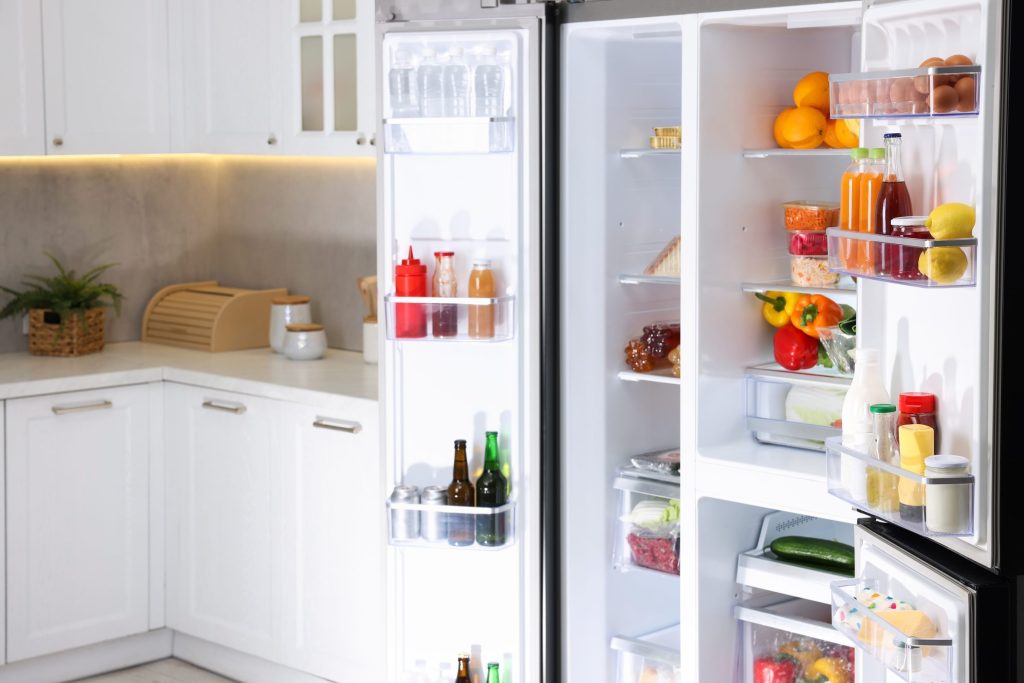
The freezer holds and the refrigerator drifts, or the reverse. Before anything else, find out whether you have one appliance or two — on this make a Side-by-Side is two separate cabinets behind two matching doors.
- Freezer fine, fridge warm
- Fridge fine, freezer warm
- Two doors, one continuous run of cabinetry
-
Most of these are documented, and normal Refrigerator or freezer beeping
The single most searched thing about this make, and most of the answers are in the manual rather than in a repair. Liebherr documents a door alarm, a temperature alarm and a power-failure indicator, and each of them stops when its cause goes away.
- Beeping with the door open
- Beeping after loading or rearranging
- Beeping that will not stop with the door shut
-
Usually a change, not a breakage Display flashing or blinking
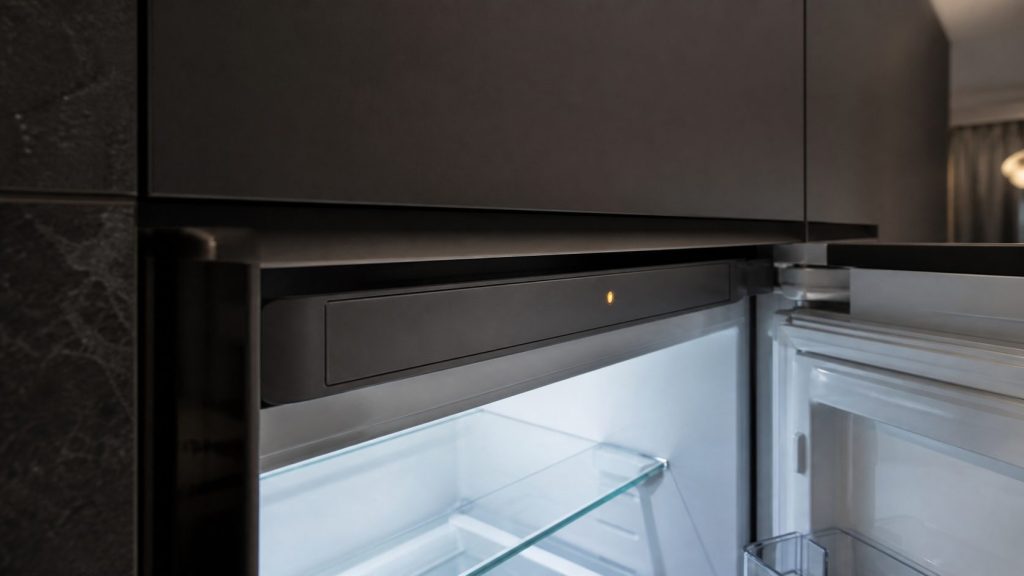
The display is flashing and nothing obvious is wrong. On this make that is documented behavior in two cases and a genuine alarm in a third — and telling them apart takes a look rather than a visit.
- Flashing right after you changed a setting
- Flashing after loading the freezer
- Flashing together with the alarm LED
-
The maker's own first questions cost nothing Loud running noise
One of the six rows in the maker's own troubleshooting table, and its published answers start with things you can check yourself in two minutes.
- Vibration that comes and goes
- Rattling that stops if you touch the cabinet
- A hum that got louder over months
-
Cold made and not delivered Fan not working
The refrigeration is producing cold and something has stopped moving it. It shows up as one area warm while another is fine, and it often arrives with a noise.
- One shelf warm, the rest right
- Noise that changed before the temperature did
- Ice on the evaporator behind the panel
-
Check the free answer first Interior light not working
The light is out and the cabinet is still cold. On this make there is a documented reason for that which costs nothing to check.
- Light out, temperature fine
- Out since the door was left open
- Wine cabinet light that will not turn off
What we do on it
Repairs we carry out on Liebherr wine fridges
Starting figures for this equipment in South Florida. The exact cost is confirmed after an on-site diagnostic — and this is not the whole list of what can go wrong, so call if your problem is not here.
-
from $95 Diagnostic visit
We work out what is actually wrong before anybody quotes a part. On this make that starts with a question most technicians skip: is the appliance reporting a problem, or is it telling you something it was designed to tell you? A flashing display and a sounding alarm are frequently correct behavior. The fee is credited toward the work when you go ahead.
- The plate read first — three numbers, not one
- Signals told apart from problems before any part is named
- Credited toward the repair
-
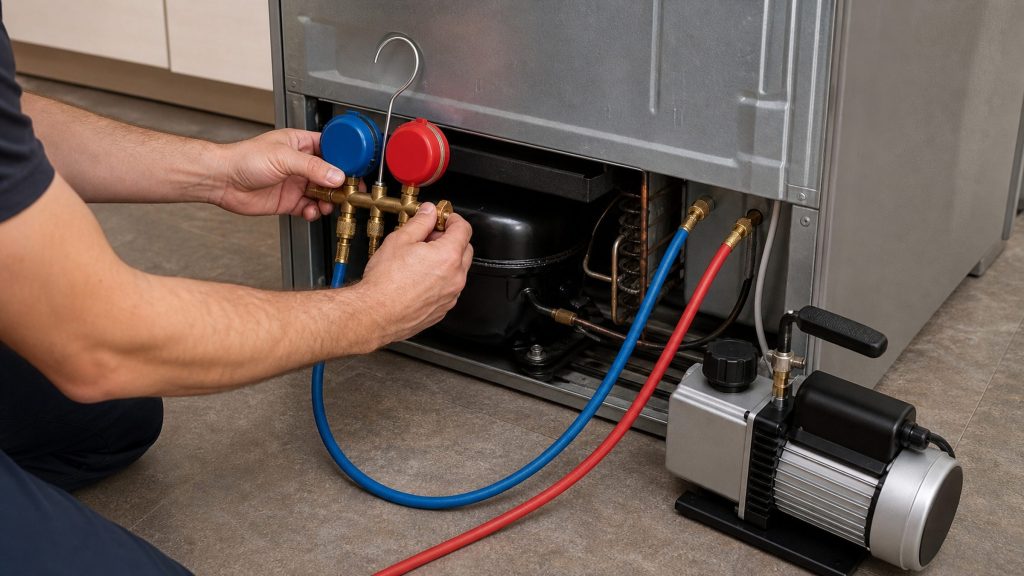
from $650 Sealed system repair
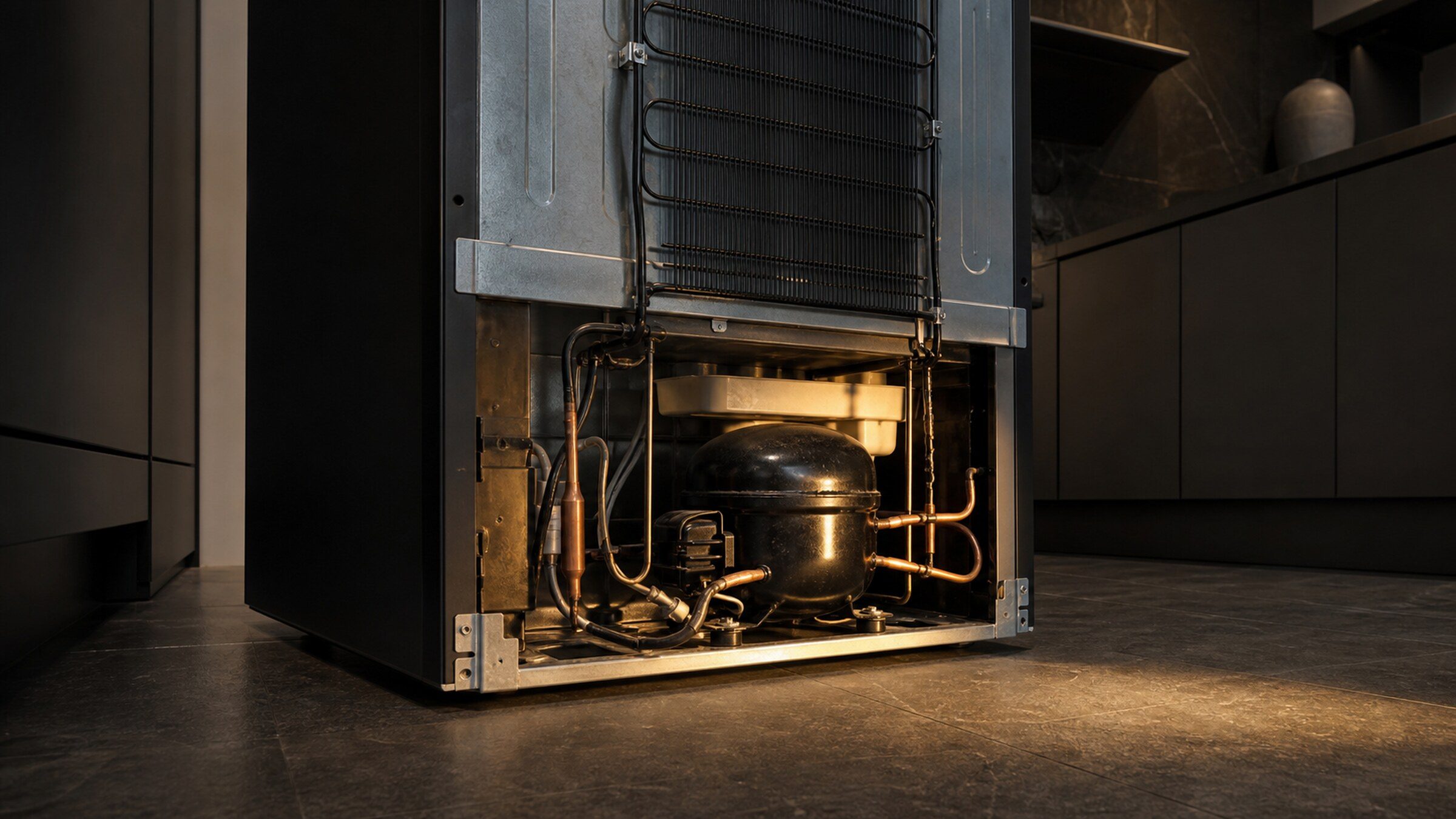
Refrigerant work: the compressor, condenser, evaporator, drier and the tubing between them. It is licensed work with recovery equipment, it is the most expensive thing that can be wrong with a cold appliance, and it is diagnosed by measurement rather than by elimination.
- Diagnosed with pressures and temperatures, not guesswork
- Checked against the maker’s own sealed-system position first
- A figure in writing before anything is opened
-
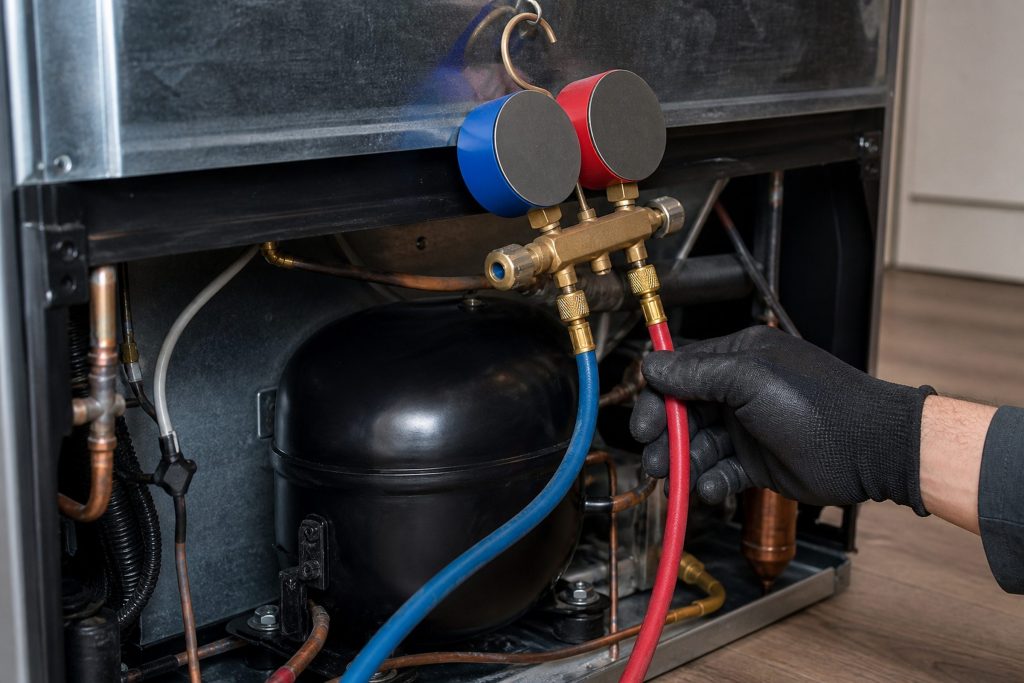
from $850 Compressor replacement
Sealed-system work plus the compressor itself. It is the largest single job on a cold appliance, and it is worth being certain about before it is quoted — a compressor that is running but not achieving pressure and a compressor that has failed are different diagnoses with different answers.
- Confirmed by measurement before it is quoted
- Warranty position checked first
- Recovery, replacement and recharge as one job
-
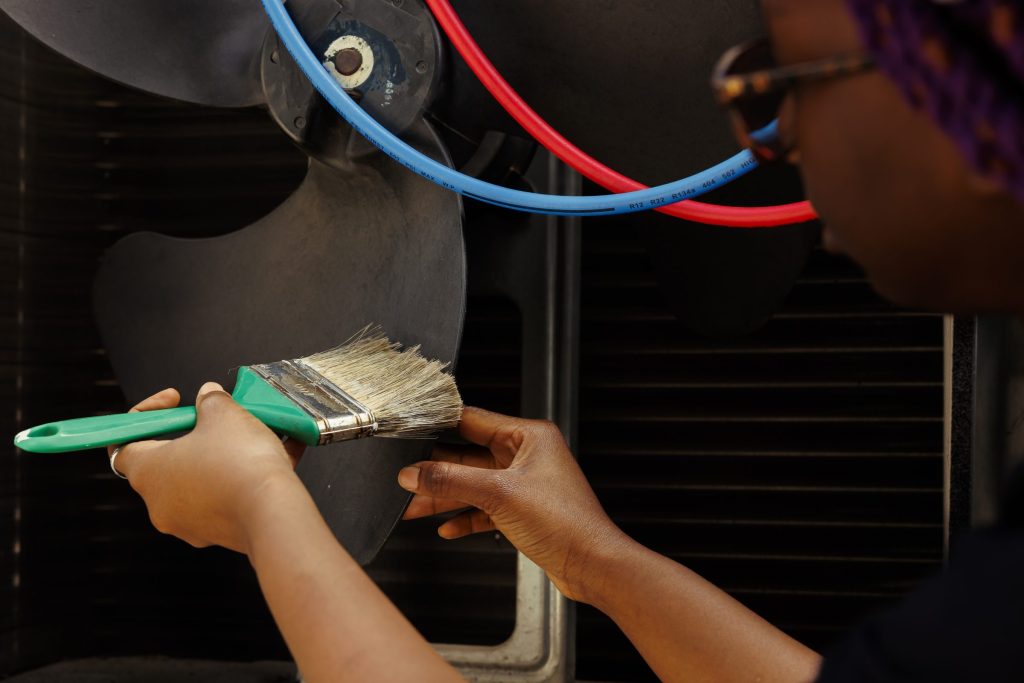
from $145 Condenser and airflow service
The maker names ventilation first among the causes for both "motor seems to run too long" and "the temperature is not cold enough". In South Florida a condenser fills faster than anywhere else in the country, and this is the least expensive visit on this page.
- Named first by the maker for two of its own symptoms
- Labor and access rather than parts
- The visit that prevents the expensive ones
-
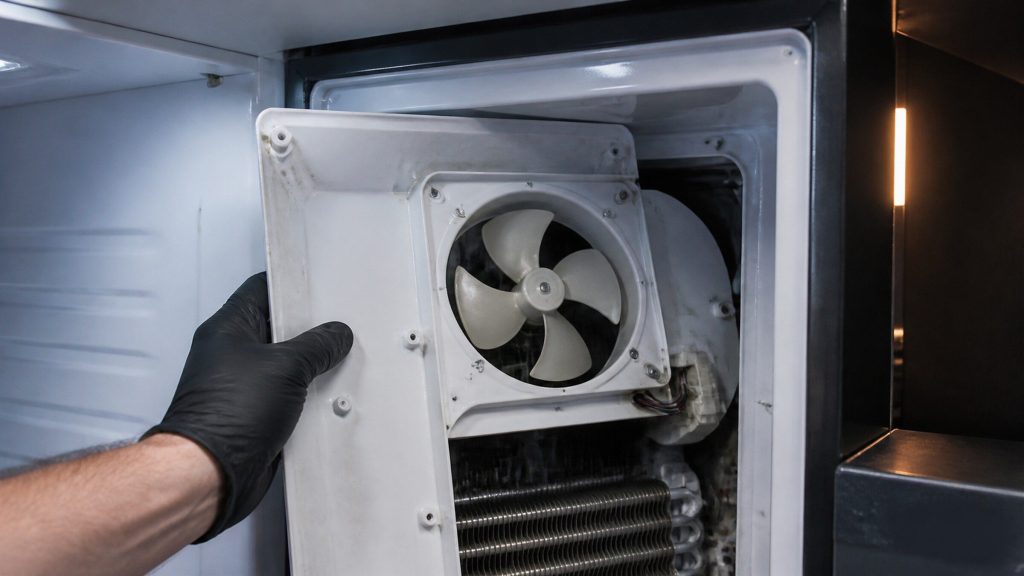
from $175 Evaporator fan and running-noise repair
Loud running noise is one of the manual’s own six troubleshooting rows. It is worth taking seriously and it is worth ruling out the free causes first, because two of the three usual answers cost nothing at all.
- Leveling and contact checked before any part
- Fan, compressor mount and airflow told apart
- A noise that changes with the door is a different answer
-
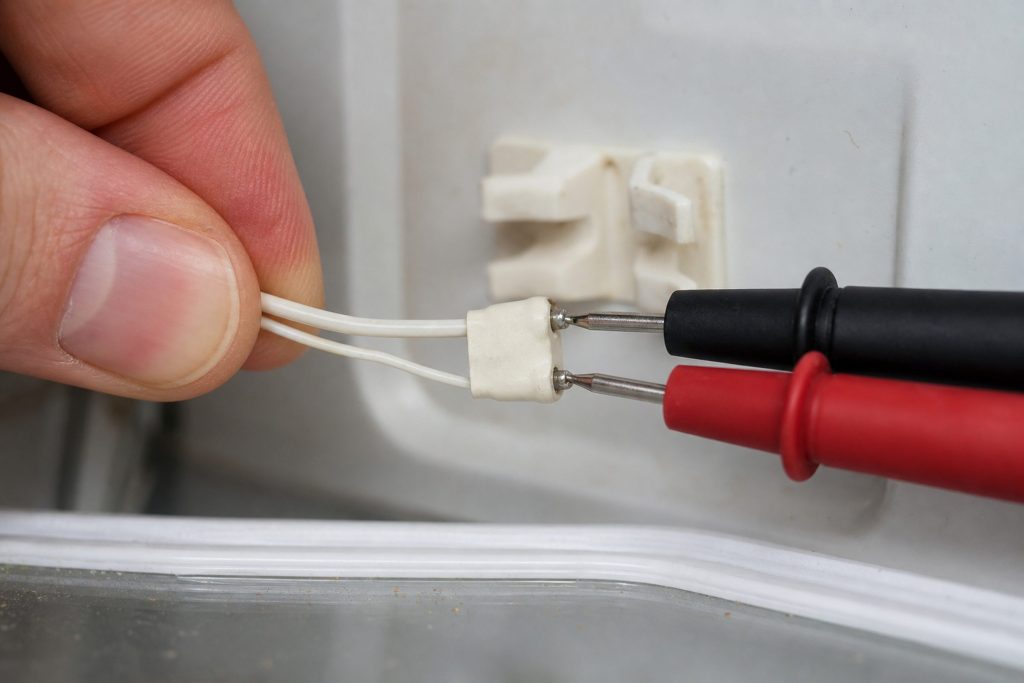
from $175 Temperature sensor and probe replacement
The cabinet is holding a temperature it thinks is right and is not. A sensor is a resistance at a known temperature, so this is one of the few things on a cold appliance that can be proved rather than inferred.
- Proved with a measurement, not a guess
- The part is inexpensive; the figure is access
- Checked against an independent thermometer
-
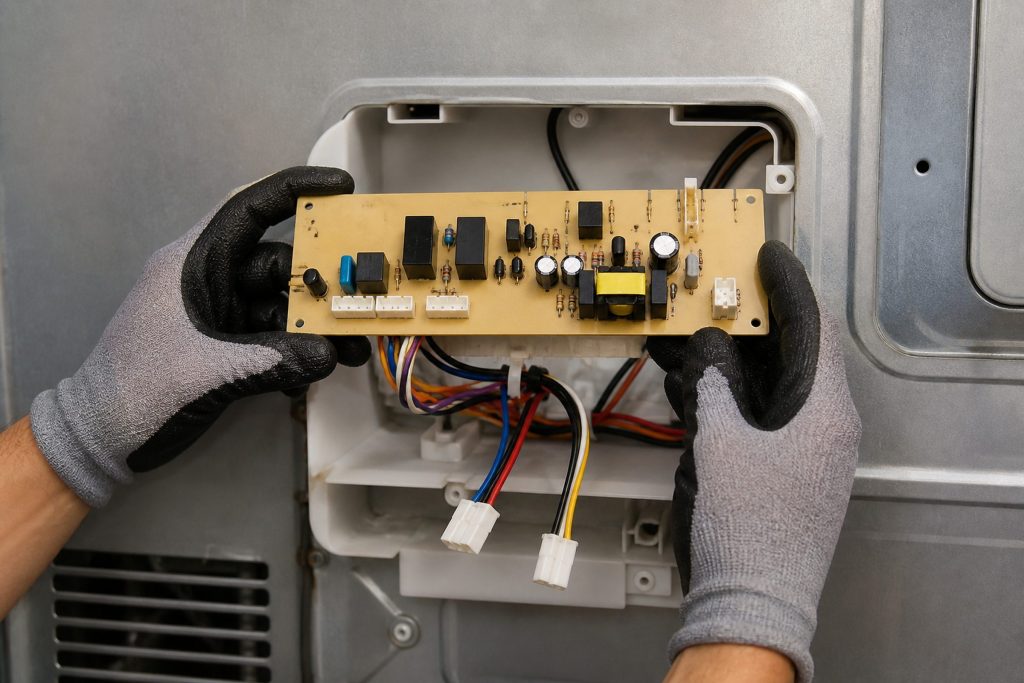
from $245 Control board and display repair
The board is the expensive part on a cold appliance and the one that gets blamed first and wrongly. It is also, occasionally, genuinely the answer — and telling those two situations apart is what this visit is for.
- Everything the board controls checked before the board
- Buttons, display and control separated
- Never the first thing named
-
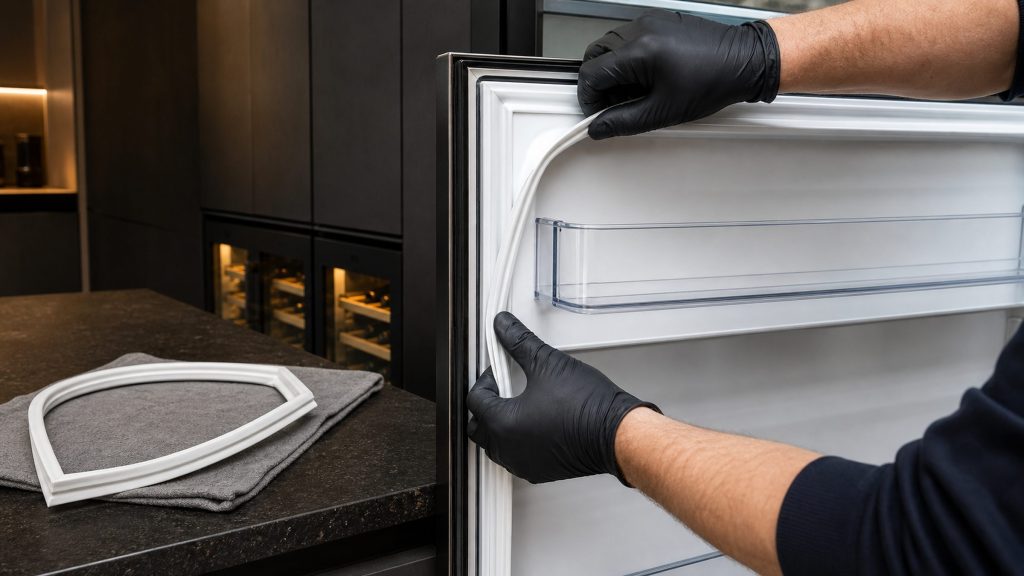
from $155 Door seal replacement
The cheapest thing on a cold appliance that costs real money if it is ignored. A seal that no longer grips is warm air entering continuously, which is a compressor running longer, ice forming where it should not, and a wine cabinet fogging on the inside of its glass.
- A paper test anyone can do before calling
- Seal, then alignment — in that order
- The first thing to check behind condensation
-
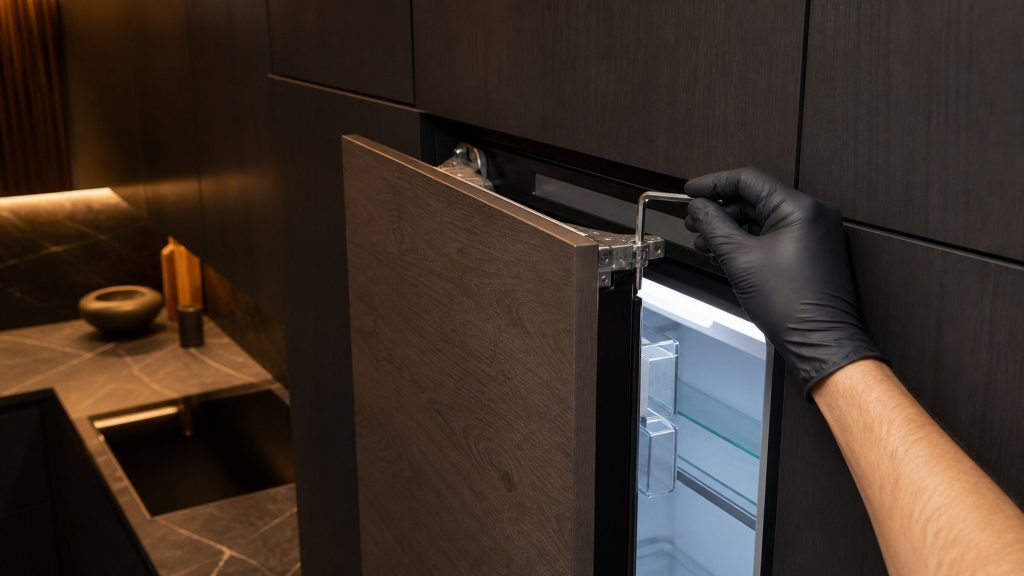
from $165 Door alignment and hinge repair
On an integrated cabinet the door carries your own cabinet front, so alignment is joinery work as much as appliance work. A door that has dropped a few millimeters shows up first as a seal that no longer grips and second as a run of cabinetry that no longer lines up.
- Appliance door and cabinet front aligned together
- Hinges, closers and the panel mounting
- Re-tested against the seal
-
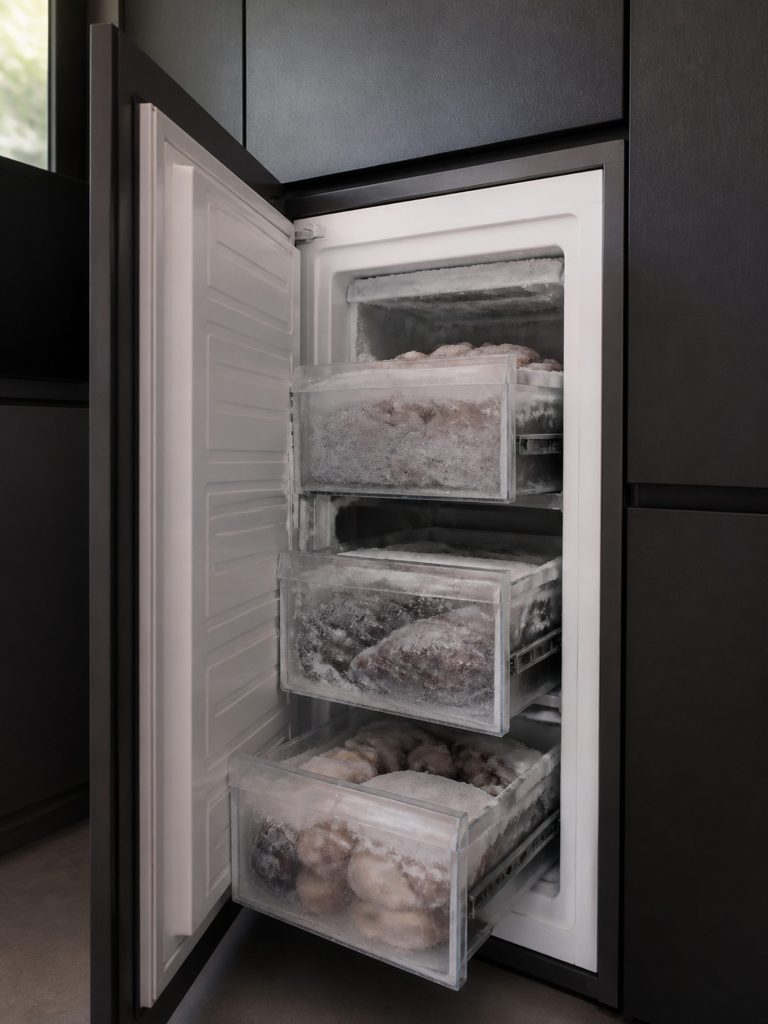
from $195 Integrated panel and column refit
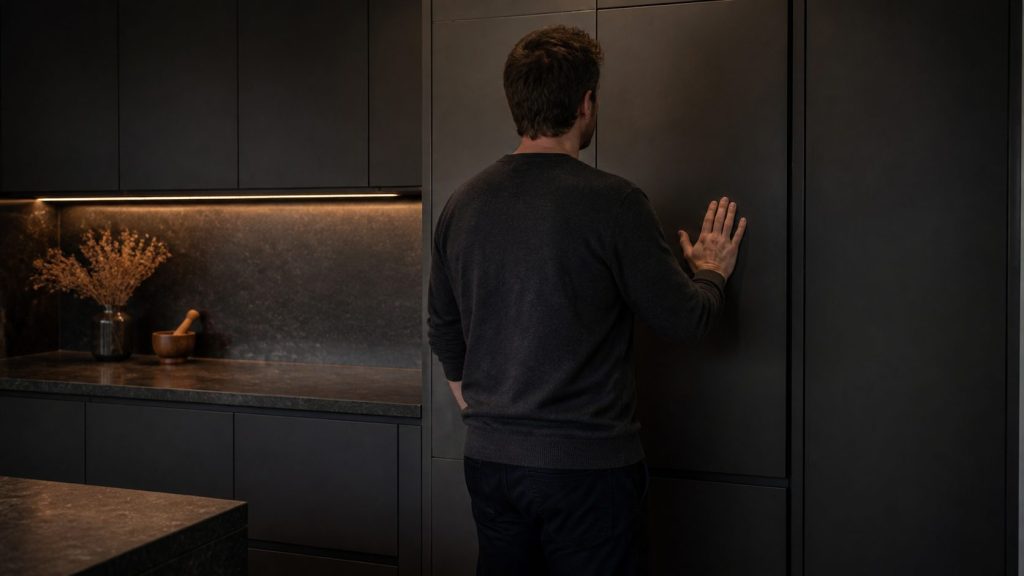
Taking a fully integrated column out of joinery and putting it back level, plumb and aligned to its neighbors. Ten of the refrigerators in this line and every one of the freezers are fitted this way, so on this make it is routine work rather than an exception.
- Planned before the visit, not discovered during it
- Level, plumb and aligned to the run
- Panel, plinth and toe-kick refitted properly
-
from $145 Alarm and power-failure diagnosis
This visit exists because of what this make documents. A flashing display, a sounding alarm or a lit power-failure light is frequently the appliance working exactly as designed — and a visit that ends "nothing is wrong, and here is what it was telling you" is a real visit that took real time. Priced accordingly, and described honestly.
- May end in no repair at all, and we say so upfront
- Every documented signal checked against the manual
- The alarm history read before anything is cleared
-
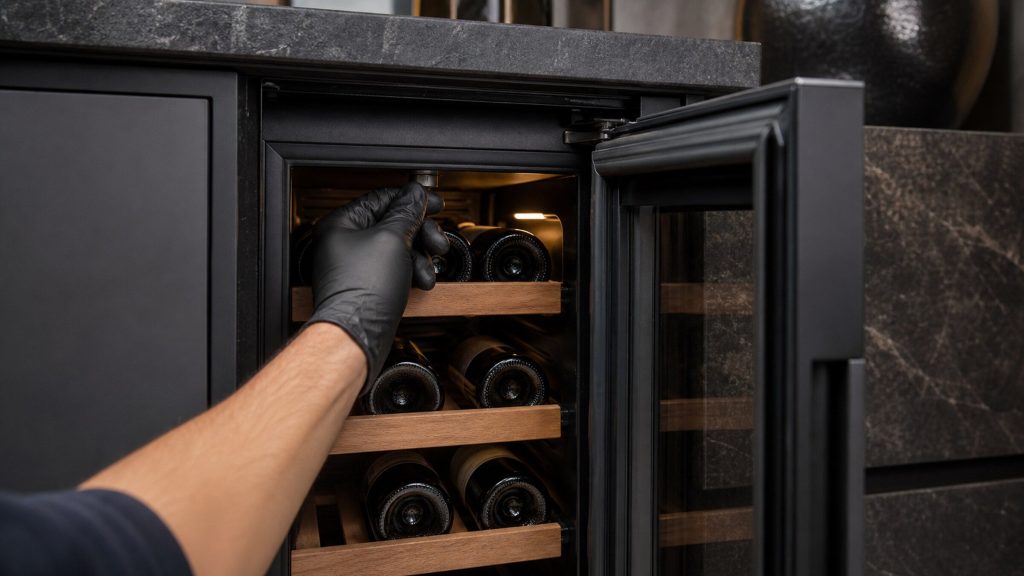
from $195 Wine cooler zone repair
Six of the eleven wine cabinets in this line hold two temperature zones and three hold three. One zone drifting while the others hold is a much smaller job than "the wine cabinet has failed", and it points straight at where to look.
- One zone diagnosed rather than the whole cabinet
- Settings checked before parts
- Seals and glass treated as temperature parts
-
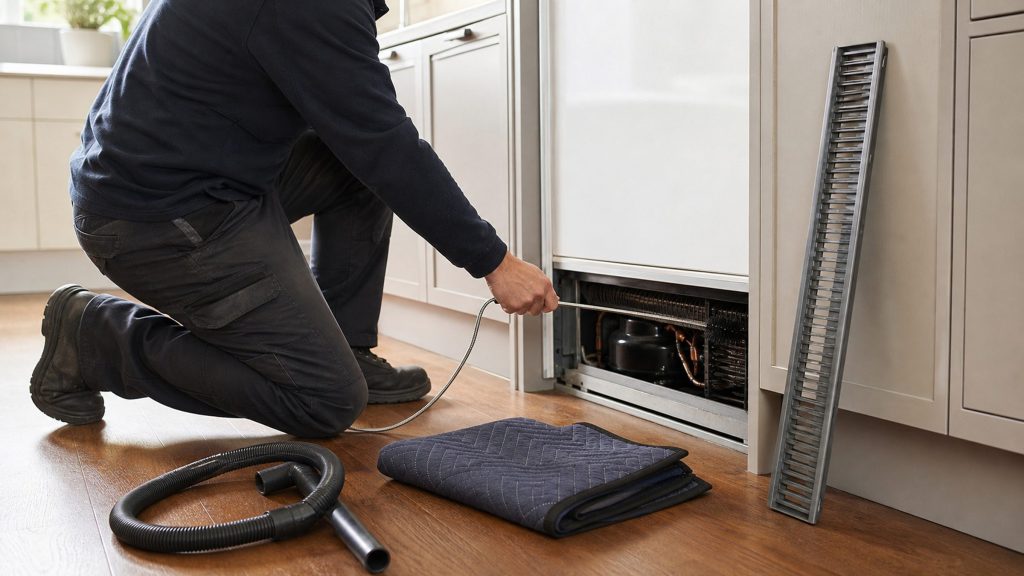
from $135 Appliance maintenance visit
On cold-only equipment maintenance is a short and specific list, and it is the visit that prevents most of the expensive rows on this page.
- Condenser, seals, drainage, alignment, temperature
- Second appliance on the same visit costs much less
- Findings written down rather than announced
-
from $175 Appliance installation and refit
Leveling, door alignment, panel fitting and the water connection where there is one. On integrated cabinets the installation decides how the appliance performs and how long it lasts, which is why it is a service rather than an afterthought.
- Level and plumb, then aligned to the run
- Clearances the manual actually specifies
- Water connection tested under pressure
In more detail
About Liebherr wine fridges
The word people use, and the appliance under the counter
Liebherr wine fridge is what most of South Florida types into a search box.
It covers everything from a two-zone tall cabinet to the undercounter unit beside the sink. This page is about the undercounter unit; if what you own is tall and divided into zones, wine cabinets goes further, and wine refrigeration explains what these appliances do that a food refrigerator does not.
What goes wrong on a small unit
- Not cooling at all — check power and the setting first, both of which are free
- Running constantly, which under a worktop is usually ventilation before it is refrigeration
- Warm at the top, which is airflow before it is refrigeration
- Noise that has changed — a fan, a mount, or a cabinet that has shifted in its opening
- Door seals and hinges, on a door opened more often than any cabinet door in the kitchen
Built in is not the same as freestanding
An undercounter unit fitted into joinery vents through its plinth, and a plinth panel fitted flush by a cabinetmaker who did not know that is one of the most common reasons a healthy appliance runs hot and never stops. It is worth saying, when you book, whether the unit was installed into the run or simply pushed into a gap — it changes what we look at first.
What to have ready when you call
The model number from the plate inside, what it is set to and what it is reading, whether it is built into the run or standing in a gap, whether the compressor runs at all, and what changed. If the setting is the question rather than a defect, what temperature a wine cooler should be is the page to read first.
This article is based on:
- Official manufacturer documentation
- Internal repair procedures
- Technician repair history
- Company quality standards
Before you book
Questions about Liebherr wine fridges
My wine fridge has stopped cooling completely.
Start with the two free checks: is it actually powered — undercounter units share circuits with a great many other things — and has the temperature been changed, by somebody or by a control that has been leaned on. If it is powered and set correctly and has been warm for more than a few hours, it is a repair, and the useful things to tell us are how warm it is reading, whether the compressor is running at all and whether anything is showing on the display.
It is warm at the top and cold at the bottom.
On a single-zone unit a few degrees of difference top to bottom is normal — cold air falls, and manufacturers expect it. What is not normal is a difference big enough to matter to a bottle, and the usual causes are airflow rather than refrigeration: a unit loaded to the back of every shelf, a vent at the plinth that has been blocked by the joinery, or a fan that has stopped. All three are worth checking before anything is opened.
It runs constantly and it is loud.
An undercounter unit built into a run of cabinets has to get rid of its heat through the plinth, and in a Miami kitchen in August it is doing that against a warm floor cavity. A unit that never rests is often a ventilation problem rather than a failing compressor — but constant running still wears a compressor that has nothing wrong with it, so it is worth attending to rather than living with. Noise that has changed, rather than noise that has always been there, is the one to call about.
Is a wine fridge worth repairing at this size?
More often than people expect, because the things that fail on small units are mostly not the expensive things: a fan, a thermostat or sensor, a door seal, a hinge, lighting, a control board. Those are ordinary repairs. We will tell you plainly when a repair on a small cabinet stops making sense against what a new one costs, and that conversation happens before any work, not after it.
Where we do it
Across Miami-Dade, Broward, and Palm Beach
Same terms everywhere we go: an on-site diagnostic first, the price agreed in writing, and the exact figure confirmed once we have seen the unit.
Neighborhoods people ask for by name