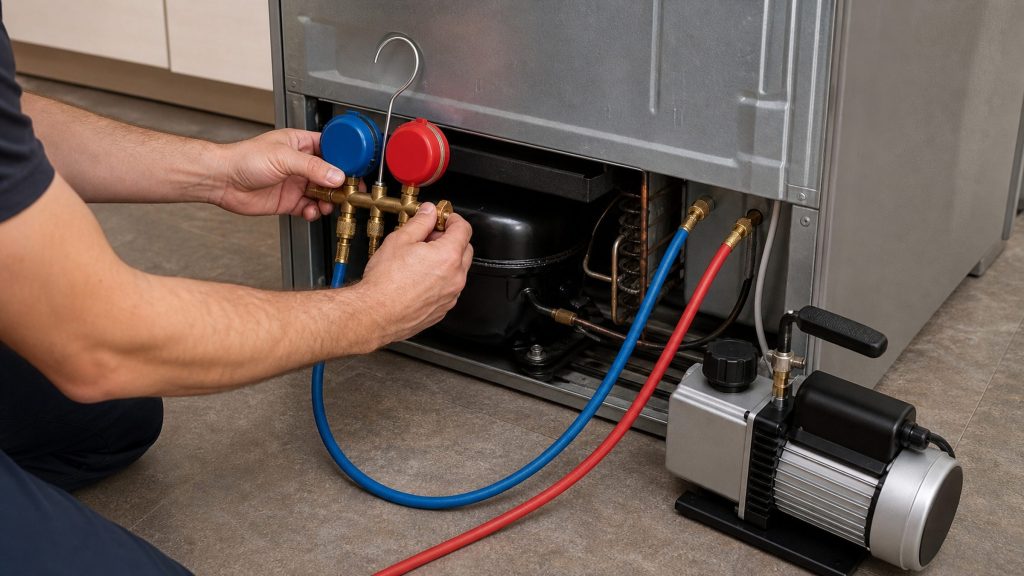
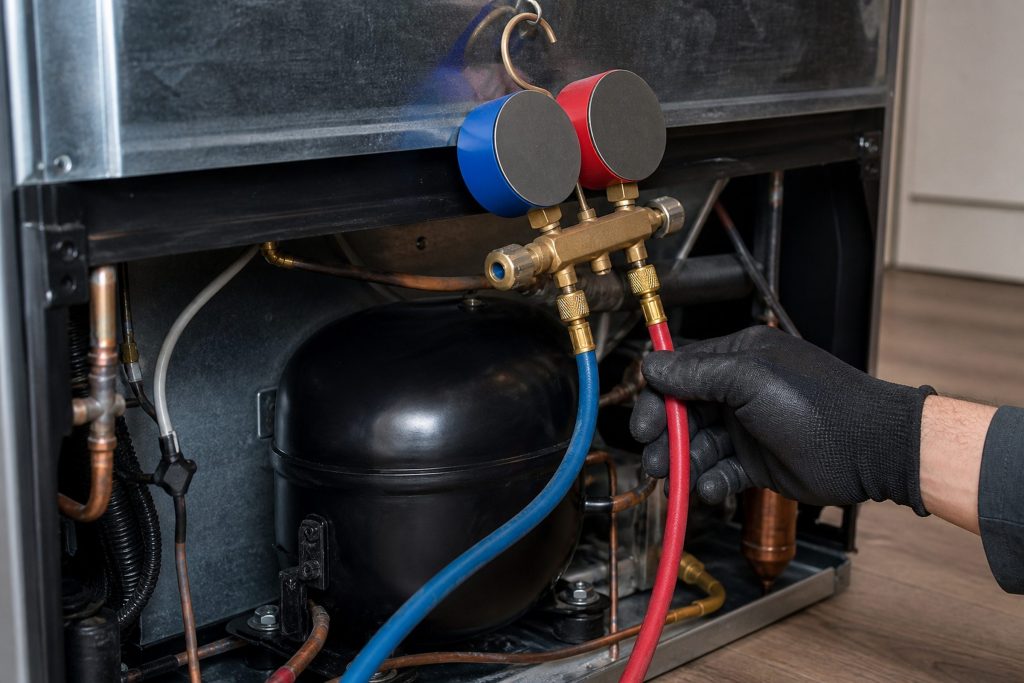
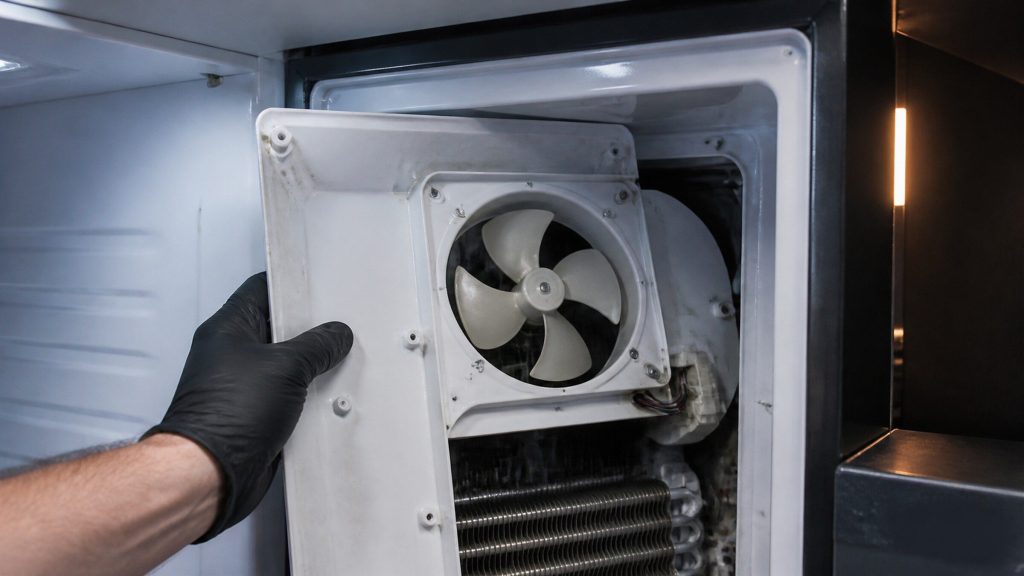
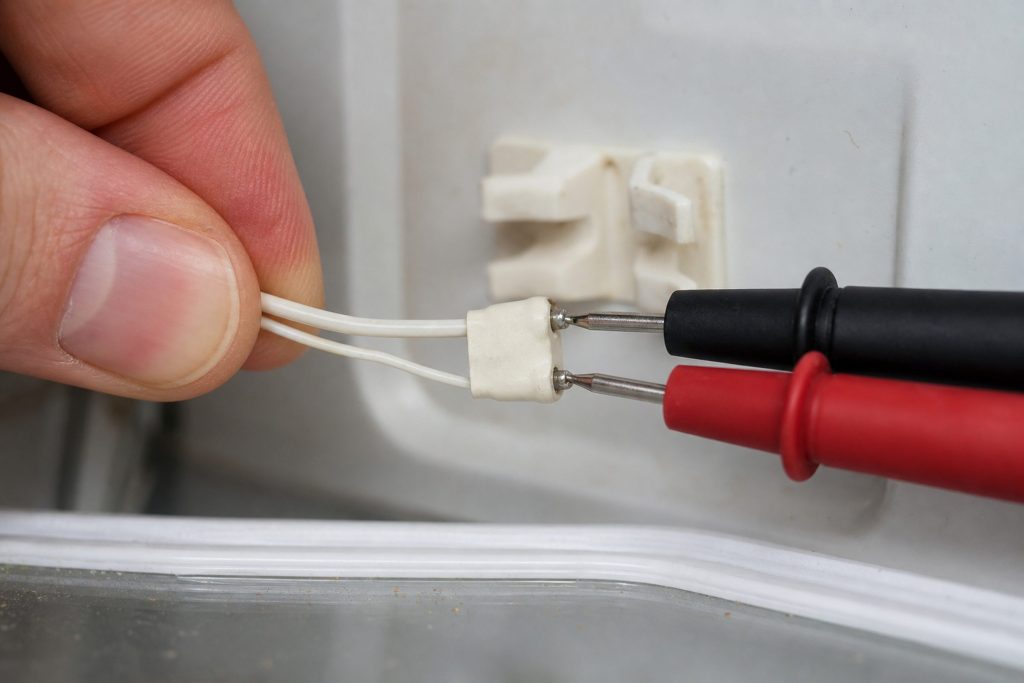
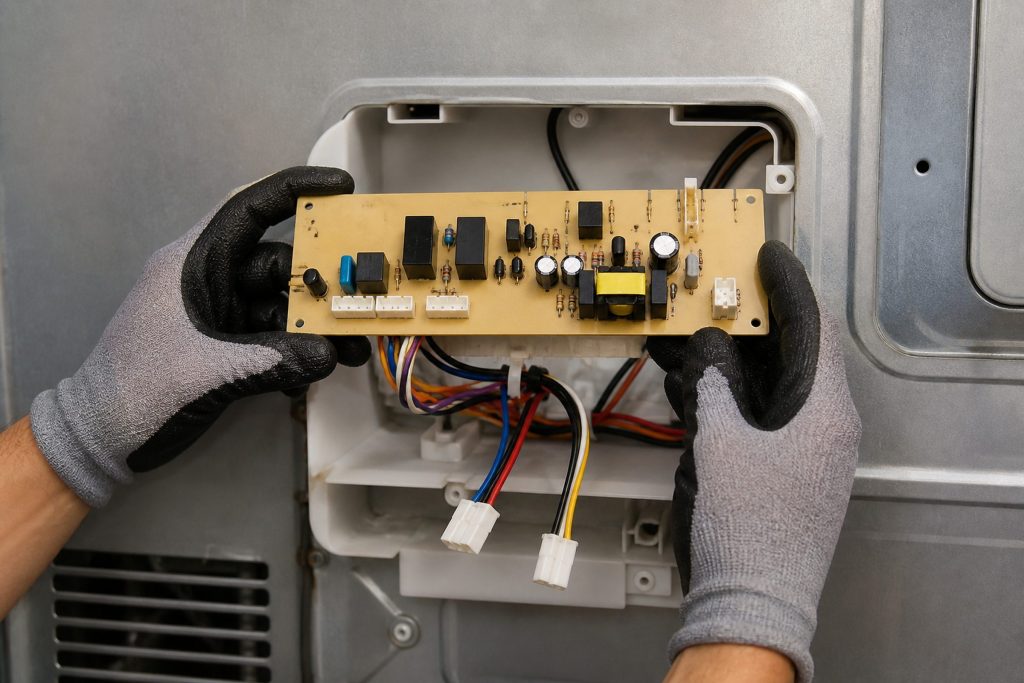
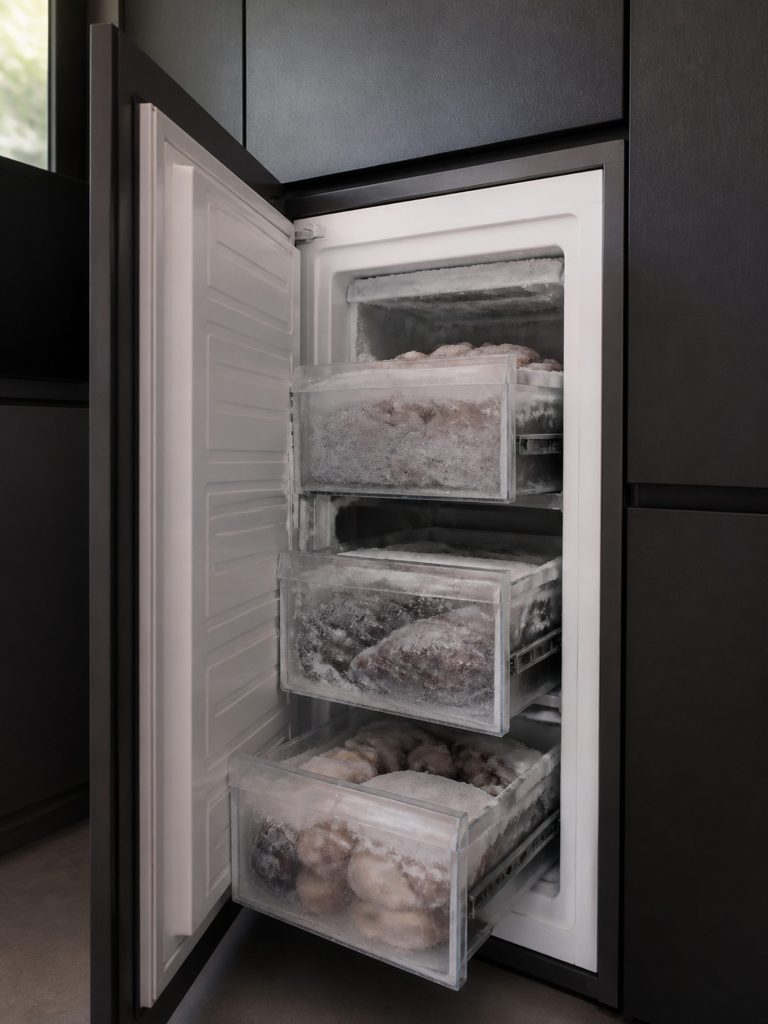
Cold equipment fails in a small number of ways and the useful question is always the same: is the appliance failing to make cold, or failing to move it? Making is the sealed system — compressor, condenser, evaporator, drier and the tubing between them, which is the maker’s own definition in its warranty. Moving is fans, vents, dampers and a defrost circuit that has to keep the evaporator clear enough to work. Most calls are about moving, and moving is the cheaper half.
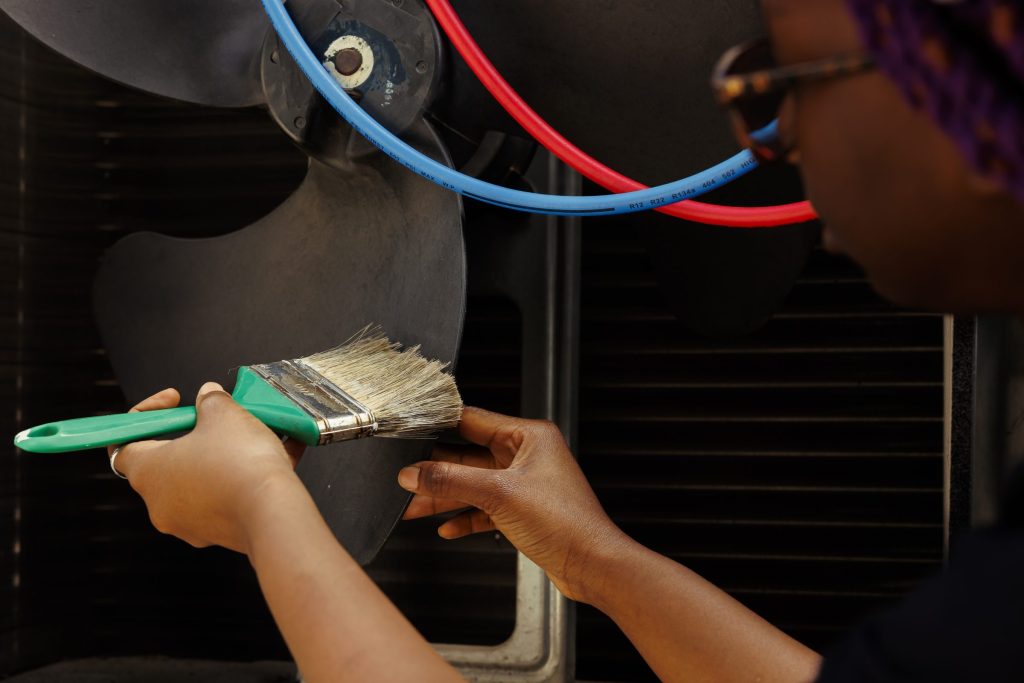
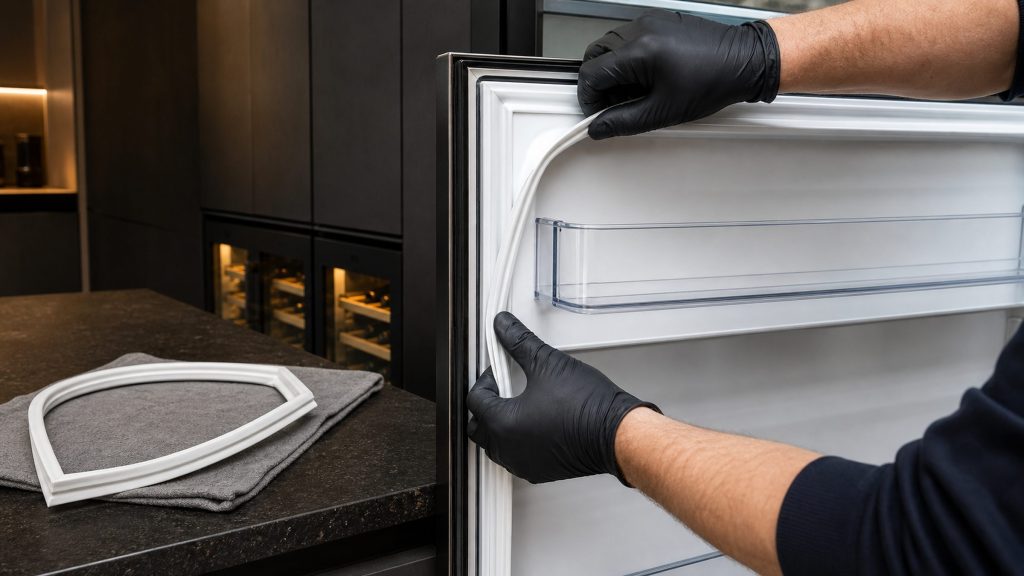
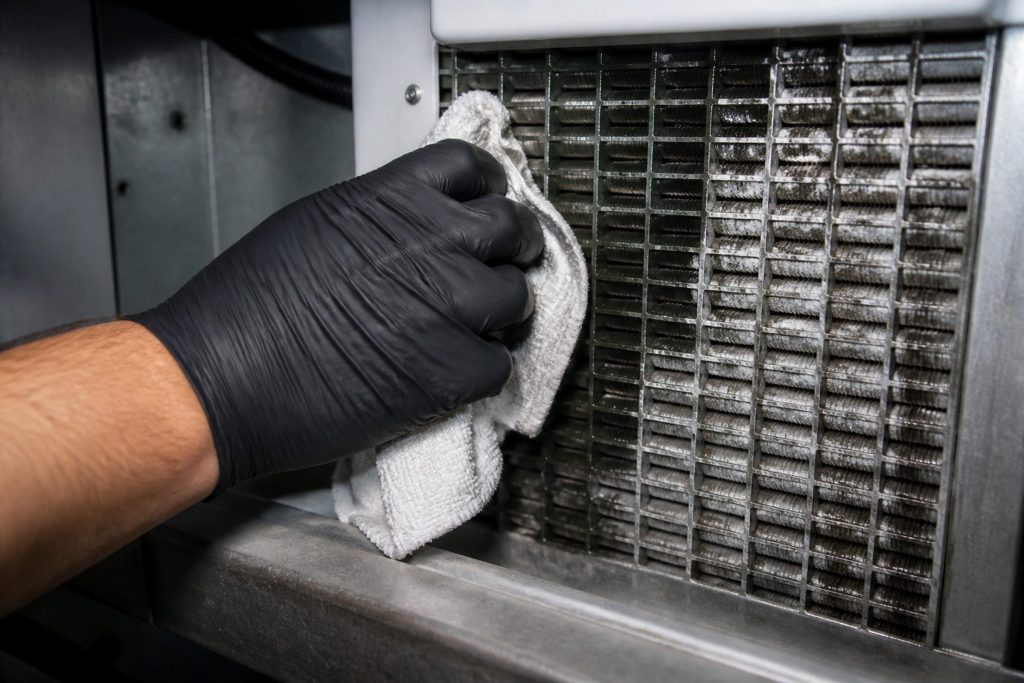
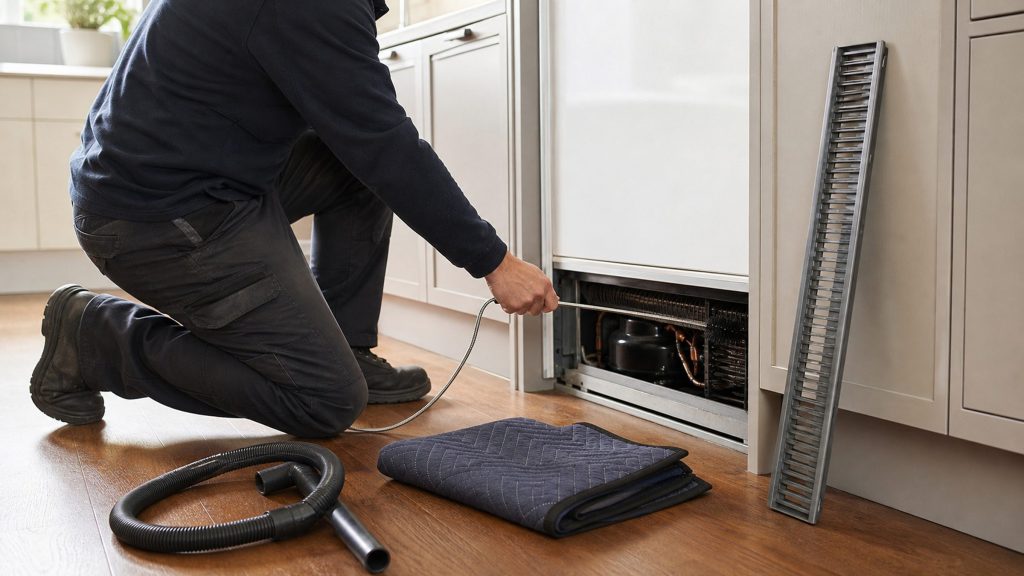
Between those two sits a third category that costs nothing at all and explains a surprising share of what we are called out to: a condenser that has not been cleaned since the kitchen was built, a door seal that no longer grips a sheet of paper, a cabinet packed tight enough to block its own vents, a clearance the installation never had. The maker names ventilation first in its own troubleshooting rows for both running too long and not cold enough — that is Liebherr telling you where to look before anybody charges you.
South Florida changes the weighting. Salt air and fine dust fill a condenser faster than the manual assumes; humidity puts more work through every door seal and fogs the glass on a wine cooler in a kitchen that opens to the outside; and seasonal power failures produce a predictable round of alarms that are the appliance doing its job rather than breaking. Three of the eighteen jobs on this page exist mainly because of this city.
And one page here is unusual: alarm and power-failure diagnosis may end with no repair at all. We would rather publish that as a priced, honest visit than either refuse to come out or invent a part to make the trip feel worthwhile.