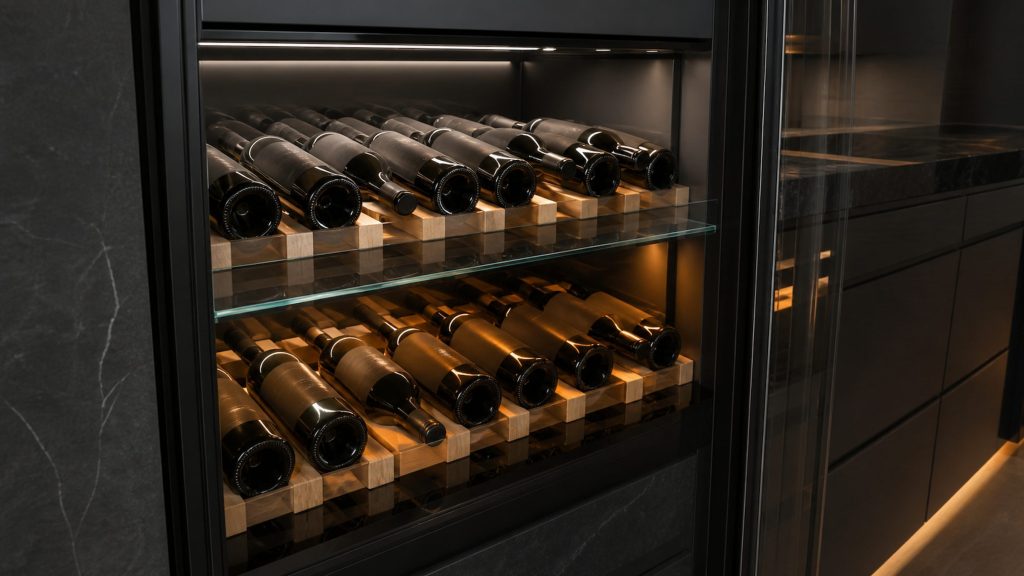
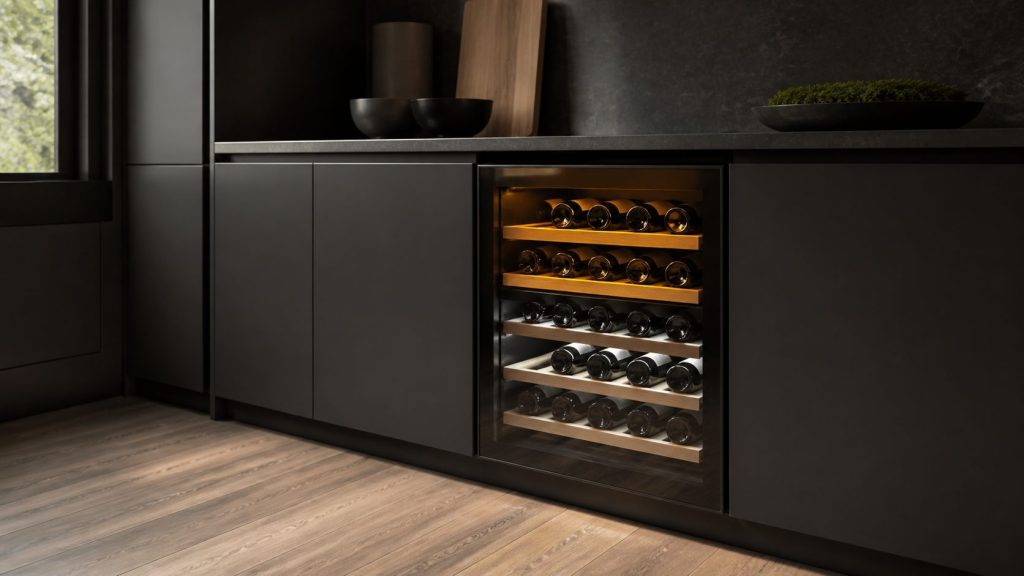
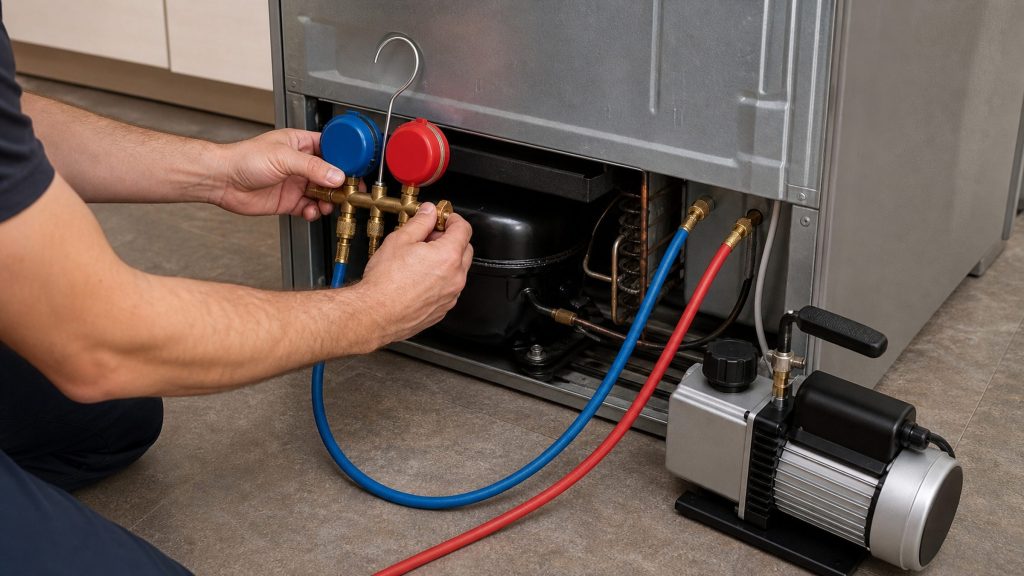
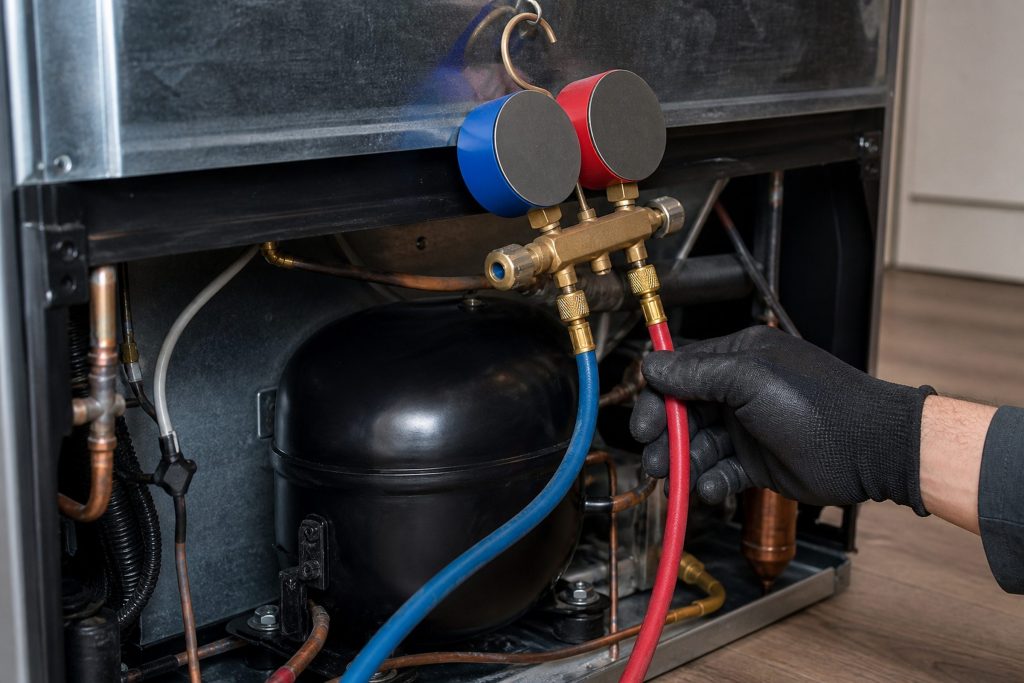
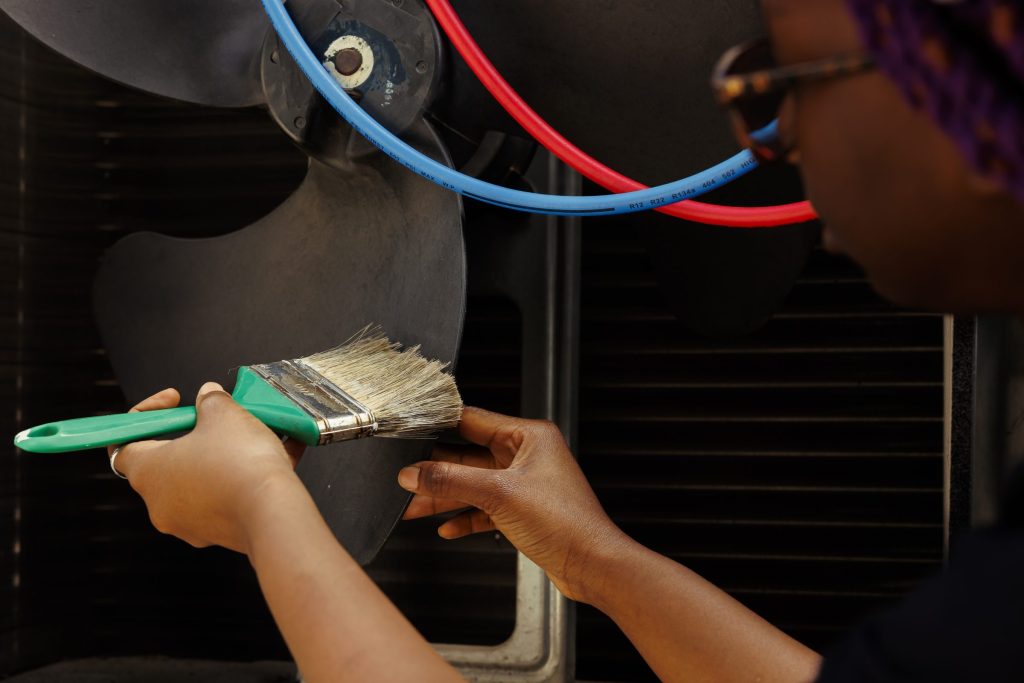
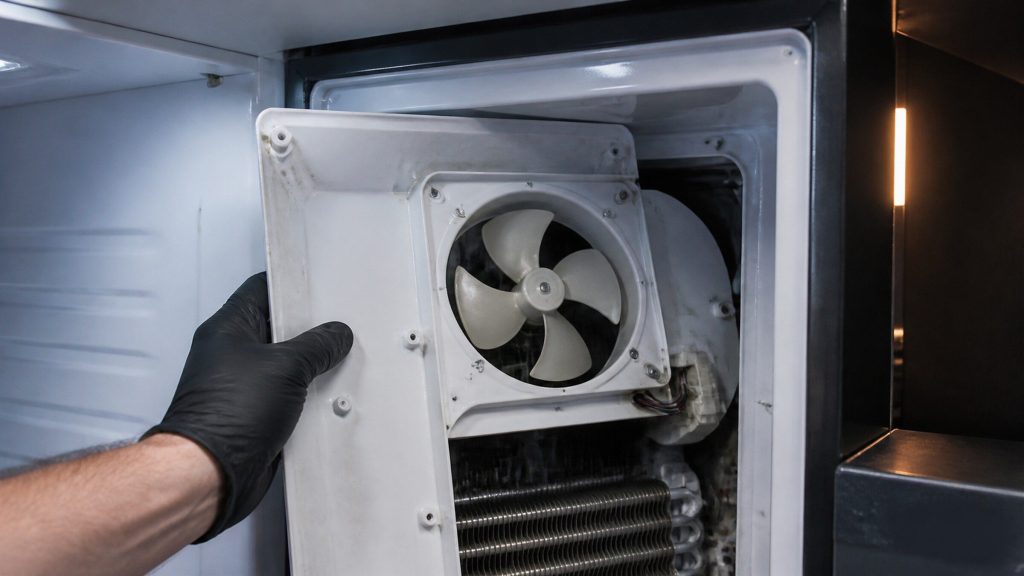
Three machines is unusual among the makes we repair — most span a whole kitchen — and it changes what a repair company has to be good at. There are no burners to light, no wash arms to clear, no drums or bearings. What there is: a sealed system, a defrost circuit, fans, sensors, a control board, and doors that either seal or do not. Six things, and almost every visit is one of them.
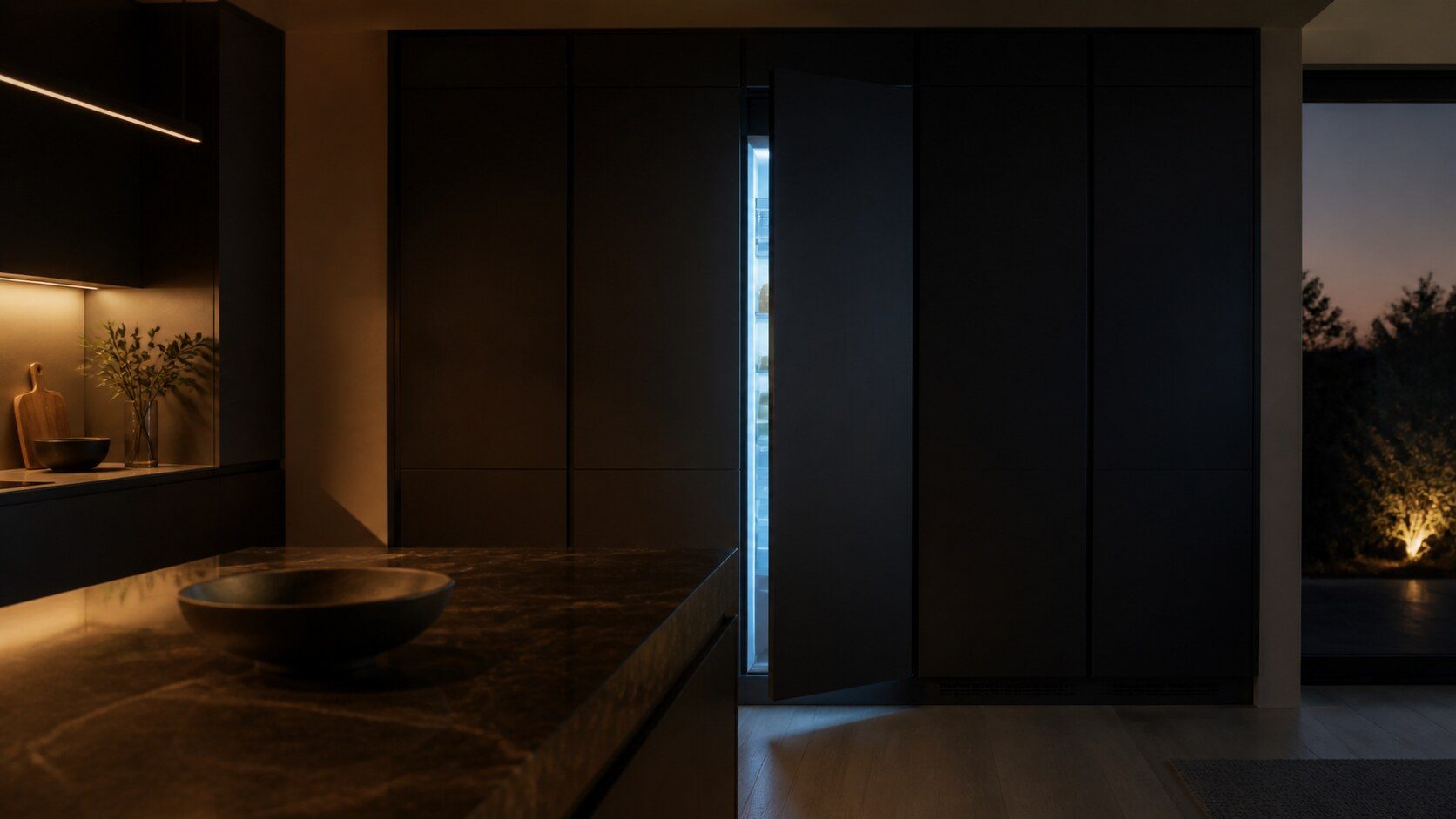
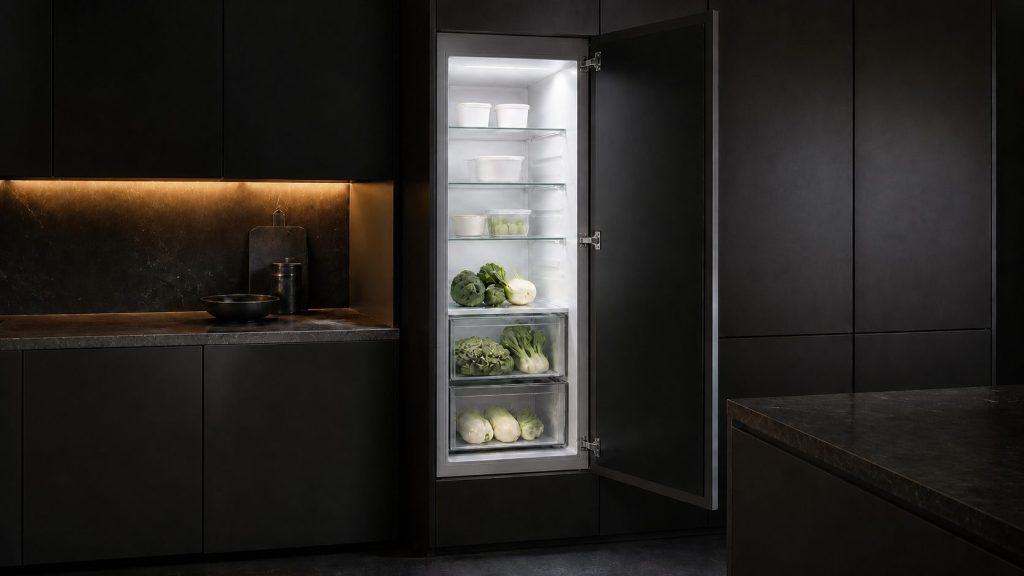
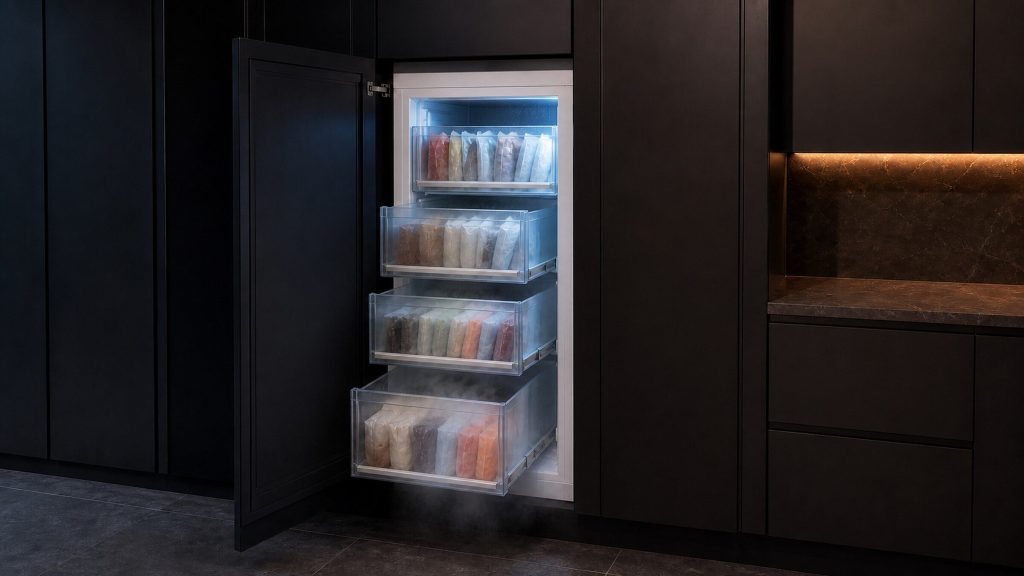
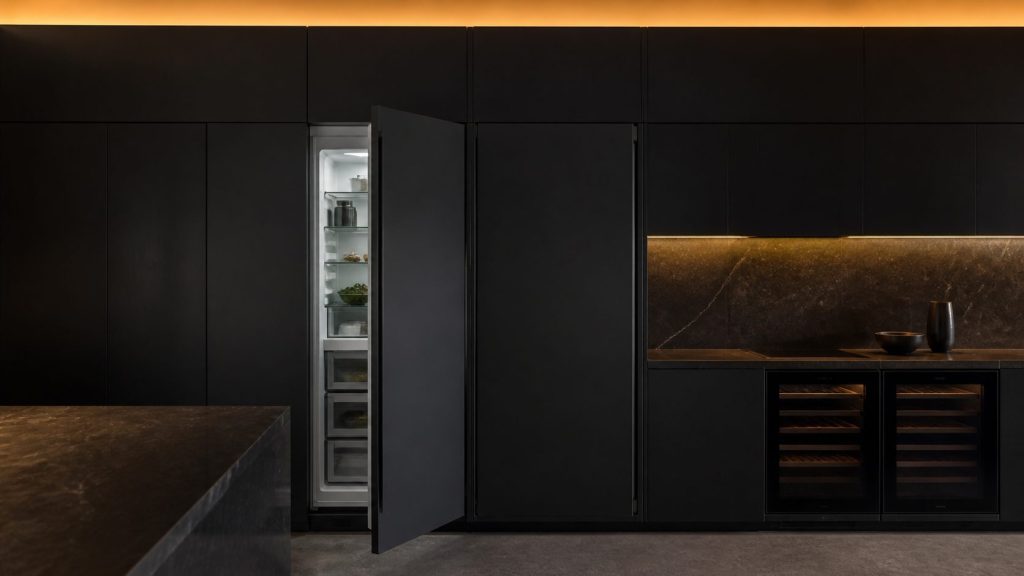
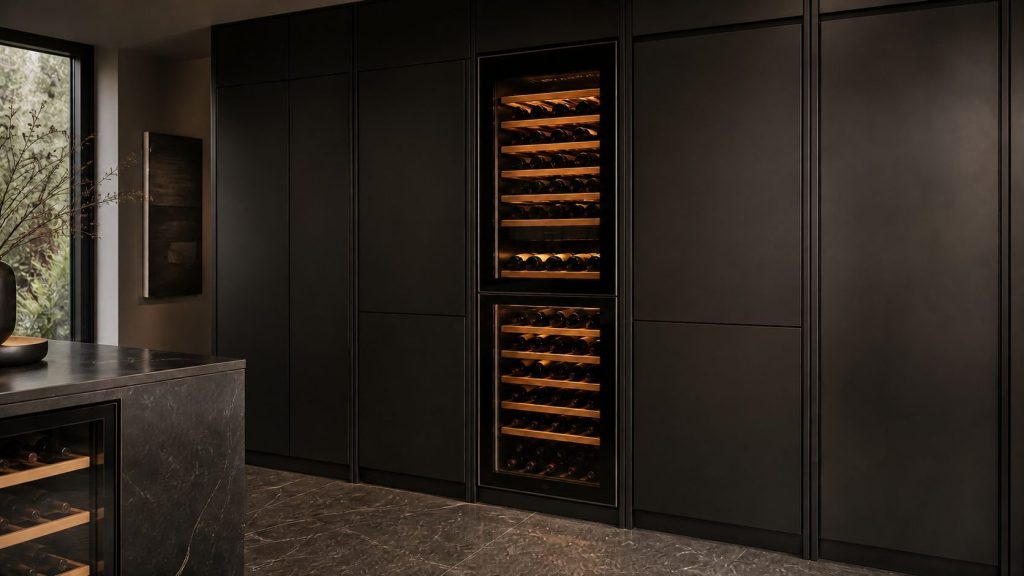
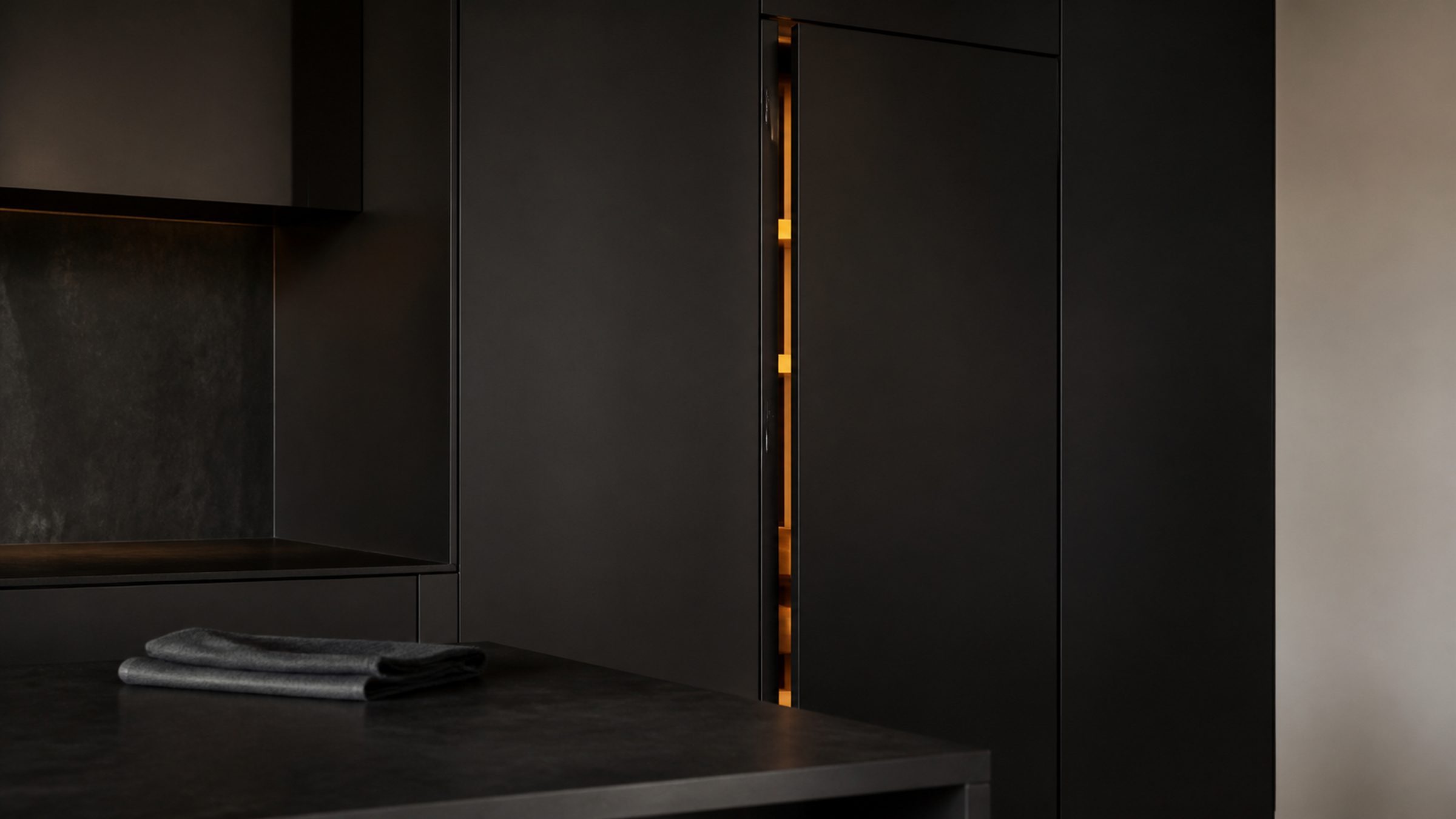
The second consequence is access. Fifteen of the appliances in the current US line are fully integrated, which on other makes is unusual and here is normal. A cabinet that has to come out of joinery, be reconnected and be aligned back against its neighbors takes time a freestanding unit never does, and pretending otherwise produces quotes that are wrong in the middle of the job.
The third is that this maker documents behavior better than most and decodes its own error numbers not at all. F1 to F5 appear on the display with no published meaning; the door alarm, the temperature alarm, the two dashes and the power-failure record are all described precisely. So on this equipment “what is it doing” beats “what is the code”, which is the opposite of how most appliance sites are organized — and it is why the symptom pages here are longer than the code ones.