Common Problems
What Temperature a Wine Cooler Should Be — Serving, Storage, and Why Zones Differ
Long-term storage sits around 53–57°F for everything, red and white alike, because what ages wine badly is fluctuation rather than a particular number. Serving temperatures are different and warmer or cooler depending on the wine: roughly 60–65°F for full-bodied reds, 55–60°F for lighter reds, 48–55°F for whites and around 45°F for sparkling. That is the entire reason multi-zone cabinets exist — six of the eleven Liebherr wine coolers in the current US line hold two zones and three hold three, so one zone can be a cellar and another a serving cabinet. Which means a zone reading 62°F is not too warm; it is set for red. Before deciding anything is wrong, write down what each zone is set to and what each zone is reading, because a great many of these calls end with a set point somebody changed. What is genuinely a problem is one zone that will not reach its own set point while the others hold, or a cabinet where every zone has drifted together.
The full guide
The numbers
Liebherr wine fridge how to set temperature depends entirely on what each zone is for, which is the whole reason the cabinet has more than one.
Long-term storage: about 53–57°F, and the same for red and white. Storage is about holding a wine still, not about preparing it to be drunk.
Serving temperatures, which are what the second zone is usually for:
- full-bodied reds — 60–65°F
- lighter reds — 55–60°F
- whites — 48–55°F
- sparkling — around 45°F
Which is why the cabinet has zones
Six of the eleven Liebherr wine coolers in the current US line hold two temperature zones. Three hold three. Two are a single zone throughout.
The point of more than one is precisely that storage and serving are different jobs. A cabinet with one zone at 55°F and another at 62°F is not confused; it is a cellar and a serving cabinet in one carcass.
So check the setting before you diagnose the appliance
This resolves a genuinely large share of "my wine fridge has stopped working" calls.
Write down, for each zone:
- what it is set to;
- what it is reading.
Two or three pairs of numbers. That is the whole diagnostic, and it separates three very different situations:
Set to 62, reading 62. Working perfectly, set for red. Nothing to do.
Set to 55, reading 62. That zone cannot reach its own set point — a real finding, and one that points at the zone rather than at the cabinet.
Every zone reading above its set point. Now it is the shared refrigeration, and that is a different conversation and a different price.
Stability beats precision
Worth saying because it changes what to worry about.
Wine tolerates a steady 58°F far better than it tolerates swinging between 50 and 65. What produces swings is not the compressor — it is doors, seals and sunlight:
- a seal that no longer grips lets warm humid air in continuously;
- a glass door in afternoon sun is a heat source you installed yourself;
- a cabinet in a kitchen that opens to the outside works hardest of all.
In this city those three do more damage to a collection than a refrigeration problem ever will, and all three are cheap to put right.
Stability is the number that matters, and it is the one nobody checks
A cabinet holding a steady temperature two degrees away from the ideal is doing a better job than one swinging four degrees either side of it every hour. Wine responds to movement rather than to a set point, which is why a cabinet in a hot garage is a worse place than a cabinet in a cool hallway even when both displays read the same.
Three ordinary things cost stability, and none of them is refrigeration. A door opened often — a cabinet by the kitchen table is opened more than one in a pantry. A seal that has stopped gripping, which lets warm air in continuously rather than in bursts. And loading: a cabinet packed to the back of every shelf moves air poorly, so the sensor can read correctly while the bottles at the bottom sit several degrees warmer.
If you want one thing to check twice a year, it is the door. It costs nothing, it takes two minutes, and it is the difference between a display that is right and a cabinet that is right.
If it turns out to be a repair
What this leads to, and what it costs
Every job on this site is priced the same way: an on-site diagnostic first, the figure agreed in writing before anybody starts.
-
Which zone is the diagnosis Wine cooler not cooling
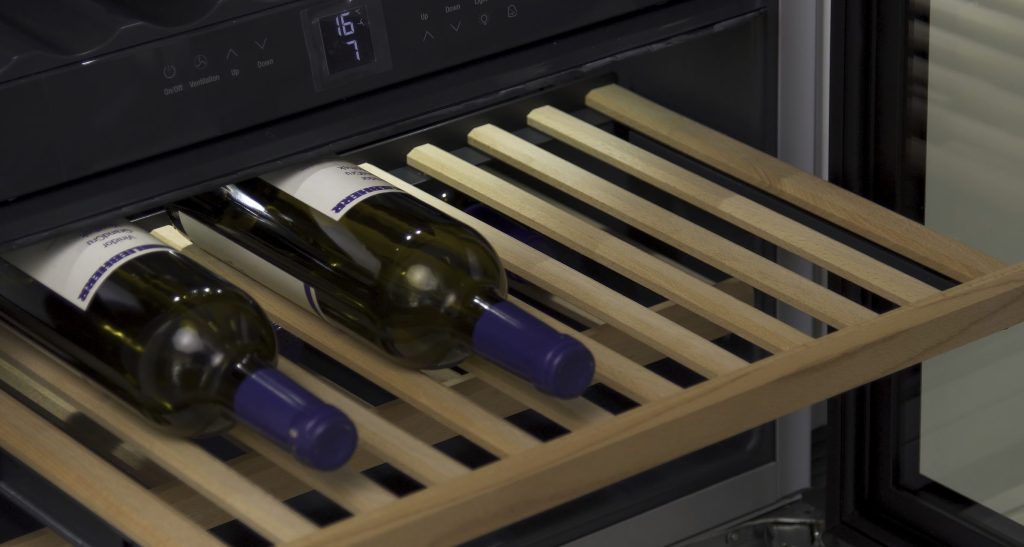
A wine fridge that is not holding temperature — and on a cabinet with two or three zones, which zone has drifted is most of the answer.
- One zone warm, the others right
- Every zone warm together
- Warmer than a fridge, which may be correct
-
from $195 Wine cooler zone repair
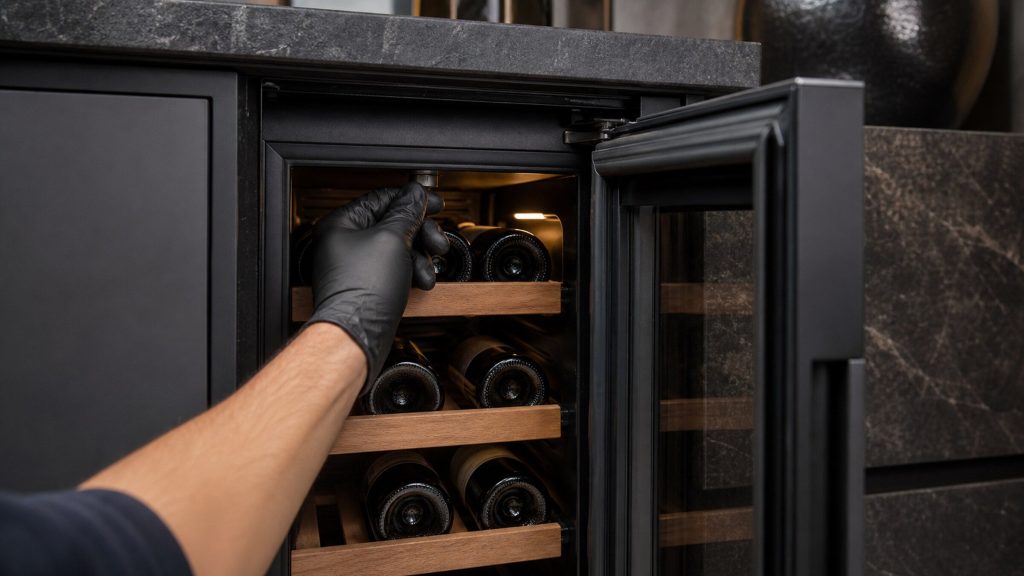
Six of the eleven wine cabinets in this line hold two temperature zones and three hold three. One zone drifting while the others hold is a much smaller job than "the wine cabinet has failed", and it points straight at where to look.
- One zone diagnosed rather than the whole cabinet
- Settings checked before parts
- Seals and glass treated as temperature parts
Questions people ask about this
Is 55°F too warm for a wine fridge?
No — it is close to ideal for long-term storage of anything. A wine cooler is not a refrigerator and it is not broken for being warmer than one. If you are storing rather than chilling, the mid-fifties is where it should be.
Why does my cabinet have two different temperatures?
Because that is what a dual-zone cabinet is for: one zone at storage temperature and one at serving temperature, or reds in one and whites in the other. Six of the eleven cabinets in this line are dual-zone and three are triple.
One zone is right and one is not.
That is useful rather than alarming, and it narrows the diagnosis to that zone's own sensor, damper or fan rather than to the whole appliance. Tell us which zone, set to what, reading what.
Does fluctuation really matter?
More than the exact number. Wine tolerates a steady 58°F far better than it tolerates swinging between 50 and 65, which is why door seals and stable installation matter as much on these cabinets as the refrigeration does.
Common Problems
More guides like this one
-

Ice on the Back Wall of Your Fridge Is Normal — Here Is When It Is Not
The maker calls it completely normal in its own manual. It is also the most common reason somebody pays to have a working refrigerator looked at.
Read more -
Ice Maker Making No Ice — the Two Free Checks the Maker Publishes
Liebherr's own ice-maker troubleshooting is three rows long and two of them are about the water tank. Start there rather than with a parts list.
Read more -
Why Your Liebherr Is Making That Noise — and the Two Free Answers
The maker's own troubleshooting row for running noise asks two questions and both are free. Its suggested remedies are to move the appliance, adjust the feet, or move some bottles.
Read more
Tell us the model number and what it is doing.
This article is based on:
- Official manufacturer documentation
- Internal repair procedures
- Technician repair history
- Company quality standards