
Common Problems
Ice Maker Making No Ice — the Two Free Checks the Maker Publishes
Work through the maker's own published questions before anything else, because two of the three cost nothing. Is the ice maker actually switched on. Is the drawer closed properly. Is there enough water in the tank, and has the tank been inserted correctly. Liebherr publishes exactly those, and it publishes the same two water-tank questions again as the answer to a control lamp flashing above the ON/OFF button. Beyond them, the order is water first and mechanism last: a filter at the end of its life restricts flow long before it affects taste, a supply valve that is partly closed or not opening fully starves the fill, and a freezer compartment running a few degrees warm will make very little ice while looking perfectly normal from the front. Only after all of that is the module itself — motor, mold heater and harness — worth measuring. Slow ice is almost always water; no ice at all is more often the free checks than anything anybody charges for.
The full guide
The maker's own list is three rows long
Liebherr ice maker not making ice has a published answer before it has an expensive one.
Here it is, in full, from the Liebherr manual's ice-maker troubleshooting:
Ice maker cannot be turned on — is the appliance connected to the electrical outlet?
Ice maker is not making any ice — is the ice maker turned on? Is the drawer closed properly? Is there enough water in the tank? Has the tank been inserted correctly?
The control lamp above the ON/OFF button flashes — is there enough water in the tank? Has the tank been inserted correctly?
That is the whole published list. Two of its questions are about the water tank and one is about a drawer. None of them costs anything, and between them they resolve a genuinely large share of these calls.
Then: water, in order
If the free checks are clear, the next three things are all about water arriving.
The filter. Restricted flow shows up as *slow ice* long before it shows up as taste. A filter at the end of its life is the most common paid answer on this page.
The valve. It either opens fully or it does not. A valve that opens partly produces a small, slow, hollow cube.
The supply. Half-closed since somebody worked under the sink is a real and irritating cause, and it is free to rule out.
And one that is not about the ice maker at all
A freezer compartment running a few degrees warm will make very little ice while looking entirely normal from the front.
That is a cooling diagnosis wearing an ice maker's clothes, and it is why the compartment temperature gets checked on the same visit rather than after a new module has already been fitted.
Last: the module
Motor, mold heater, harness. Measured rather than swapped.
It is a real part and it does fail. It is simply the last thing on a list of six, and anybody who starts there is starting at the expensive end.
Slow ice vs no ice
Worth separating, because they point differently:
- Slow ice is almost always water — filter, valve, supply, or a tank that keeps running dry.
- No ice at all is more often the free checks — switched off, drawer not shut, tank not seated — or the freezer being too warm to freeze anything properly.
Slow ice in a Miami August is not the same complaint
An ice maker works against the cabinet it lives in, and in this climate the cabinet is working harder than the specification sheet assumes for four months of the year. A household that empties the bin twice a day in January and finds it half full in August has not necessarily got a problem — production drops when the appliance is opened more often, when the room is warmer, and when the door has been standing open while somebody decides what to cook.
So the useful distinction is between slower and stopped, and it is worth establishing before booking anything. Empty the bin completely, note the time, and look again after a day. An appliance producing nothing at all in twenty-four hours is a call. One producing less than it did is usually water pressure, a filter approaching the end of its life, or the season.
Two things do stop it entirely and cost nothing to check: a filter that was changed without purging the air out of the line afterwards, and a shut-off arm or sensor that something in the bin is holding up.
If it turns out to be a repair
What this leads to, and what it costs
Every job on this site is priced the same way: an on-site diagnostic first, the figure agreed in writing before anybody starts.
-
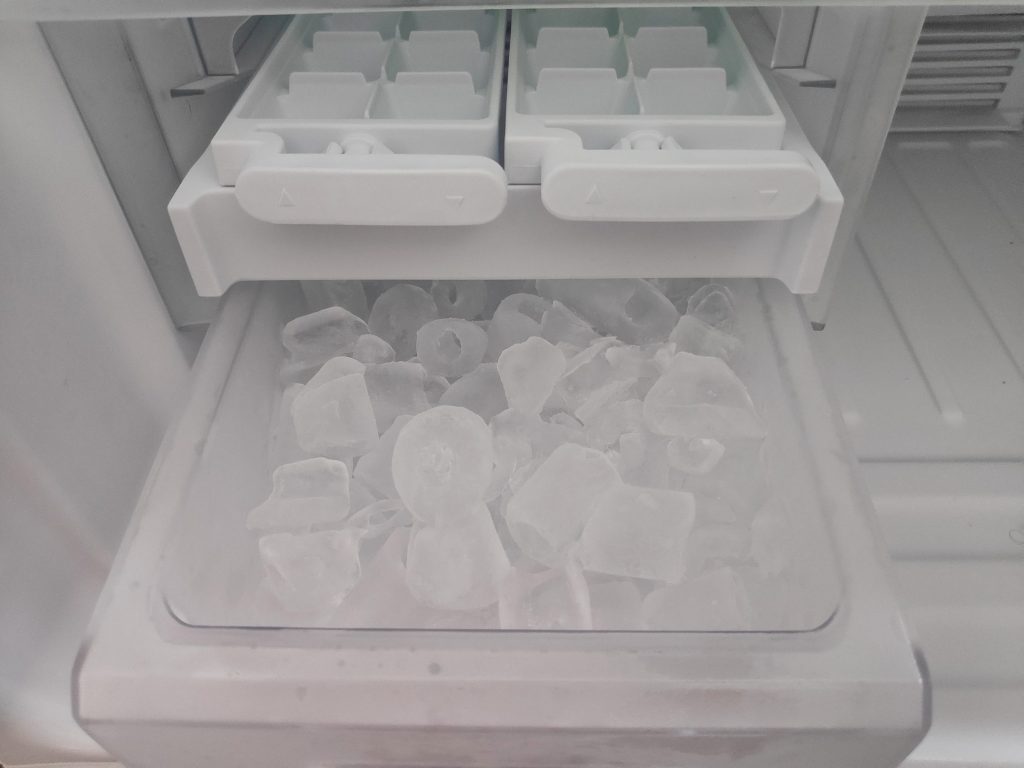
Two free checks first, published by the maker Ice maker not making ice
No ice, slow ice, or the control lamp flashing above the ON/OFF button. Liebherr publishes its own troubleshooting for this and two of its three questions cost nothing.
- No ice at all
- Slower than it used to be
- Lamp flashing above the on/off button
-
from $165 Ice maker repair
No ice, slow ice, or a control lamp flashing above the ON/OFF button. The maker’s own troubleshooting for this starts with two questions that cost nothing, and it is worth working through them before anybody comes out.
- The maker’s own free checks first
- Water path, valve and filter
- The flashing lamp explained rather than replaced
Questions people ask about this
The lamp above the on/off button is flashing.
That one is documented and it is about water: is there enough in the tank, and has the tank been inserted correctly. Those two checks are the maker's own published answer to that exact lamp.
It makes some ice but very slowly.
Usually water rather than ice maker. A filter at the end of its life, a valve not opening fully, or a supply somebody partly closed while working under the sink. It can also be a freezer running a few degrees warm, which is why the compartment temperature is checked at the same visit.
How often should the filter be changed?
Follow the appliance where it tells you, but in practice sooner than most people do in this water. Restricted flow shows up as slow ice long before anybody thinks about the filter.
Is a new ice maker expensive?
The module is a real part and it is not the first answer. Most of these calls end at water — tank, filter, valve or supply — which is why the published free checks are worth the five minutes before anybody visits.
Common Problems
More guides like this one
-

Ice on the Back Wall of Your Fridge Is Normal — Here Is When It Is Not
The maker calls it completely normal in its own manual. It is also the most common reason somebody pays to have a working refrigerator looked at.
Read more -
Why Your Liebherr Is Making That Noise — and the Two Free Answers
The maker's own troubleshooting row for running noise asks two questions and both are free. Its suggested remedies are to move the appliance, adjust the feet, or move some bottles.
Read more -
Why Your Refrigerator Is Freezing Food — and the Free Fix Most People Miss
Ice in the milk and lettuce like glass. Too cold is as wrong as too warm, and it usually has a simpler and cheaper cause.
Read more
Tell us the model number and what it is doing.
This article is based on:
- Official manufacturer documentation
- Internal repair procedures
- Technician repair history
- Company quality standards