Maintenance & Prevention
How to Clean a Refrigerator Drain Hole Without Damaging Anything
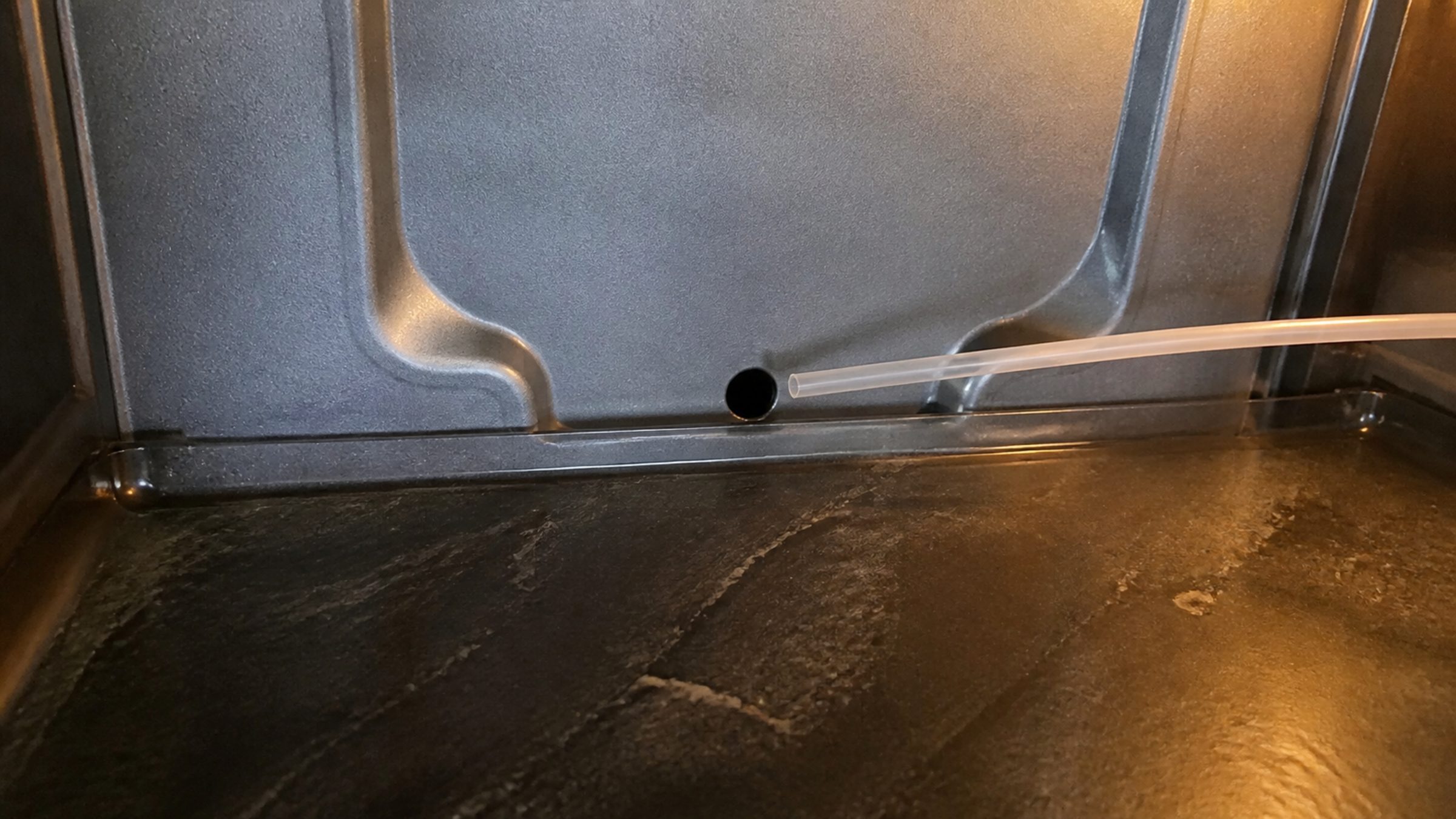
Warm water first, and most of the time that is the whole job. Find the drain — a small hole at the base of the rear wall inside the refrigerator compartment, usually in a shallow channel — and pour a cup of warm water slowly into it. If it drains away, you are finished. If it backs up, the blockage is usually a plug of ice or food debris within the first few inches, and a soft flexible tool clears it: a length of silicone tubing, a pipe cleaner, or a turkey baster used to push warm water rather than to suck. What matters is that the tool is soft and flexible, because the drain tube is not, and a wire coat hanger or a screwdriver punctures it. Do not pour boiling water, which can damage the liner, and do not use bleach, which does the same. On a fully integrated cabinet where the drain is hard to reach, or where the blockage will not clear with water, that is worth a visit rather than a more forceful tool.
The full guide
The water is supposed to be there
Before we get to how to clean refrigerator drain hole blockages, it is worth knowing why there is water there at all — because the answer changes what you are trying to fix.
Liebherr says so in its own manual: humidity in the refrigerator compartment condenses on the rear wall and freezes while the compressor runs, then defrosts during the idle period and drains through the defrost water drain for evaporation.
So the wet patch and the light frost at the back are the appliance working. The drain is what makes them work. When the drain blocks, exactly the same normal condensation ends up in the bottom of your cabinet instead.
Find it
Inside the refrigerator compartment, at the base of the rear wall, there is a small hole — often in a shallow molded channel that runs along the bottom of that wall. On some cabinets it sits behind the lowest shelf or a crisper drawer, so take the drawer out.
If you have a fully integrated column and cannot see anything that looks like a drain, stop there rather than removing panels.
Clear it, gently
One: warm water. A cup, poured slowly into the hole. Warm from the tap, not boiling. If it disappears, you are done and the whole job took four minutes.
Two: something soft. If it backs up, the blockage is usually within the first few inches — a plug of ice, or debris that came off a shelf. A length of silicone tubing, a pipe cleaner, or a turkey baster used to *push* warm water through will clear most of them.
Three: warm water again, to confirm it runs away and stays away.
What damages it
Anything rigid. A wire coat hanger, a skewer, a screwdriver. The drain tube is soft and it punctures, and once it does, water goes into the insulation instead of into the tray. That is a repair rather than a maintenance job, and it is the one thing on this page you cannot undo.
Boiling water. It can damage the liner and the tube itself.
Bleach. Same reason, and it does not clear anything a warm rinse will not.
When to stop and call
If warm water will not shift it, the blockage is deeper than a domestic tool should be reaching, or the drain has frozen rather than blocked. Both are ordinary repairs and neither is expensive next to a punctured drain tube.
The same is true if the drain is not reachable at all on a built-in column. Fifteen appliances in the current Liebherr line are fitted into joinery, and getting to the back of one is planned work rather than a Saturday task.
The Miami version of this job
Two local things make this the most common maintenance call on cold equipment here. Humidity means more condensation reaching the drain in the first place, and a kitchen that opens to the outside does it all summer. And the drain works by evaporation at the other end — the water leaves through a tray near the compressor, in a warm room, which is slower work in August than in February.
So the job is worth doing on a schedule rather than on a symptom, and the schedule is twice a year rather than annually. It takes five minutes with warm water.
There is one thing worth knowing before you start on this make: water in the base of the refrigerator compartment is a drain problem, but frost inside a NoFrost freezer compartment is not, and no amount of drain clearing will touch it. That compartment is designed to accumulate nothing. Frost there means the defrost circuit has stopped, and left alone it becomes a cooling problem, because ice on an evaporator insulates it from the air it exists to cool.
If it turns out to be a repair
What this leads to, and what it costs
Every job on this site is priced the same way: an on-site diagnostic first, the figure agreed in writing before anybody starts.
-

Find the shut-off before anything else Water inside or underneath
Water in the bottom of the cabinet or on the floor. On a plumbed appliance the first action is not diagnosis — it is closing the supply, because water behind cabinetry costs more than any repair on this site.
- Water pooling inside the cabinet
- Water on the floor in front
- A damp patch at the side of the joinery
-

from $185 Refrigerator cooling and defrost repair
The cabinet runs but does not hold temperature, or holds it in one compartment and not the other. On a NoFrost appliance that is usually the defrost circuit or the airflow rather than the compressor — and telling those apart before ordering anything is the whole job.
- One compartment warm while the other holds
- Frost where the manual says there should be none
- Temperature that drifts rather than fails outright

Questions people ask about this
Why does my fridge have water in the bottom?
Because the condensation that forms on the rear wall — which the maker describes as completely normal — has nowhere to go. It is supposed to run down into a drain and out to a tray where it evaporates. When the drain blocks, it collects in the cabinet instead.
Can I use a wire to clear it?
Please do not. The drain tube is soft, and a wire coat hanger or a screwdriver will go through the side of it. What follows is water inside the insulation instead of water in the tray, which is a far worse and far more expensive problem.
How often should this be done?
It is not a routine job so much as a symptom job — you do it when water starts collecting. That said, on an annual maintenance visit it is checked as a matter of course, because catching it before it overflows is easier than afterwards.
What if warm water does not clear it?
Then either the blockage is further down than water will shift, or the drain is frozen rather than blocked. Both are worth a visit. Force is the wrong answer at that point, because the thing you would be forcing is a tube that punctures easily.
Maintenance & Prevention
More guides like this one
-
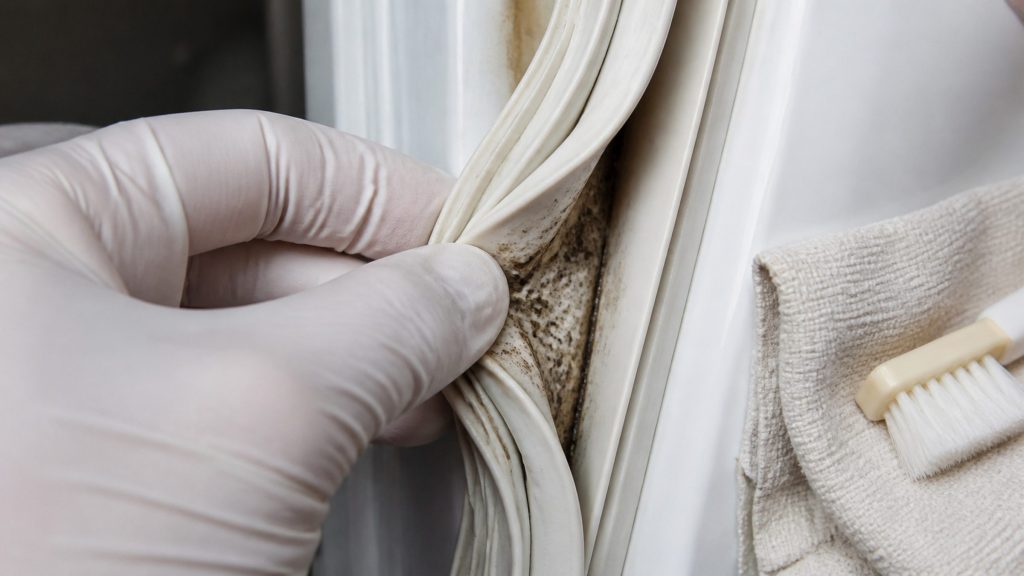
How to Clean a Refrigerator Door Seal, and the Paper Test That Follows
Cleaning a gasket is the easy half. The half that tells you whether it still works takes ten seconds and a sheet of paper.
Read more -
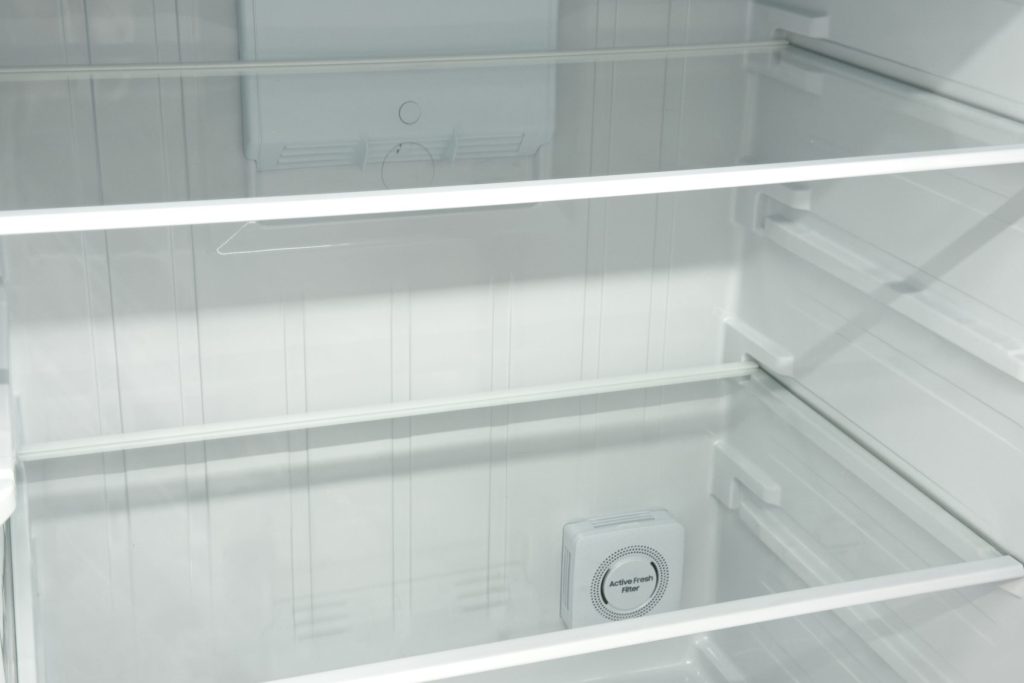
How to Clean a Liebherr Fridge — Inside, Behind, and the Part That Matters Most
Most cleaning articles start with the shelves. The maker's own troubleshooting starts with ventilation, which tells you the order this should really go in.
Read more -

How a Built-In Refrigerator Column Comes Out of Its Joinery
Fifteen appliances in the current line are fitted into cabinetry. Removal is routine planned work — and the thing at risk is the kitchen, not the appliance.
Read more
Tell us the model number and what it is doing.
This article is based on:
- Official manufacturer documentation
- Internal repair procedures
- Technician repair history
- Company quality standards