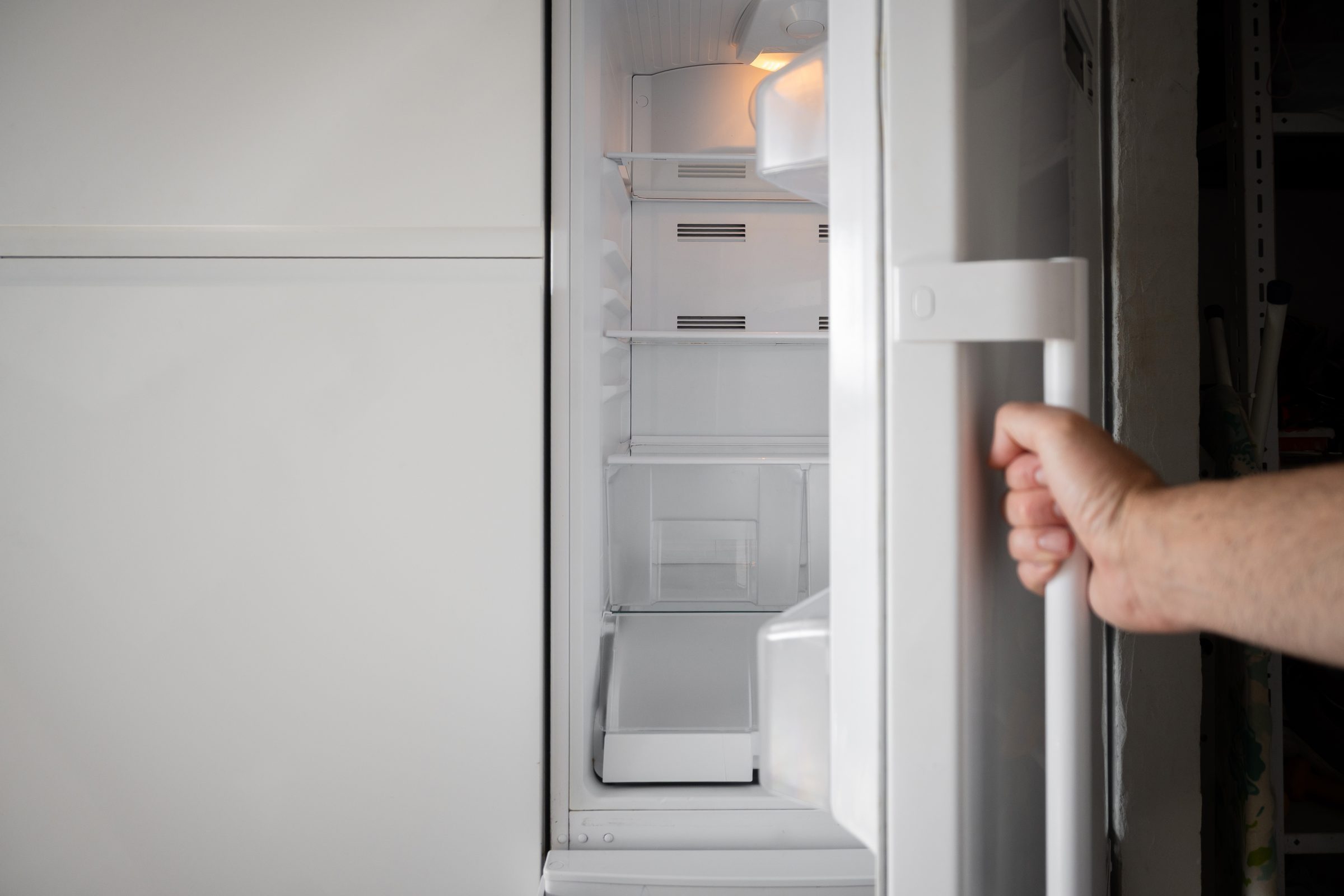
Common Problems
A Refrigerator Door That Will Not Close — Six Causes, Cheapest First
Work through it cheapest first, because four of the six causes cost nothing. Start with what is in the door and on the shelves — a bottle proud of a shelf edge or an over-packed door bin stops a door by a few millimeters, which is enough. Then check that the cabinet is standing level, because a refrigerator tipped very slightly forward will not swing shut; the maker's own troubleshooting begins with whether the appliance stands firmly. Then look at the seal: a gasket that has hardened or folded holds the door open a fraction. Then the closer, which on these cabinets provides the assist that pulls the last centimeter shut and loses it gradually. Then the hinge itself. The sixth cause belongs to this make specifically: on a fully integrated cabinet the door carries your own cabinet front, and a front that is heavier than the hinge was set for — usually after a kitchen refit — will hang low and stop closing. That is an adjustment, not a failure, and it is a common call.
The full guide
Cheapest first, because four of these are free
A liebherr refrigerator door not closing is rarely one thing, so work through it in order of cost.
1. Something is catching
A bottle standing proud of a shelf edge. A door bin packed until it bows. A container pushed too far back so the door meets it on the way round.
Millimeters are enough. Empty the door bins, take one shelf at a time, and watch where it stops.
2. The cabinet is not standing level
Liebherr's own troubleshooting opens a related row with exactly this question: is the appliance standing firmly on the floor.
A refrigerator tipped very slightly forward will not swing shut, because gravity is working against the door instead of with it. The adjustable feet are there for this, and a fraction of a turn is usually all it takes.
3. The seal has hardened or folded
A gasket that has taken a set, or hardened after years of the wrong cleaner, holds the door open a fraction along one edge.
Close the door on a sheet of paper and pull, at six points. Where it slides out freely, that section is not gripping — and a section that has folded over on itself will physically stop the door.
Then the parts
4. The closer
These doors are designed to pull themselves the last centimeter. That assist fades gradually, and the failure mode is exactly what people describe: *it does not close by itself any more.*
This is the single most common answer once the free causes are out, and it is an ordinary repair.
5. The hinge
Wear, or a fixing that has worked loose. Less common than the closer and more often blamed for it.
6. The one that belongs to this make
Ten of the fifty-two refrigerators in the current Liebherr line are fully integrated, and every one of the five freezers is. On those, the door carries your own cabinet front.
Which means the hinge was adjusted for the weight of a particular panel. Change the kitchen fronts — heavier oak instead of a lighter veneer, a thicker slab, an added handle rail — and the door now hangs low, drags on the seal and stops closing.
Nothing has broken. The hinge needs setting for the weight it is now carrying, and this is one of the more frequent calls after a kitchen refit.
What it costs you to ignore
A door that rests instead of closing is:
- a door alarm after about 180 seconds, every time;
- warm air entering continuously, so the compressor runs longer for the same cold;
- ice forming where the appliance is not designed to have any;
- on a wine cooler, a zone that will not hold and glass that fogs.
All of that from a few millimeters, which is why this is worth the twenty minutes it takes to work through.
What a door that does not close costs, in order
The reason to work through this list rather than live with it is that the consequences arrive in a sequence, and only the last one is expensive. First the appliance runs longer to hold its temperature, which you do not notice. Then the humidity coming in condenses and freezes on the rear wall faster than the defrost cycle clears it, which you see as ice. Then that ice starts to block airflow, which shows up as a cooling complaint. Somewhere in there the door alarm begins sounding sooner than it should, and by then most people are calling about the beeping rather than about the door.
On a fully integrated column the sequence has an extra step at the front: the panel is carried by the appliance door, so a door that has dropped is visible in your kitchen as a cabinet front out of line with its neighbors, usually weeks before anything else shows. That is the cheapest moment to call, and it is the one people take longest to act on because it looks like a joinery complaint rather than an appliance one.
If it turns out to be a repair
What this leads to, and what it costs
Every job on this site is priced the same way: an on-site diagnostic first, the figure agreed in writing before anybody starts.
-
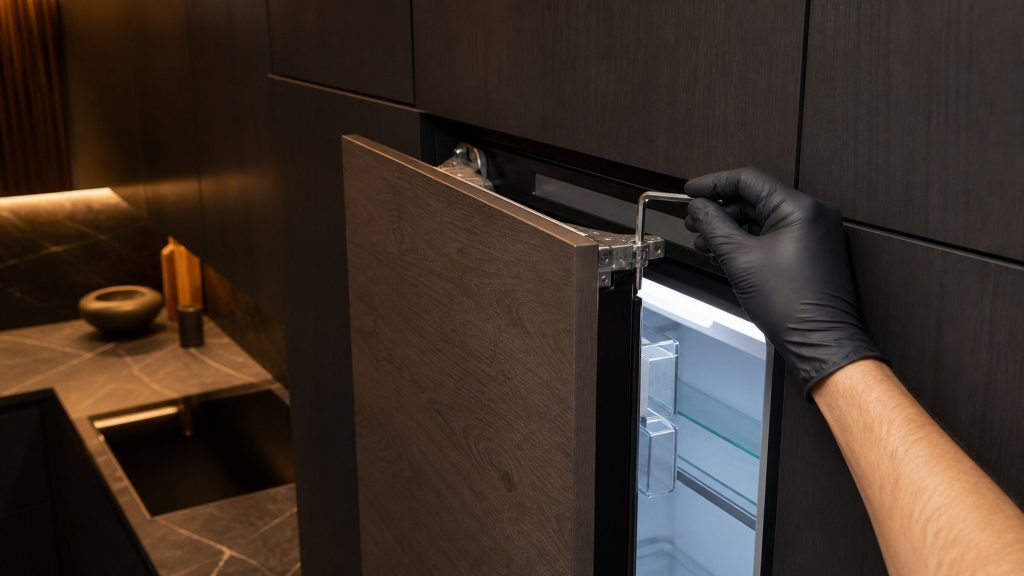
from $165 Door alignment and hinge repair
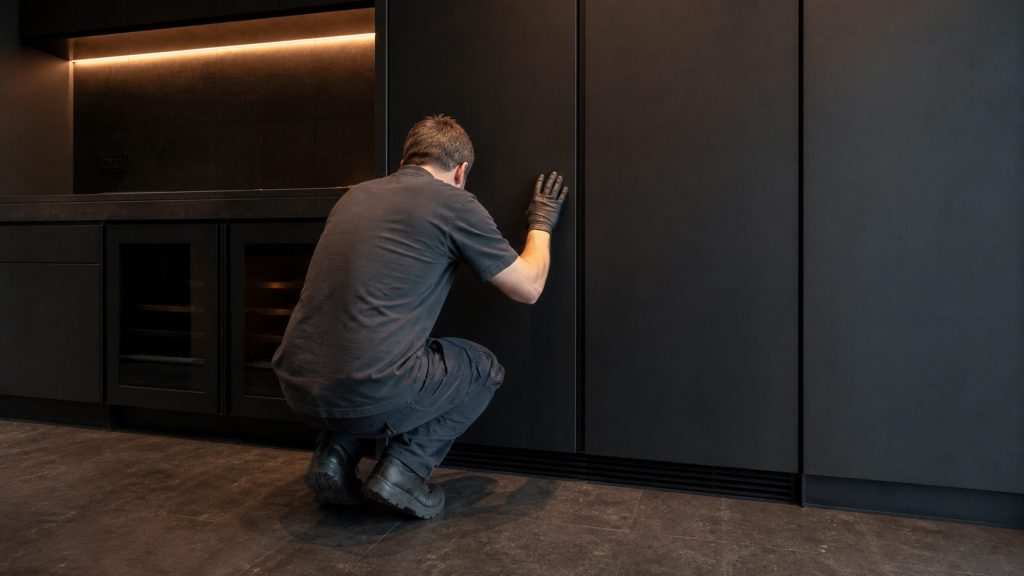
On an integrated cabinet the door carries your own cabinet front, so alignment is joinery work as much as appliance work. A door that has dropped a few millimeters shows up first as a seal that no longer grips and second as a run of cabinetry that no longer lines up.
- Appliance door and cabinet front aligned together
- Hinges, closers and the panel mounting
- Re-tested against the seal
-
Most of these are documented, and normal Refrigerator or freezer beeping
The single most searched thing about this make, and most of the answers are in the manual rather than in a repair. Liebherr documents a door alarm, a temperature alarm and a power-failure indicator, and each of them stops when its cause goes away.
- Beeping with the door open
- Beeping after loading or rearranging
- Beeping that will not stop with the door shut
Questions people ask about this
Why does my fridge door not close by itself any more?
Most likely the closer rather than the hinge. These doors are designed to pull themselves shut over the last centimeter, and that assist fades gradually — so the door starts resting against the seal instead of closing. It is worth fixing quickly, because a resting door is a door alarm and a seal doing nothing.
Could it just be that the fridge is not level?
Yes, and it is the maker's own first troubleshooting question for a related symptom. A cabinet tipped very slightly forward will not swing shut. Adjustable feet exist for exactly this.
We changed our kitchen fronts and now the door hangs low.
Very likely the new front is heavier than the one the hinge was adjusted for. That is a routine adjustment rather than a failure, and it is one of the more common calls after a refit.
Is a door that does not close urgent?
It is not an emergency and it is not something to live with. Warm air entering continuously means a compressor running longer, ice appearing where it should not, and a temperature alarm with a permanent reason to sound.
Common Problems
More guides like this one
-

Ice on the Back Wall of Your Fridge Is Normal — Here Is When It Is Not
The maker calls it completely normal in its own manual. It is also the most common reason somebody pays to have a working refrigerator looked at.
Read more -

Ice Maker Making No Ice — the Two Free Checks the Maker Publishes
Liebherr's own ice-maker troubleshooting is three rows long and two of them are about the water tank. Start there rather than with a parts list.
Read more -
Why Your Liebherr Is Making That Noise — and the Two Free Answers
The maker's own troubleshooting row for running noise asks two questions and both are free. Its suggested remedies are to move the appliance, adjust the feet, or move some bottles.
Read more
Tell us the model number and what it is doing.
This article is based on:
- Official manufacturer documentation
- Internal repair procedures
- Technician repair history
- Company quality standards