Common Problems
How Long a Liebherr Freezer Takes to Get Cold — and Why It Shows Two Dashes
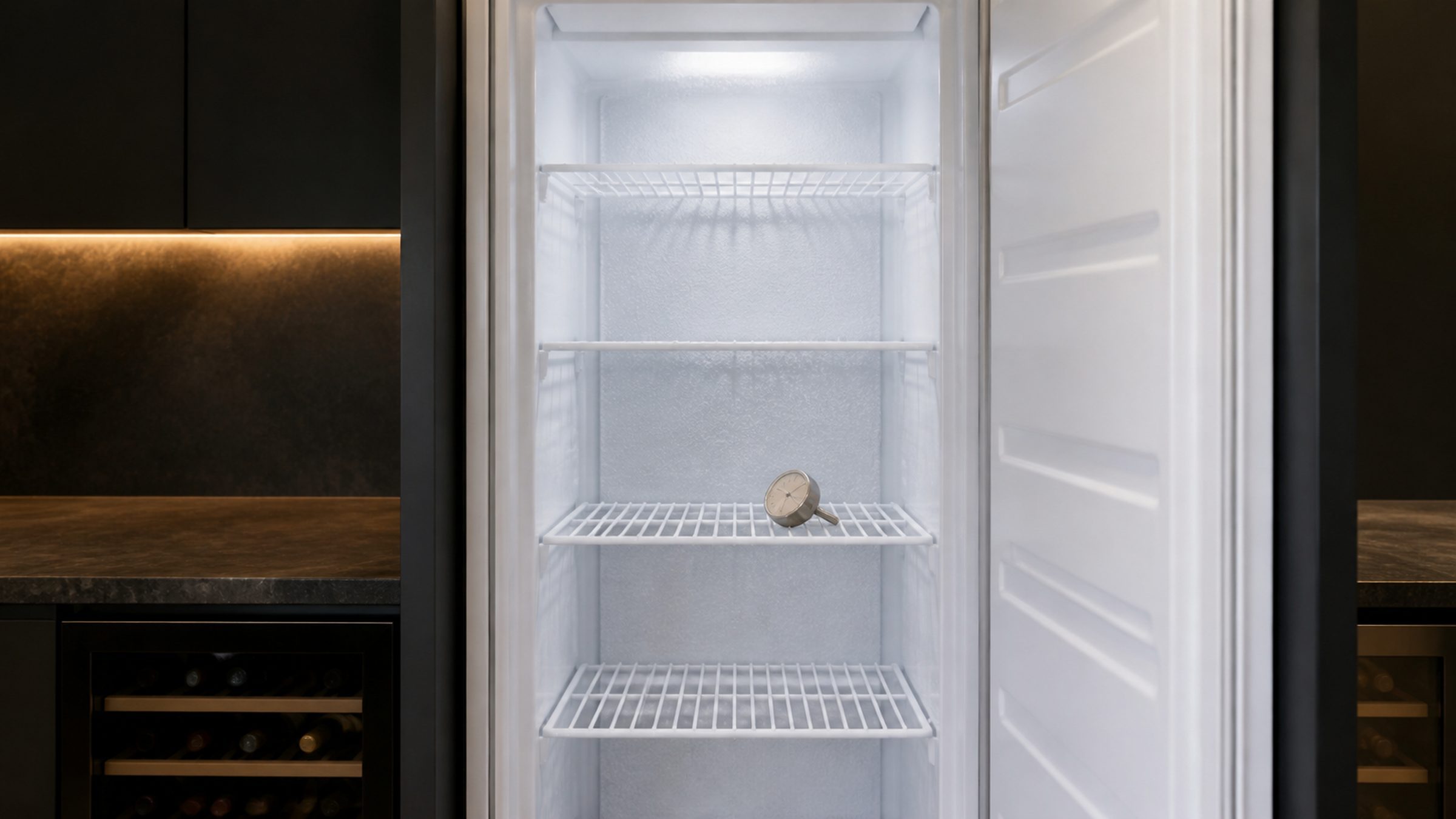
Three to five hours, depending on the room, and the maker says so itself. Until the compartment is actually below freezing the display shows two dashes rather than a number, because that display only reports below-freezing temperatures — dashes mean the reading would be above its range, not that something has gone wrong. The same thing happens after a power failure for the same reason. A warm kitchen lengthens it, a full load of room-temperature food lengthens it considerably, and a cabinet that has just been moved should be left standing for a few hours before it is switched on at all. What is worth a call is dashes that are still there the next morning, or a compartment that reaches a number and then drifts back up. Loading it before it is properly down is the most common way people make this take longer than it should — put food in after it shows a number, not before.
The full guide
The number, from the maker
How long does it take for liebherr freezer to get cold has a published answer, which is unusual and useful.
Three to five hours, depending on the room, to reach freezing temperatures from a cold start.
That is Liebherr's own figure, published in its manual, and it comes with an explanation of the thing that worries people most.
Two dashes is not an error
The freezer temperature display will only show temperatures that are below freezing.
So when the appliance is warmer than that — because it has just been switched on, or because the power was off — there is nothing in range for it to display, and it shows two dashes instead.
That is the display working, not failing. It is also, judging by the search data, one of the more alarming things a new owner encounters, which is why it is worth knowing before it happens rather than at nine o'clock at night.
What makes it take longer
A warm room. A closed Miami kitchen in August is a different environment from the one a European manual assumes, and the five-hour end of the range is the realistic one here.
A load of warm food. This is the big one. Filling a freezer that is still coming down does two things: it adds heat the appliance now has to remove, and it can trip the temperature alarm on the way, which then worries you about a second thing that is also not a problem.
A cabinet that has just been moved. Let it stand for a few hours before switching it on. That is about the refrigerant settling, and it applies to any cold appliance that has been tilted.
Load it after, not before
Wait for a number on the display. Then fill it.
If you must fill it sooner, do it in stages rather than all at once, and expect the alarm to sound while it catches up — that is the temperature alarm doing exactly what the manual describes.
When it is genuinely wrong
- Still two dashes the next morning. Past the window, with none of the causes above. Worth a call.
- Reaches a number and drifts back up. Different problem, and a more interesting one: it can make cold and cannot hold it, which points at seals, airflow or defrost rather than at refrigeration.
- Alarm sounding with the door shut and nothing new inside. That is the appliance saying it is not cold enough and cannot explain it away.
The same clock runs after a power cut
A freezer that has been off for six hours is doing a pull-down when the power comes back, not recovering from damage, and it shows you the same two dashes for the same reason. That matters in this city, because the question usually arrives the morning after a storm rather than the day a new appliance is delivered.
What is different after an outage is that the appliance kept a record while you were not watching. Touch the alarm icon and it will show the warmest temperature it reached — which is the number that decides what is safe to keep, and it is a better answer than opening the door to feel the food. Read it first, clear it second, and then let the pull-down run without opening anything.
If the display is still showing dashes well past five hours with the door shut and nothing warm loaded, the pull-down has stopped being a pull-down. That is the point at which it is worth a call, and it is worth saying on the phone how long it has been and what the room temperature is.
If it turns out to be a repair
What this leads to, and what it costs
Every job on this site is priced the same way: an on-site diagnostic first, the figure agreed in writing before anybody starts.
-
Freezer display showing two dashes
Not an error. The freezer temperature display only shows temperatures below freezing, so two dashes mean the compartment has not got there yet.
- Dashes instead of a number
- Right after switching on
- Right after a power failure
-
Liebherr freezer column: The freezer display shows two dashes instead of a temperature
Liebherr freezer column — an indicator rather than a code. The freezer temperature display will only show temperatures that are below freezing. When initially starting the freezer it will not be below freezing. It will take three to five hours (depending on ambient conditions) for freezing temperatures to be achieved and thus displayed numerically. This may also occur after a power failure.
What the machine is telling you
Questions people ask about this
What do two dashes mean on a Liebherr freezer?
That the compartment is not below freezing yet. The display only shows below-freezing temperatures, so dashes are the display saying the number would be out of its range. It is documented behavior rather than an error code.
Should I put food in straight away?
No. Wait until it shows a number. A load of room-temperature food added to a freezer that is still coming down turns three hours into most of a day, and it can trip the temperature alarm on the way.
It has been eight hours and still shows dashes.
That is past the published window and worth a call. Check the obvious first — is a door properly shut, is the room extremely hot, was a large warm load added — but eight hours with none of those is a real question.
Why does it do this after a power cut too?
Same reason. The compartment warmed above freezing while the power was off, so the display has nothing in range to show until it gets back down. Three to five hours again.
Common Problems
More guides like this one
-

Ice on the Back Wall of Your Fridge Is Normal — Here Is When It Is Not
The maker calls it completely normal in its own manual. It is also the most common reason somebody pays to have a working refrigerator looked at.
Read more -

Ice Maker Making No Ice — the Two Free Checks the Maker Publishes
Liebherr's own ice-maker troubleshooting is three rows long and two of them are about the water tank. Start there rather than with a parts list.
Read more -
Why Your Liebherr Is Making That Noise — and the Two Free Answers
The maker's own troubleshooting row for running noise asks two questions and both are free. Its suggested remedies are to move the appliance, adjust the feet, or move some bottles.
Read more
Tell us the model number and what it is doing.
This article is based on:
- Official manufacturer documentation
- Internal repair procedures
- Technician repair history
- Company quality standards