Safety & Risks
What to Do With a Full Freezer Before a Hurricane
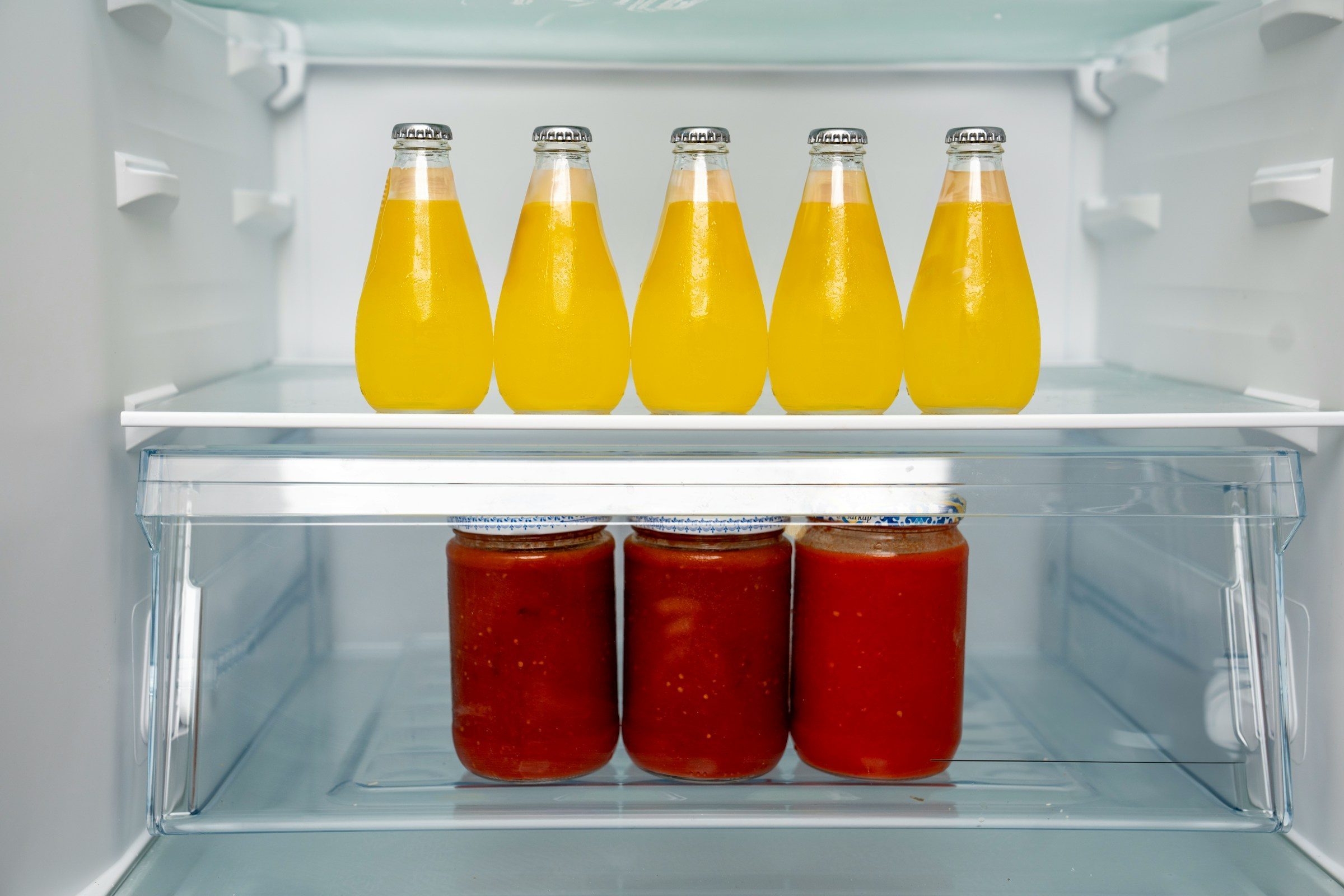
Fill the empty space, lower the temperature, and stop opening the door. A full freezer holds safe temperatures roughly twice as long as a half-empty one, so in the days before a storm fill gaps with containers of water — they freeze into thermal mass and become drinking water afterwards. Turn the freezer to its coldest setting a day ahead so the whole load starts colder. Freeze water bottles for the refrigerator too, because a fridge only holds about four hours on its own. Move anything you will want during the outage into a cooler beforehand so the freezer is not opened at all. During the outage the rule is simple: keep it shut. A full freezer holds about 48 hours unopened and a half-full one about 24. Afterwards, before you clear anything, read what the appliance recorded — if the power-failure light is lit, touching the alarm icon shows the highest temperature the compartment actually reached, which is the number that decides what is safe rather than a guess based on hours.
The full guide
Days before: make it full and make it colder
How long will food keep in freezer power outage conditions depends mostly on what you did in the days before it, so start there.
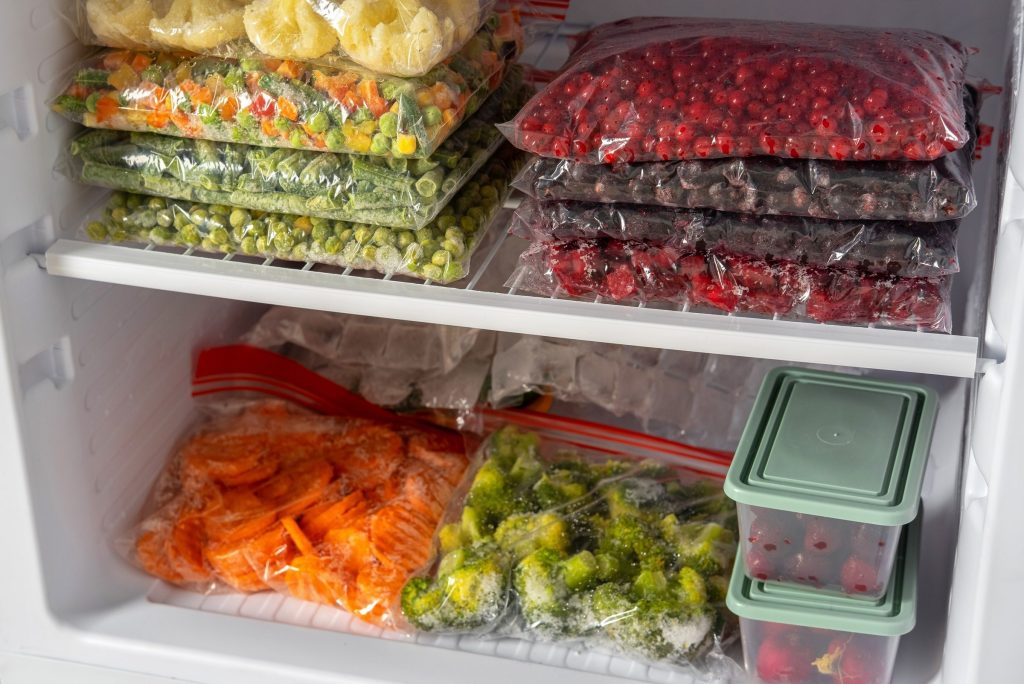
Fill the gaps. A full freezer holds safe temperatures for roughly twice as long as a half-empty one, because frozen mass holds cold and air does not.
Containers of water are the cheapest way to do it. They freeze into thermal mass, they cost nothing, and afterwards they are drinking water — which in a serious outage matters more than the food did.
Turn it colder. A day ahead, set the freezer to its coldest. Starting the whole load several degrees lower buys real hours at the other end.
Freeze bottles for the refrigerator. A fridge holds about four hours on its own. Frozen bottles moved across when the power goes extend that meaningfully.
Hours before: decide what you will need
Move anything you actually want during the outage — drinks, ice, whatever the children will ask for — into a cooler, before the power goes.
The point is not convenience. It is that every time somebody opens the freezer "just to grab something", hours come off the 48.
During: shut, and stay shut
- Full freezer: about 48 hours.
- Half-full: about 24.
- Refrigerator: about 4.
Every one of those numbers assumes the door stays closed.
Do not add warm items. Do not check on it. If the outage is going to be long, dry ice on top of the packages buys real time, and a friend with power buys more — both are hour-two decisions rather than hour-twenty ones.
After: read it before you clear it
This is the part that belongs to this make, and it is the reason an owner here is better off than an owner of almost anything else.
If the power-failure light is lit, the appliance is telling you the freezer got warmer than it should have. Touch the alarm icon and it will display the highest temperature the compartment actually reached.
That number decides everything:
- still at or below 40°F, ice crystals present — refreezable, with some loss of quality;
- above 40°F for more than two hours — throw it out.
Read it first. Clearing the alarm is what most people do on instinct, and the number goes with it.
And the beeping is not a breakage
A cabinet alarming after the power comes back is a cabinet that noticed, recorded and reported. That is the feature working. Nothing needs repairing, and nothing needs to be switched off at the breaker to make it stop — the alarm icon does that, once you have the number.
The built-in question nobody asks until the day
Almost every hurricane checklist assumes a freestanding appliance you can reach behind, unplug and move. Every freezer in this line is a fully integrated column in kitchen joinery, and several are one half of a Side-by-Side pair. Two practical consequences follow, and both are worth settling before the storm rather than during it.
The first is that "unplug it" is not a five-second job here, and generally should not be done at all: an appliance left shut and unpowered keeps its contents far longer than one that has been opened to reach a plug. Leave it closed.
The second is that a pair behind matching doors is two appliances with two sets of contents. The refrigerator half loses its margin in hours; the freezer half holds for far longer. If you are going to open anything during an outage, know which door is which before the lights go out — and if there is a generator in the picture, know which of the two is worth the fuel. It is the refrigerator, and it is not close.
If it turns out to be a repair
What this leads to, and what it costs
Every job on this site is priced the same way: an on-site diagnostic first, the figure agreed in writing before anybody starts.
-
The appliance recorded what happened Beeping after a power outage
The power came back and the appliance is alarming. That is the power-failure indicator, and it exists so that you learn what happened to the food from the machine rather than from the food.
- Alarm and a lit power-failure light
- Freezer display flashing after an outage
- Two dashes on a freezer that was fine yesterday
-
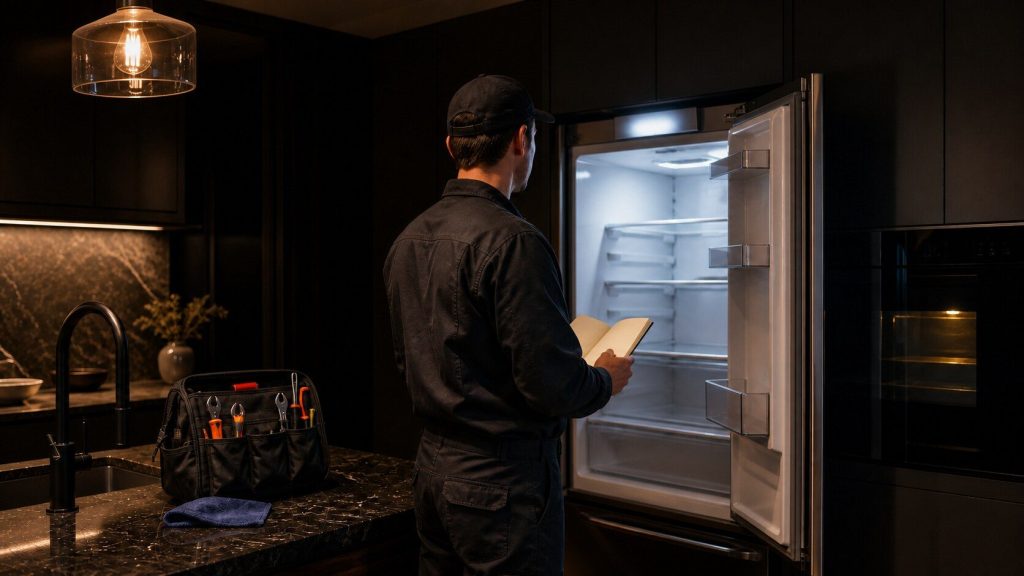
from $145 Alarm and power-failure diagnosis
This visit exists because of what this make documents. A flashing display, a sounding alarm or a lit power-failure light is frequently the appliance working exactly as designed — and a visit that ends "nothing is wrong, and here is what it was telling you" is a real visit that took real time. Priced accordingly, and described honestly.
- May end in no repair at all, and we say so upfront
- Every documented signal checked against the manual
- The alarm history read before anything is cleared

Questions people ask about this
Does filling the freezer really help?
Substantially. A full freezer holds safe temperatures roughly twice as long as a half-empty one, because frozen mass holds cold and air does not. Containers of water are the cheapest way to fill it, and you end up with drinking water.
Should I turn it colder before a storm?
Yes, a day ahead. Starting the whole load several degrees colder buys hours at the other end, and there is no downside beyond a little electricity you are about to lose anyway.
What about the refrigerator?
It only holds about four hours, so plan for it separately. Frozen water bottles moved into it help, and anything you genuinely need should go into a cooler with ice rather than staying in a cabinet you cannot open.
How do I know what to throw out afterwards?
Read what the appliance recorded before clearing anything. If the power-failure light is lit, touching the alarm icon shows the highest temperature the freezer reached. Above 40°F for more than two hours means throw it out; still holding ice crystals at or below 40°F means it can be refrozen.
Safety & Risks
More guides like this one
-
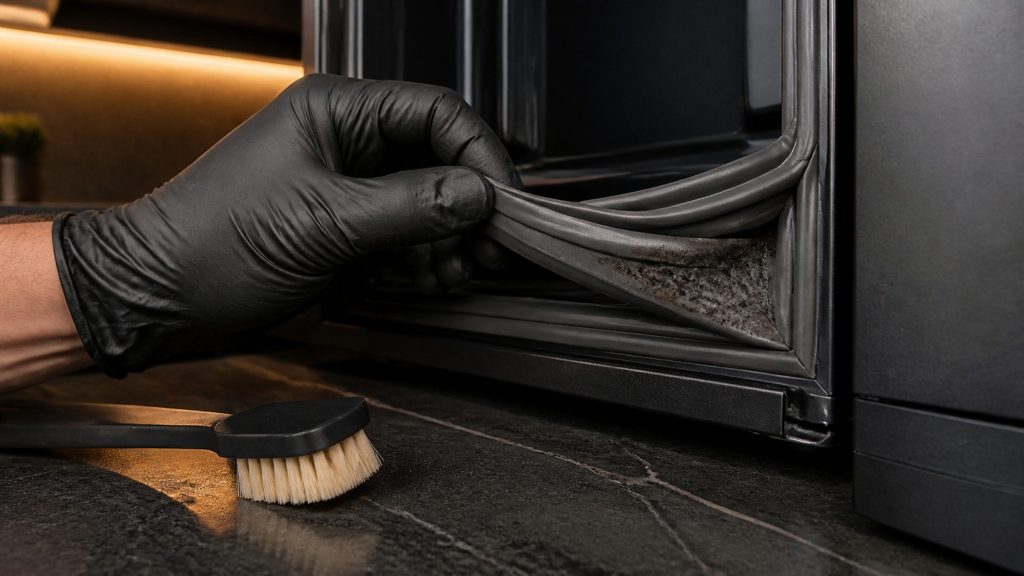
Mold on a Refrigerator Door Seal — What Removes It and What Damages It
A humid city, a rubber fold that stays damp, and a list of popular remedies that quietly destroy the seal you are cleaning.
Read more -
How Long Food Lasts in a Freezer Without Power — and How Your Liebherr Tells You
The general rule is 48 hours for a full freezer and 24 for a half-full one. Your Liebherr can do better than a rule: it recorded the highest temperature it reached while the power was off, and it will show you.
Read more
Tell us the model number and what it is doing.
This article is based on:
- Official manufacturer documentation
- Internal repair procedures
- Technician repair history
- Company quality standards