Troubleshooting
How to Check Your Refrigerator Temperature — With a Thermometer and Without One
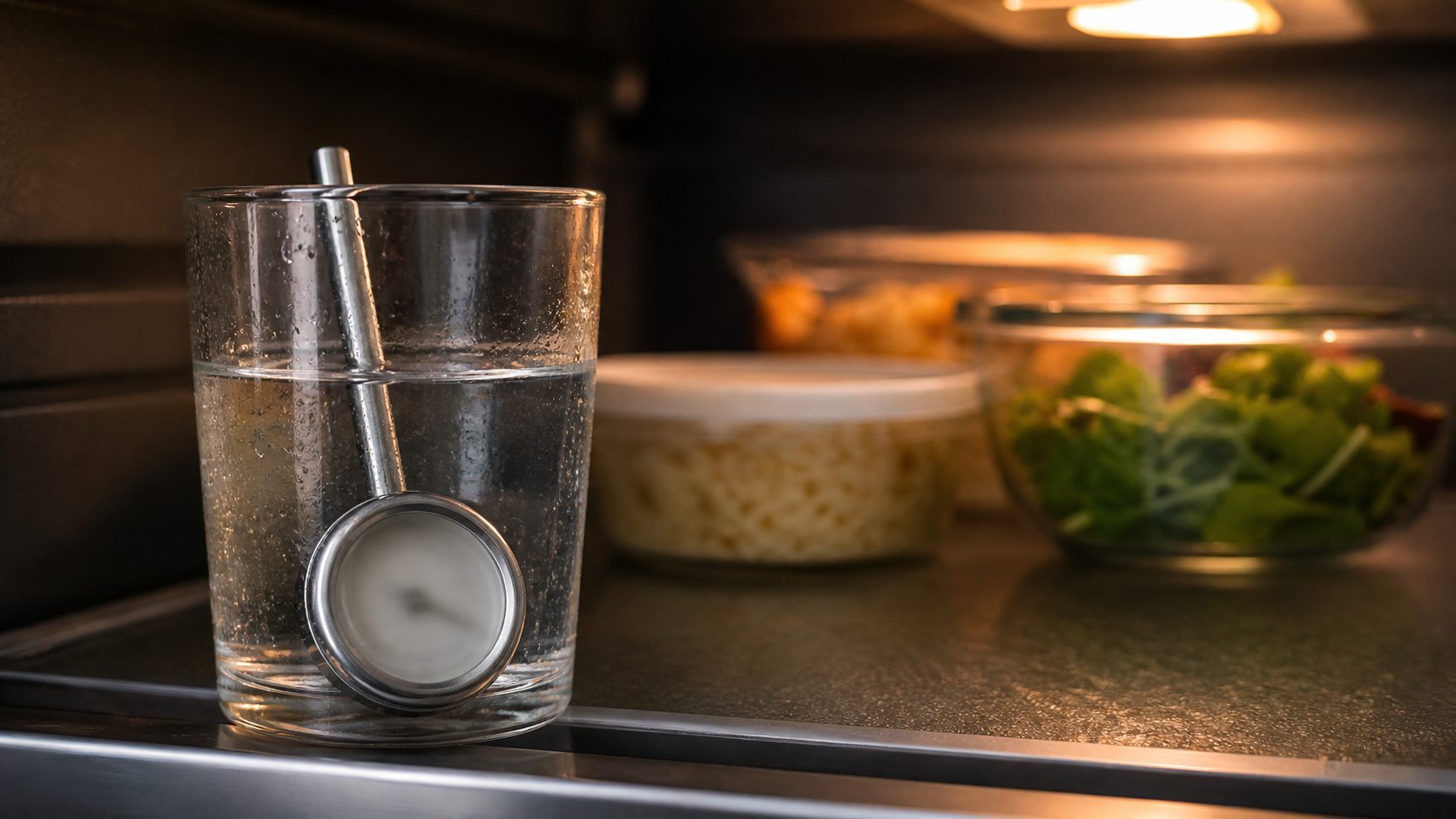
Put an independent thermometer in a glass of water on the middle shelf of the refrigerator, and between two packages in the freezer, and leave both for at least four hours — overnight is better. Reading the air is misleading because it changes every time the door opens; reading a mass of water or food gives you what the food is actually experiencing. A refrigerator should be at or below 40°F and a freezer at or below 0°F. Compare that with what the appliance display is claiming, because the difference is the useful part: a cabinet that reads 38°F on the display and 46°F on the shelf has a measurement problem rather than a cooling problem, and those are different repairs at different prices. Without a thermometer there are honest proxies — ice cream that is firm rather than scoopable, milk that lasts its date, no soft spots in frozen packages — but they tell you roughly and a $10 thermometer tells you exactly, which is worth it before anybody is paid to visit.
The full guide
Two different facts
How to check freezer temperature with thermometer is a ten-dollar question with a surprisingly large payoff, because it separates two things people assume are the same.
What the display says is what the appliance believes, based on a sensor somewhere in the cabinet.
What the shelf is at is what your food is experiencing.
Most of the time these agree. When they do not, the gap between them is the most useful number in the entire diagnosis — and it costs about ten dollars to find out.
Do it properly
In the refrigerator: a thermometer in a glass of water, on the middle shelf, toward the front. Not in the door.
In the freezer: a thermometer between two packages, in the middle of the load.
Leave them for at least four hours. Overnight is better. Anything shorter and you are measuring the last time somebody opened the door rather than the cabinet.
The numbers
- Refrigerator: at or below 40°F.
- Freezer: at or below 0°F.
A refrigerator has cold and warm places by design — cold air enters at specific points, so the shelf nearest an outlet runs several degrees below the back of a crisper drawer. That is normal, and it is why "it freezes things at the back" is usually about position rather than about the appliance.
Without a thermometer
Real proxies, in order of how much they tell you:
- Ice cream. Properly frozen it resists a spoon. Scoopable straight from the freezer means several degrees too warm.
- Milk. Reaching its date reliably is a good sign; going off two days early is not.
- Frozen packages. Soft spots or a layer of ice on the outside of the bag both say the temperature has been up and down.
These are honest but rough. If any of them is telling you something, the ten-dollar version is worth buying before you pay anybody to visit.
What the answer changes
If the shelf is warm and the display agrees, the appliance knows it is warm and cannot fix it: airflow, defrost, seals, then refrigeration.
If the shelf is warm and the display says it is fine, the appliance is being lied to. That is a sensor conversation, and a sensor is one of the least expensive parts in the cabinet.
If both agree and both are cold, the problem is where you are putting things.
Three very different visits, separated by one thermometer left in overnight.
Where in the cabinet you measure changes the answer
A refrigerator is not one temperature, and it is not meant to be. Cold air falls, the door shelves sit in room air every time the door opens, and a BioFresh compartment is held close to freezing at a controlled humidity on purpose. Put a thermometer in three of those places and you will get three different numbers from an appliance with nothing wrong with it.
So measure in the middle of the cabinet, in a glass of water, and compare that number with the one the display is showing — not with what you expected. Two numbers that agree tell you the appliance is reading itself correctly, whatever they say. Two that disagree by several degrees are worth a call on their own, because a sensor reading the wrong temperature is the one problem that never announces itself: the cabinet does exactly what it is told, and what it is told is wrong.
If you are checking because something spoiled, check the door shelves too. That is where the answer usually is, and it is a habit rather than a repair.
If it turns out to be a repair
What this leads to, and what it costs
Every job on this site is priced the same way: an on-site diagnostic first, the figure agreed in writing before anybody starts.
-
Cold is moved, not only made Refrigerator not cooling
The cabinet is running and the temperature is wrong. On a NoFrost appliance that is far more often airflow or the defrost circuit than the compressor — which matters, because those are different orders of money.
- Running but warm
- Warm at the top, right at the bottom
- Slowly drifting rather than suddenly off
-
from $175 Temperature sensor and probe replacement
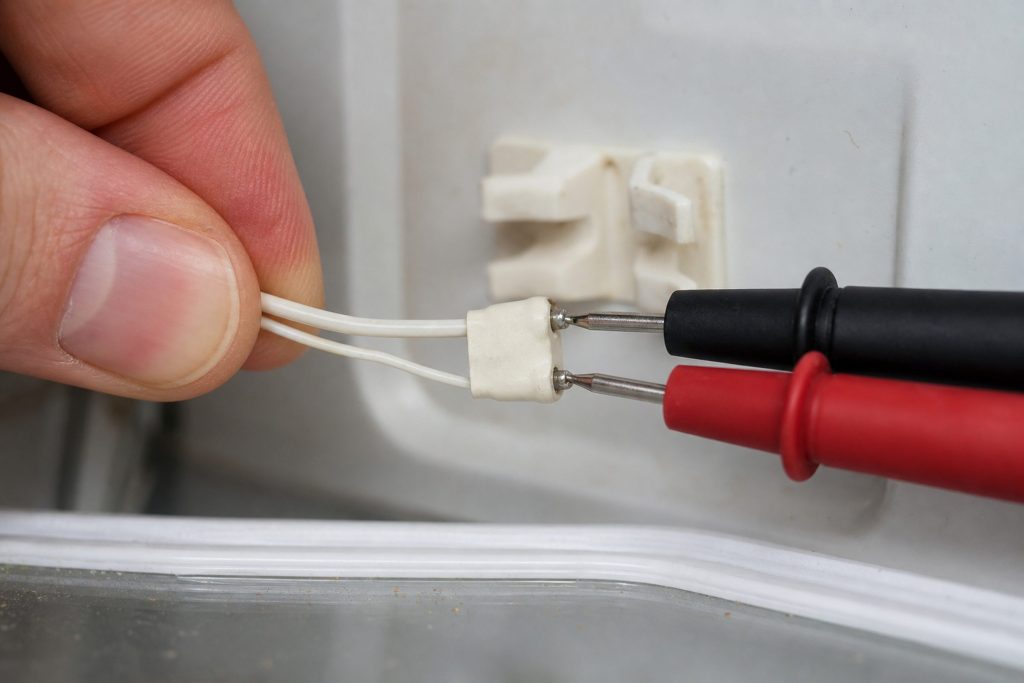
The cabinet is holding a temperature it thinks is right and is not. A sensor is a resistance at a known temperature, so this is one of the few things on a cold appliance that can be proved rather than inferred.
- Proved with a measurement, not a guess
- The part is inexpensive; the figure is access
- Checked against an independent thermometer
Questions people ask about this
Why put the thermometer in water?
Because air temperature swings every time the door opens and settles again within minutes, so an air reading tells you about the last five minutes rather than about the cabinet. A glass of water behaves like the food does — slowly — which is what you actually want to know.
How long should I leave it?
Four hours as a minimum, overnight for a reading you can rely on. Anything shorter is measuring the door being opened.
The display and the thermometer disagree. Which is right?
The thermometer, in the sense that it is what the food is experiencing. The disagreement itself is the diagnosis: a sensor reading warm makes the appliance over-cool, and a sensor reading cool makes it under-cool. Both are ordinary repairs and neither is the compressor.
How do I check without a thermometer?
Ice cream is the best proxy: properly frozen it should be firm enough to resist a spoon. In the fridge, milk should reach its date and lettuce should not turn to glass. These are rough, and rough is enough to know whether to buy a thermometer.
Troubleshooting
More guides like this one
-
What the Beeping Actually Means on a Liebherr — All Seven Signals
The most searched thing about this brand, answered in one place from the maker's own manual. Seven documented behaviors, and only one of them is a repair.
Read more -
The Three Numbers Inside Your Liebherr, and Why We Ask for All of Them
It is inside the cabinet on the left-hand side, and it carries three numbers rather than one. The maker asks for all three together, and almost nobody has them ready.
Read more -
Liebherr F1 to F5 — Why Nobody Can Tell You What They Mean
The maker prints the numbers and publishes no meanings. The pages that decode them cite nothing — including two of the top results for that search.
Read more
Tell us the model number and what it is doing.
This article is based on:
- Official manufacturer documentation
- Internal repair procedures
- Technician repair history
- Company quality standards