Troubleshooting
The Three Numbers Inside Your Liebherr, and Why We Ask for All of Them
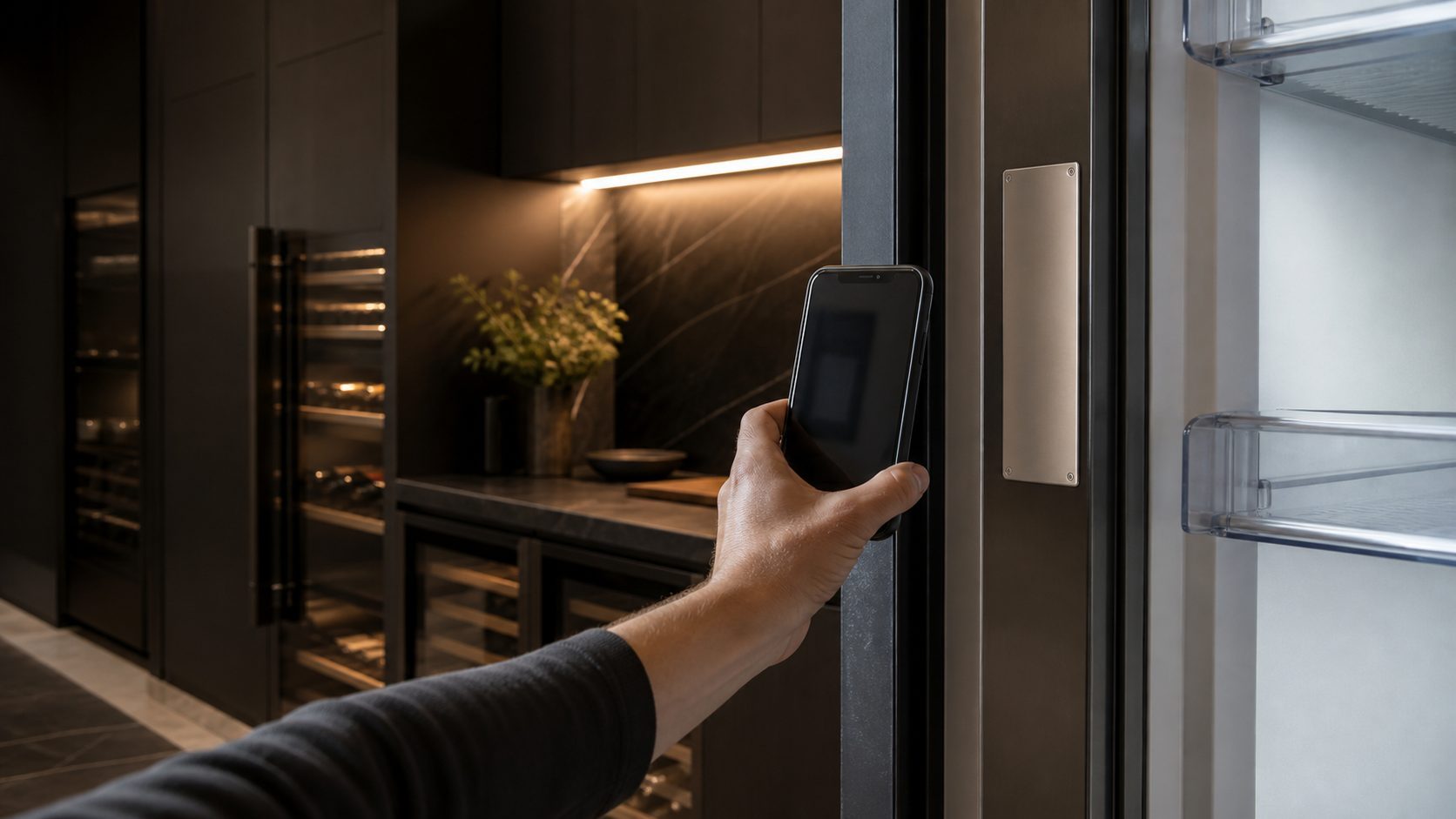
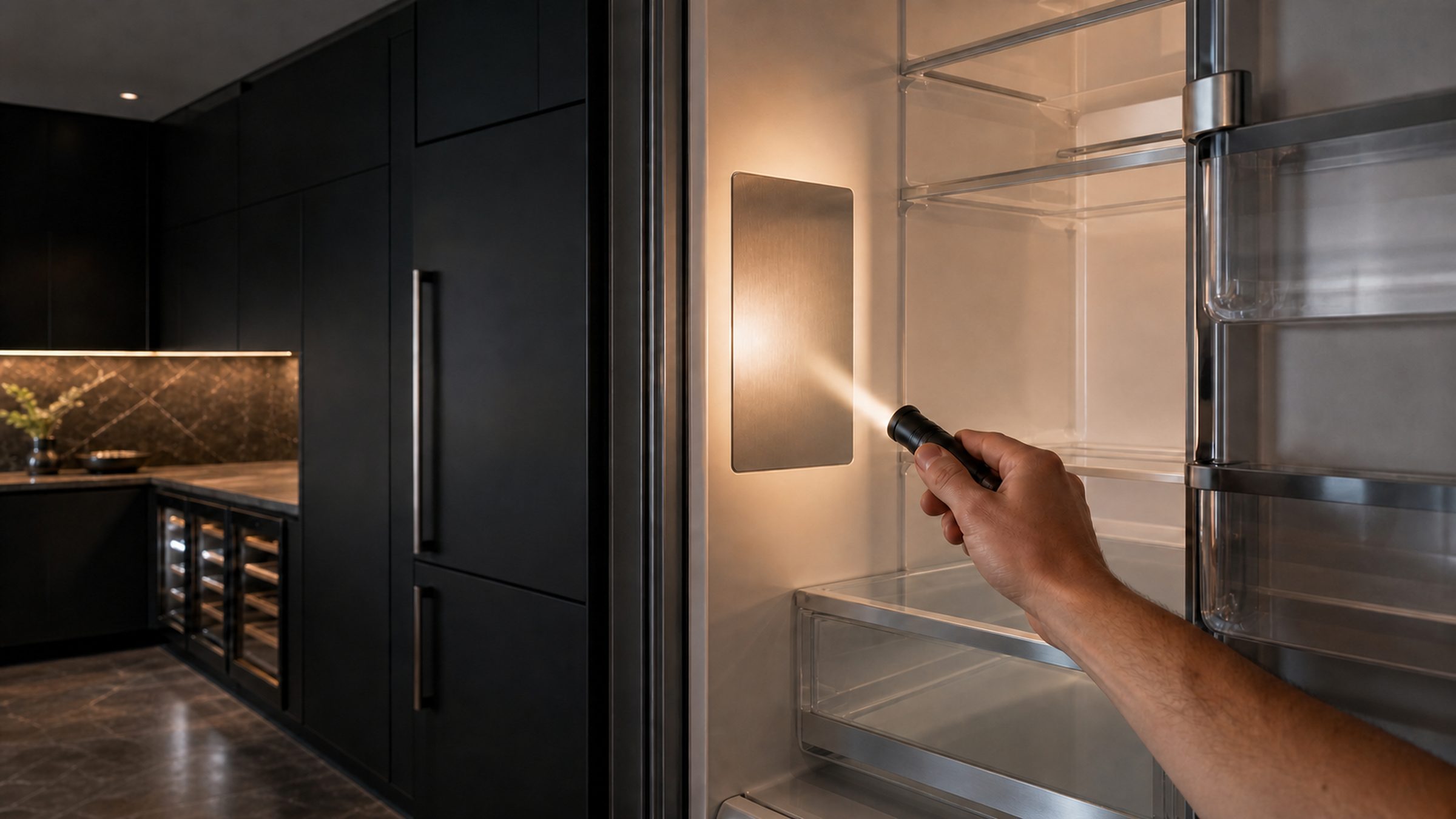
The model plate is inside the appliance, on the left-hand side. It carries three separate numbers and the maker asks for all of them together: the Type Designation, the Service Number and the Appliance or Serial Number. Most people photograph one of the three, usually the one that looks most like a model number, and that is the one least useful on its own. The reason all three matter is that cabinets which look identical behind the same cabinet front are frequently different generations with different parts — the Type Designation tells us what the appliance is, the Service Number tells us which production version, and the Serial Number tells us when. Together with anything showing in the display, they turn a diagnostic visit into a short one, because the right part can be identified and ordered before anyone arrives instead of after. Photograph the plate now, while nothing is wrong, and keep the picture. It takes ten seconds and it is the single cheapest thing you can do for a future repair.
The full guide
Where it is
Liebherr refrigerator model number location, in one sentence: inside the cabinet, on the left-hand side.
Inside the appliance, on the left-hand side.
Open the door and look at the left-hand wall of the cabinet, usually near the top. On most models nothing needs to be removed — a shelf at most.
Not on the back, not behind the plinth, not on the door.
What is on it
Three numbers, and the maker asks for all three:
Type Designation — what the appliance is.
Service Number — which production version it is. Two cabinets with the same Type Designation and different Service Numbers can take different parts.
Appliance / Serial Number — the individual unit, and when it was built.
Most people, asked for "the model number", photograph whichever one looks most like a model number. That is usually the Type Designation, and on its own it is the least conclusive of the three.
Why all three shorten a visit
Built-in refrigeration is the worst case for identification. The appliance is behind your own cabinet front, so it does not look like anything from outside; the visible interior of two different generations can be near-identical; and the part that has failed is frequently generation-specific.
With all three numbers, the right part is identified before anybody arrives. Without them, it is identified on the visit, ordered afterwards, and fitted on a second visit — which is a week and another appointment.
Take the photograph now
While nothing is wrong.
It takes ten seconds, it lives in your phone, and the moment you need it will be the moment you least want to be crouched in front of a warm cabinet with a torch.
Do it for every Liebherr in the house. On a Side-by-Side pair that is two plates, because those are two separate appliances — and the number we need is the one from the half that stopped.
What to send with it
Alongside the three numbers:
- anything showing in the display, written down exactly, before it is cleared;
- whether the appliance is paneled with your own cabinet front;
- what changed, and when — a drift over a month and a stop overnight are rarely the same problem.
Those five things are the difference between a diagnostic visit and a repair visit.
The number people leave out, and what it decides
Of the three, the Service Number is the one that gets skipped, and it is the one that most often decides whether the right part arrives. Two cabinets can sit behind identical fronts, carry the same model designation and take different components, because the production version changed partway through the line's life. The model tells us what the appliance is; the Service Number tells us which one of it you have.
The Serial Number does a second job that is worth money to you rather than to us: it dates the cabinet, and the date is what decides whether the maker's own five-year sealed-system position and its sixth-to-twelfth-year parts position still apply. That is worth establishing before anybody quotes a sealed-system repair, and it is a question you can answer yourself in the time it takes to open the door.
If the plate is unreadable — and in a kitchen that has been steam-cleaned a few times, it happens — say so when you book rather than guessing at a model from the shape of the appliance. There are other ways to identify it, and a guessed model is worse than none.
If it turns out to be a repair
What this leads to, and what it costs
Every job on this site is priced the same way: an on-site diagnostic first, the figure agreed in writing before anybody starts.
-
Diagnostic visit
We work out what is actually wrong before anybody quotes a part. On this make that starts with a question most technicians skip: is the appliance reporting a problem, or is it telling you something it was designed to tell you? A flashing display and a sounding alarm are frequently correct behavior. The fee is credited toward the work when you go ahead.
- The plate read first — three numbers, not one
- Signals told apart from problems before any part is named
- Credited toward the repair
-
Liebherr refrigerator error code F1
Liebherr refrigerator error code F1: The maker prints this number and publishes no meaning for it. Its own manual says only: if F1 to F5 appears in the display, the appliance has an error, and to have the number available when you contact service. Its troubleshooting section decodes none of them. What the maker publishes about it, what you can try yourself, and when it needs a technician.
What this one means
Questions people ask about this
Where is the model number on a Liebherr fridge?
Inside the cabinet, on the left-hand side. On most models it is on the side wall near the top, visible once the door is open — no panels to remove and nothing to move except perhaps a shelf.
Why do you need three numbers?
Because appliances that look identical are often different generations with different parts. The Type Designation says what it is, the Service Number says which version, and the Serial says when. The maker asks for all three together for exactly this reason.
The plate is unreadable. What now?
It happens, particularly on older cabinets in humid kitchens. Photograph whatever is legible and tell us; between the appliance type, the dimensions of the opening and the layout inside, we can usually get there. It just takes longer, which is the argument for photographing it while it is still readable.
Is the number on the door or the frame?
Inside the cabinet rather than on the door. Doors get swapped and paneled, and a number on a door would be the first thing to go missing.
Troubleshooting
More guides like this one
-
What the Beeping Actually Means on a Liebherr — All Seven Signals
The most searched thing about this brand, answered in one place from the maker's own manual. Seven documented behaviors, and only one of them is a repair.
Read more -
Liebherr F1 to F5 — Why Nobody Can Tell You What They Mean
The maker prints the numbers and publishes no meanings. The pages that decode them cite nothing — including two of the top results for that search.
Read more -
How to Reset a Liebherr Refrigerator or Freezer — and When Not To
Four different things get called a reset, and one of them destroys the only evidence a technician had. Which is which, and the order to try them in.
Read more
Tell us the model number and what it is doing.
This article is based on:
- Official manufacturer documentation
- Internal repair procedures
- Technician repair history
- Company quality standards