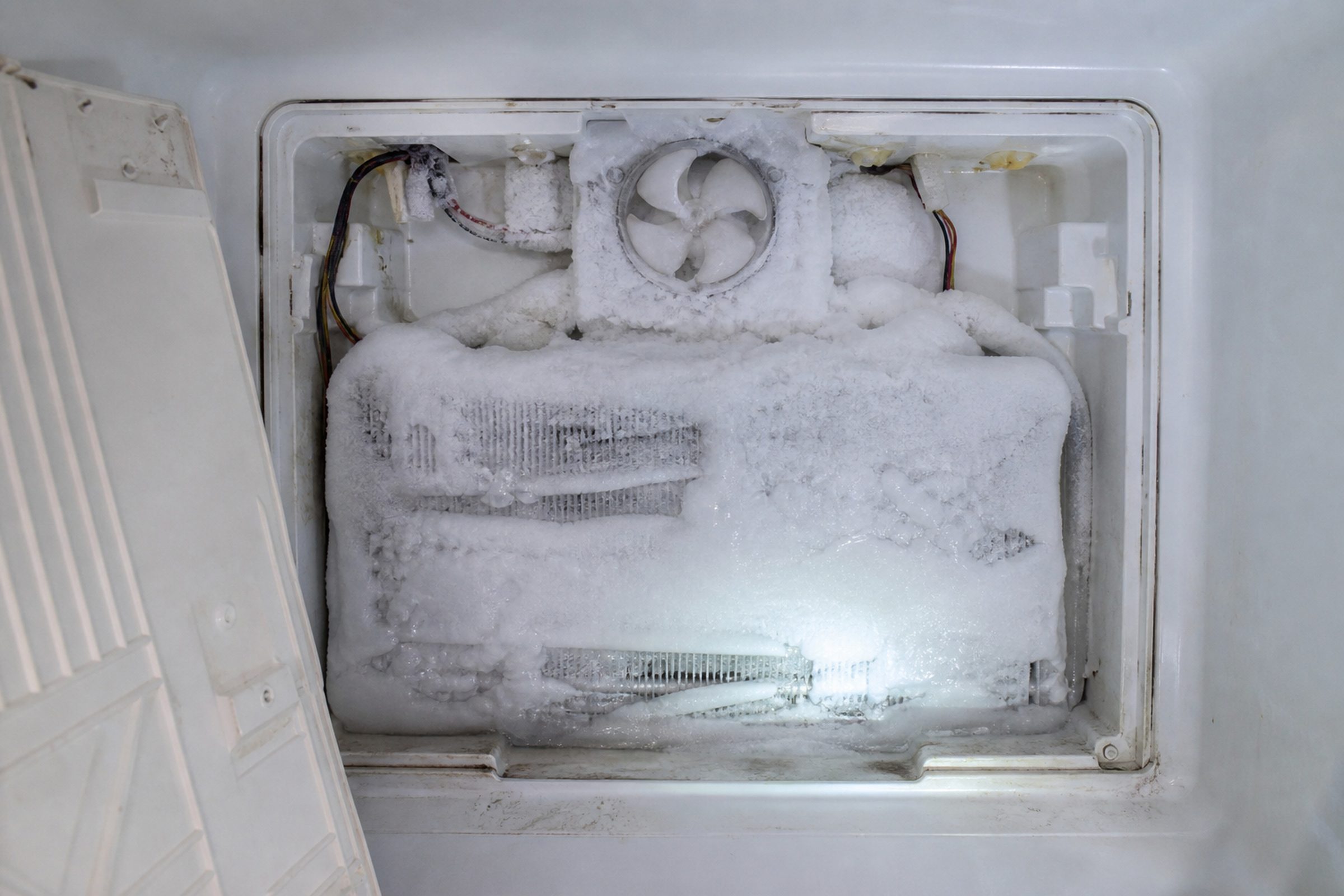
- “On the rear wall of the fridge”
- “In a NoFrost freezer compartment”
- “Thick enough to touch shelves or drawers”
Symptom
Liebherr ice building up inside
Where the ice is decides whether this is a problem at all. On the rear wall of the refrigerator compartment the maker calls it completely normal; in a NoFrost freezer, or thick enough to reach the shelves, it is not.
- From $95 diagnostic, credited to the repair
- 59 cities and neighborhoods covered
- OEM parts available on order
- In writing the price, before anything is opened
Four ordinary causes
What this usually turns out to be
Cheapest and commonest first, which is also the order we check them in. They sit hundreds of dollars apart, and only the unit settles which one is yours.
-
Normal rear-wall condensation
Published by the maker as completely normal, including the fact that it defrosts during the compressor idle period and drains for evaporation.
Diagnostic visit from $95 -
A blocked defrost drain
The same condensation with nowhere to go, which is when normal becomes water in the bottom of the cabinet.
Refrigerator cooling and defrost repair from $185 -
The defrost circuit in a NoFrost compartment
Frost that never clears is the heater, the sensor or the control that runs them.
Refrigerator cooling and defrost repair from $185 -
A door that no longer seals
Humid air entering continuously freezes where it meets the cold.
Door seal replacement from $155
In five minutes
Before you call anybody
None of it needs tools, and all of it makes the visit shorter.
-
01
Watch it over a full cycle
Normal rear-wall ice clears while the compressor rests. Ice that never clears does not.
-
02
Look for water in the bottom
That is the drain rather than the ice.
-
03
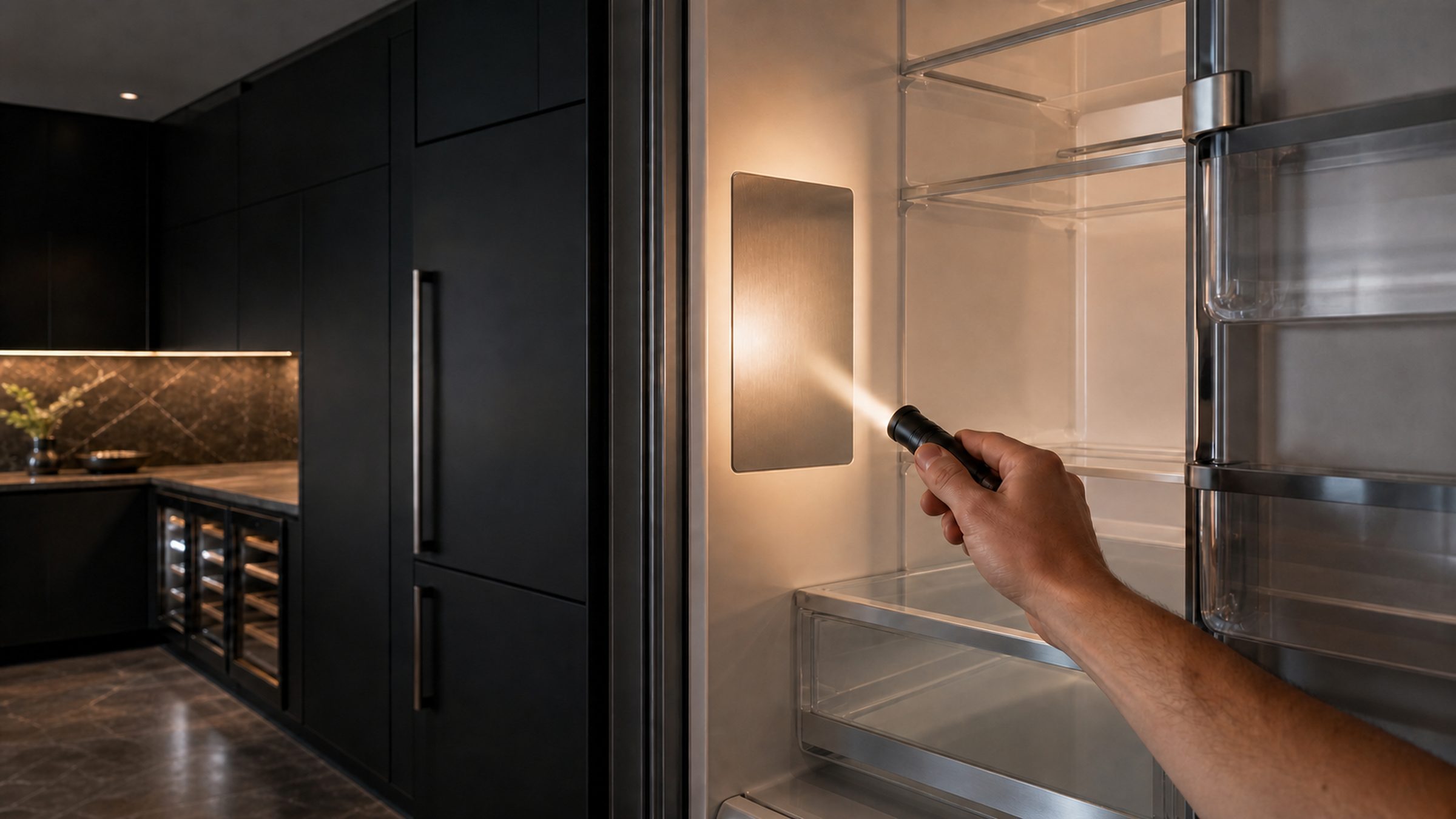
Paper test the doors
Humid air entering is the commonest cause of ice in the wrong place.
How it shows up
What people describe when they call

In more detail
About Liebherr ice building up inside
The fastest diagnosis is what the appliance is telling you
Look at where it is and whether it clears. Ice on the rear wall of the refrigerator that appears while the compressor runs and melts while it rests is documented as normal — that is condensation freezing and then draining away.
Where the ice is, is the diagnosis
Rear wall of the refrigerator, appearing and clearing with the compressor cycle: documented, normal, nothing to do. A NoFrost freezer accumulating frost: the defrost circuit. Water pooling instead of draining: the drain. Three different answers to what looks like one symptom.
This article is based on:
- Official manufacturer documentation
- Internal repair procedures
- Technician repair history
- Company quality standards
Before you book
Questions about Liebherr ice building up inside
There is always ice on the back wall. Is my fridge failing?
Almost certainly not. The maker describes exactly this and calls it completely normal: humidity condenses on the rear wall and freezes while the compressor runs, then thaws while it rests and drains away. What is worth a look is ice that never clears, or water collecting instead of draining.
My NoFrost freezer has frost in it.
That one is worth a call. A NoFrost compartment is designed not to accumulate frost, so frost accumulating means the defrost circuit has stopped doing its job — and left alone it becomes a cooling problem, because ice on an evaporator insulates it.
Where we do it
Across Miami-Dade, Broward, and Palm Beach
Same terms everywhere we go: an on-site diagnostic first, the price agreed in writing, and the exact figure confirmed once we have seen the unit.
Neighborhoods people ask for by name