Service
Liebherr diagnostic visit
We work out what is actually wrong before anybody quotes a part. On this make that starts with a question most technicians skip: is the appliance reporting a problem, or is it telling you something it was designed to tell you? A flashing display and a sounding alarm are frequently correct behavior. The fee is credited toward the work when you go ahead.
- From $95 diagnostic, credited to the repair
- 59 cities and neighborhoods covered
- OEM parts available on order
- In writing the price, before anything is opened
Before you read on
What this job costs and how it is agreed
A starting figure, not a quote. What moves it is the model, how the unit is built in and which part it needs — settled after the on-site diagnostic.
Starts at
from $95
Credited toward the repair when you go ahead with the work.
or call (305) 928-2637
If you decline
You pay the diagnostic and nothing else
The price
In writing, before anything is opened
Warranty
On the labor we performed
On the visit
How this visit actually goes
The same order every time, so nothing is opened and nothing is charged before you have seen the figure and said yes.
-
01
What it has been doing, in your words
Not only what it is doing now. A cabinet that drifted over a month and one that alarmed the night the power came back are rarely the same thing, and the second often ends at the breaker with no part at all.
-
02
Read the plate — inside, on the left-hand side
Liebherr asks for three numbers together: Type Designation, Service Number and Appliance/Serial Number. Anyone who works on these regularly reads all three before touching anything, because the parts differ between cabinets that look identical behind the same panel.
-
03
Write down whatever is in the display, before clearing it
If there is a number between F1 and F5, it goes in the notes exactly as shown. The maker publishes the number and not its meaning, so the number is evidence rather than an answer — and clearing it before it is written down throws that evidence away.
-
04
Tell a signal apart from a problem
Two dashes in a freezer display, an alarm after loading warm food, a power-failure light after an outage: all documented, all normal, none of them a repair. Sorting these out first is most of what makes a first visit short.
-
05
Establish how it comes out
Ten of the refrigerators in this line and every one of the freezers are built into joinery behind your own cabinet front. That decides the length of the appointment as much as the part does, and we would rather know at the start.
-
06
Measure, then decide
A sensor is a resistance at a known temperature. A fan is a current and an airflow. A sealed system is pressures and temperatures across the circuit. The causes that cost nothing come first — a condenser nobody has cleaned, a door that no longer seals, a cabinet packed too tight for air to move.
-
07
A figure before the work
Parts, labor and what is included, written down and agreed before anything is opened. If the honest answer is that the cabinet is still inside the maker’s own sealed-system position, that is the answer you get and the visit ends there.
Applies to
The Liebherr units we carry this work out on
-
Bottom-freezer · Side-by-Side · French-door · fully integrated Liebherr refrigerator repair in Miami
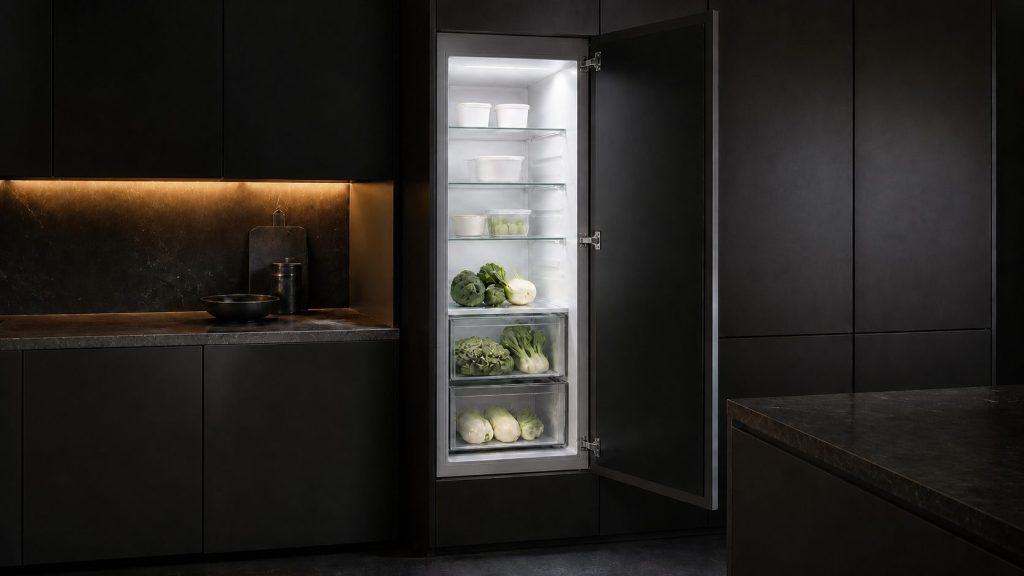
Fifty-two refrigerators in the current US line, and most of them are built into the kitchen rather than standing in it: twenty-six bottom-freezer cabinets, ten fully integrated behind your own cabinet fronts, ten Side-by-Side pairs and five French-door. Tell us which one you have and what it is doing, and whether it is paneled — that decides how the visit is planned.
- Not cold enough, or cold in one compartment only
- An error number in the display, F1 to F5
- Ice on the rear wall — usually normal, and worth knowing why
-
Fully integrated columns Liebherr freezer repair in Miami
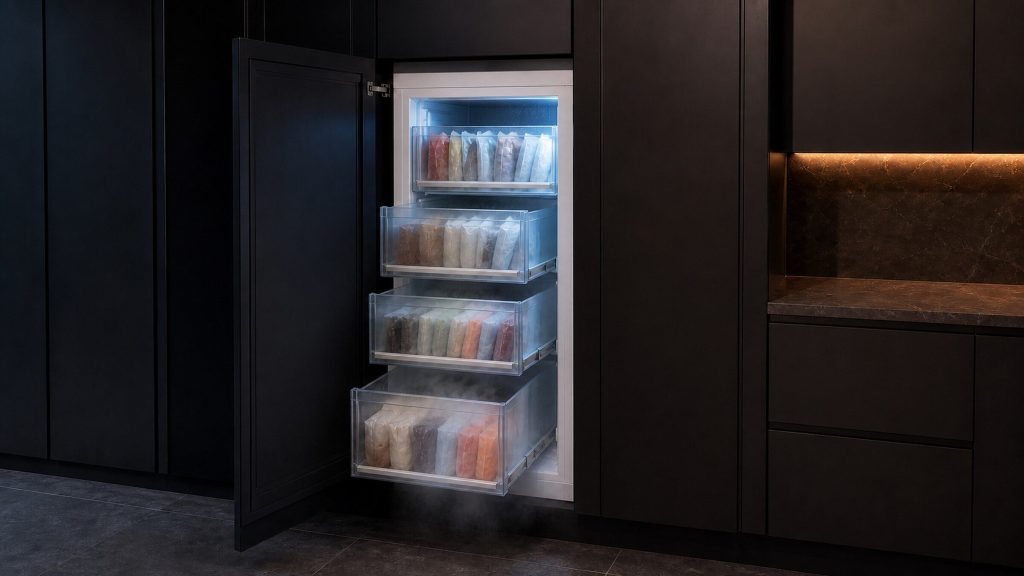
Five freezers in the current US line, every one of them a fully integrated column built into the joinery. They are frequently half of a Side-by-Side pair, which means a freezer that has stopped and a refrigerator that is fine can be two separate machines behind two matching doors.
- Two dashes in the display instead of a temperature
- The power-failure light on after an outage
- Alarm sounding and the temperature display flashing
-
Eleven cabinets · one, two and three zones Liebherr wine refrigeration repair in Miami
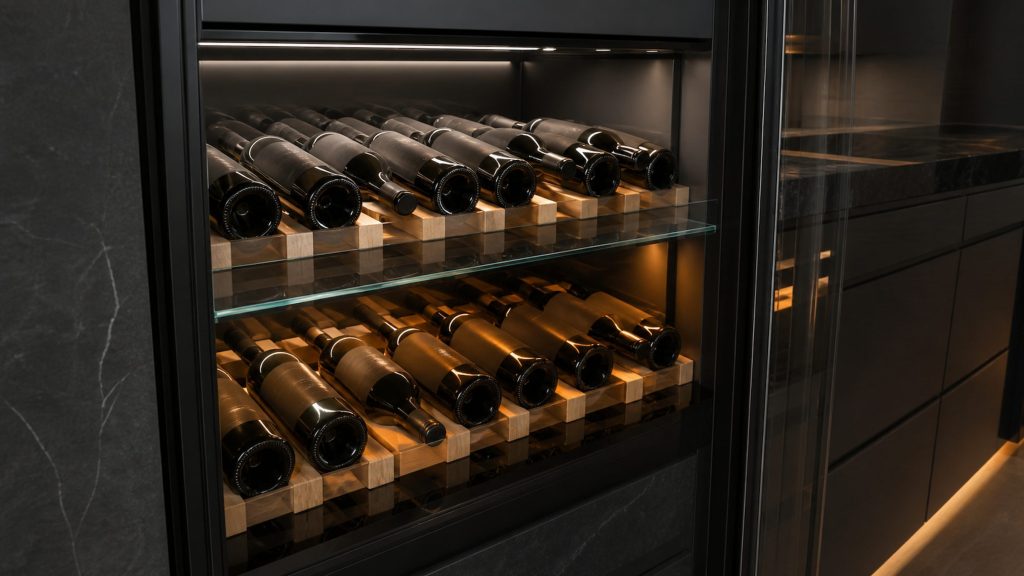
Wine refrigeration is not food refrigeration set warmer. It holds a temperature you chose rather than the coldest one available, it manages humidity instead of driving it out, and it is built to keep vibration and daylight away from the bottle. Liebherr builds eleven of them for the US — three with three zones, six with two, two with a single zone throughout — and knowing which one you have is most of the diagnosis.
- One zone drifting while the others hold
- Warmer than a fridge on purpose — and how to tell wrong from set
- Humidity, vibration and light, which food cabinets ignore
-
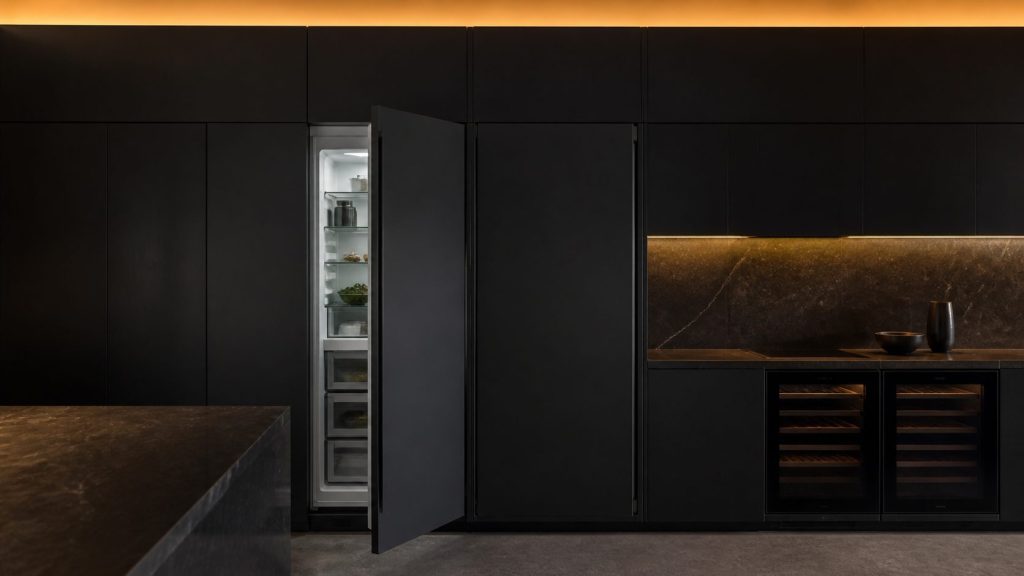
Ten cabinets · three refrigerators, four freezers, three wine Liebherr Monolith column repair in Miami
Monolith is the line Liebherr names for its fully integrated columns, and ten cabinets in the current US catalog carry it: MRB 2400, MRB 3010 and MRB 3600 on the refrigerator side, MF 1851, MF 2461, MF 3051 and MF 3661 on the freezer side, and MW 1810, MW 2400 and MW 2401 for wine. The refrigeration inside is the refrigeration in the rest of the range. What is different is that the cabinet is part of your joinery, and that is what changes about the visit.
- A column that carries your own cabinet front
- Access planned before the visit, not discovered during it
- Same sealed system, same parts, same five-year position
-
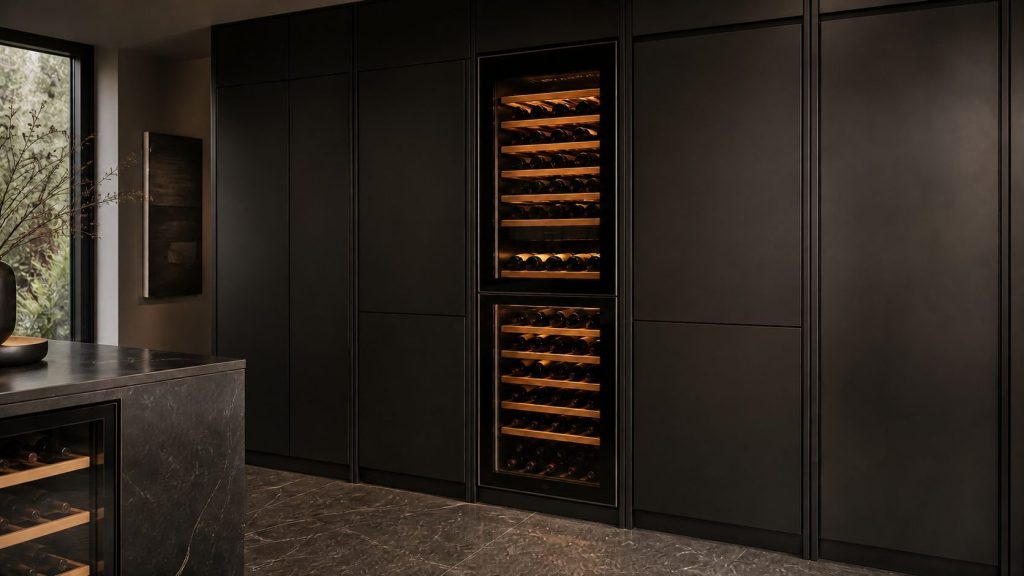
Tall cabinets · two and three zones · glass or paneled Liebherr wine cabinet repair in Miami
The tall cabinets — the ones that stand in the run of the kitchen or behind your own panel, hold a hundred bottles or more and divide themselves into two or three zones. Nine of the eleven Liebherr wine cabinets in the current US line are multi-zone, and three of those are Monolith columns. On a cabinet this size the door, the seal and the alignment matter as much as the refrigeration, because there is a great deal of cold glass and a great deal of Miami air.
- Zones that no longer agree with each other
- A glass door that has stopped sealing along its length
- Presentation shelving, lighting and locks
-
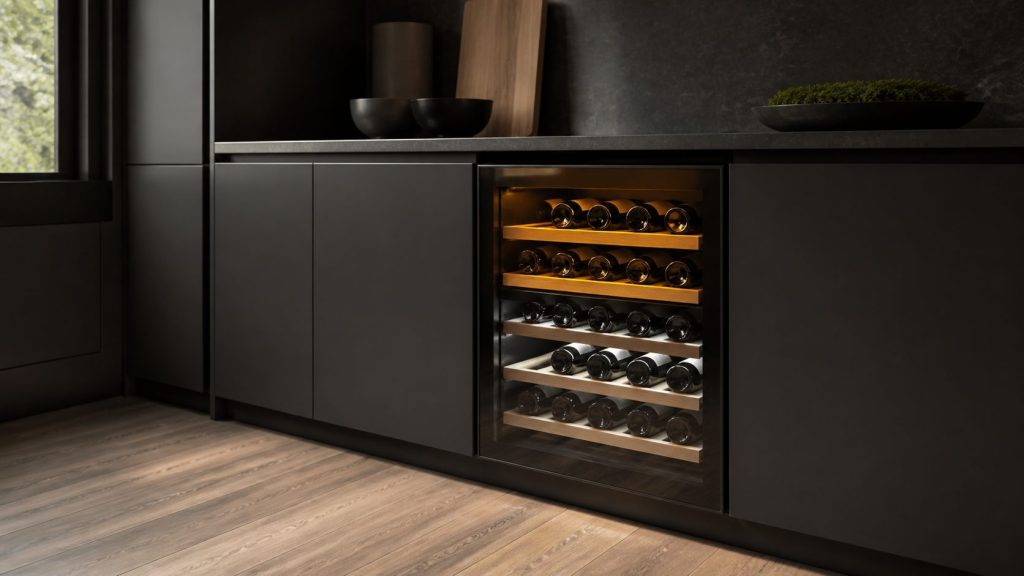
Undercounter · single zone · built into the run Liebherr wine fridge repair in Miami
The undercounter kind — the one that lives under the worktop beside the dishwasher drawer, holds a few dozen bottles and usually runs a single temperature throughout. It is also the word most people use for every one of these appliances, so if you arrived typing wine fridge and you own a tall two-zone cabinet, everything here still applies and the cabinet pages go further.
- Not cooling, or cooling and never stopping
- Warm at the top and right at the bottom
- Noise you can hear from the next room
In more detail
About Liebherr diagnostic visit
What a diagnostic is on a cold-only make
There are no burners to light and no wash cycle to run. What there is: a sealed system, a defrost circuit, a fan or two, a set of sensors, a control board, and doors that either seal or do not. That short list is why a proper diagnostic on this equipment is mostly measurement and access rather than trial and error.
The three numbers on the plate
Inside the cabinet, on the left-hand side, Liebherr prints a Type Designation, a Service Number and an Appliance/Serial Number. The maker asks for all three together with anything showing in the display. Having them ready before the visit is the single cheapest thing you can do to shorten it.
What we check before naming a part
- Whether the appliance is reporting a problem or behaving as documented
- The condenser and the airflow around it, which the manual names first for both "running too long" and "not cold enough"
- Door seals, which cost temperature stability before they cost anything else
- Whether the cabinet is packed tightly enough to stop air moving
- The breaker, on anything that has been dead since a power event
This article is based on:
- Official manufacturer documentation
- Internal repair procedures
- Technician repair history
- Company quality standards
Before you book
Questions about Liebherr diagnostic visit
Is the diagnostic fee credited toward the repair?
Yes. It starts at $95 and comes off the bill when you go ahead with the work, so on a job we carry out it is not an extra line.
The display shows F2. Can you tell me what that is before you come?
No, and neither can anybody else honestly. Liebherr prints F1 to F5 and does not publish what they mean — its own manual says only to have the number available when you contact service. Pages that decode them cite nothing. What the number does is narrow the visit, because it tells us the appliance has registered something rather than that you are imagining it.
The alarm is going off but the food is frozen solid. Do I still need a visit?
Possibly not, and that is worth five minutes on the phone first. A freezer alarm sounds when the compartment is not cold enough, and it also sounds after warm food goes in or after a long door-open while you rearranged things. It stops on its own once the cause has gone. If it has been alarming with the door shut and nothing new inside, then it is telling you something and a visit is the right call.
I have two Liebherr cabinets side by side. Is that one call or two?
One call. A Side-by-Side pair is two appliances behind two matching doors, but they are in the same kitchen and looked at on the same visit — and a second appliance on one visit costs far less than a second visit, because travel and setup are the bulk of what a service call costs.
Where we do it
Across Miami-Dade, Broward, and Palm Beach
Same terms everywhere we go: an on-site diagnostic first, the price agreed in writing, and the exact figure confirmed once we have seen the unit.
Neighborhoods people ask for by name